The Windover Site: Ancient Burials in Florida Older Than the Egyptian Pyramids
A Window into Ancient North America
Hidden beneath the quiet waters of a small pond in Brevard County, Florida, lies one of the most astonishing archaeological discoveries in North America — the Windover archaeological site. Unearthed in the 1980s, this prehistoric burial ground revealed 167 remarkably preserved human remains dating back between 6,990 and 8,120 years, making them older than Egypt’s pyramids by more than 3,500 years.
What makes Windover truly exceptional is not only its age but the extraordinary state of preservation. Thanks to Florida’s peat-rich waters and rapid burials, scientists uncovered human brains, textiles, wooden artifacts, and even remnants of medicinal plants — an unparalleled glimpse into the lives, deaths, and humanity of a people who lived thousands of years before written history.
The Discovery of Windover: An Accidental Find
In 1982, a housing developer in Titusville, Florida, stumbled upon ancient bones while draining a pond for construction. Initially believed to be a modern cemetery, the site quickly attracted archaeologists from Florida State University, led by Dr. Glen Doran.
What they discovered beneath the surface stunned the scientific world: a burial pond dating to the Early Archaic period, containing hundreds of carefully placed skeletons — many astonishingly intact. Radiocarbon dating confirmed their age at roughly 8,000 years, placing Windover among the oldest and best-preserved burial sites in the Western Hemisphere.
Astonishing Preservation: Human Brain Tissue Survives Millennia
Perhaps the most extraordinary aspect of the Windover discovery was the preservation of brain tissue in 91 of the 167 skulls. Despite Florida’s hot, humid climate — normally disastrous for organic material — the peat environment created an anaerobic (oxygen-free) setting, which prevented bacterial decay.
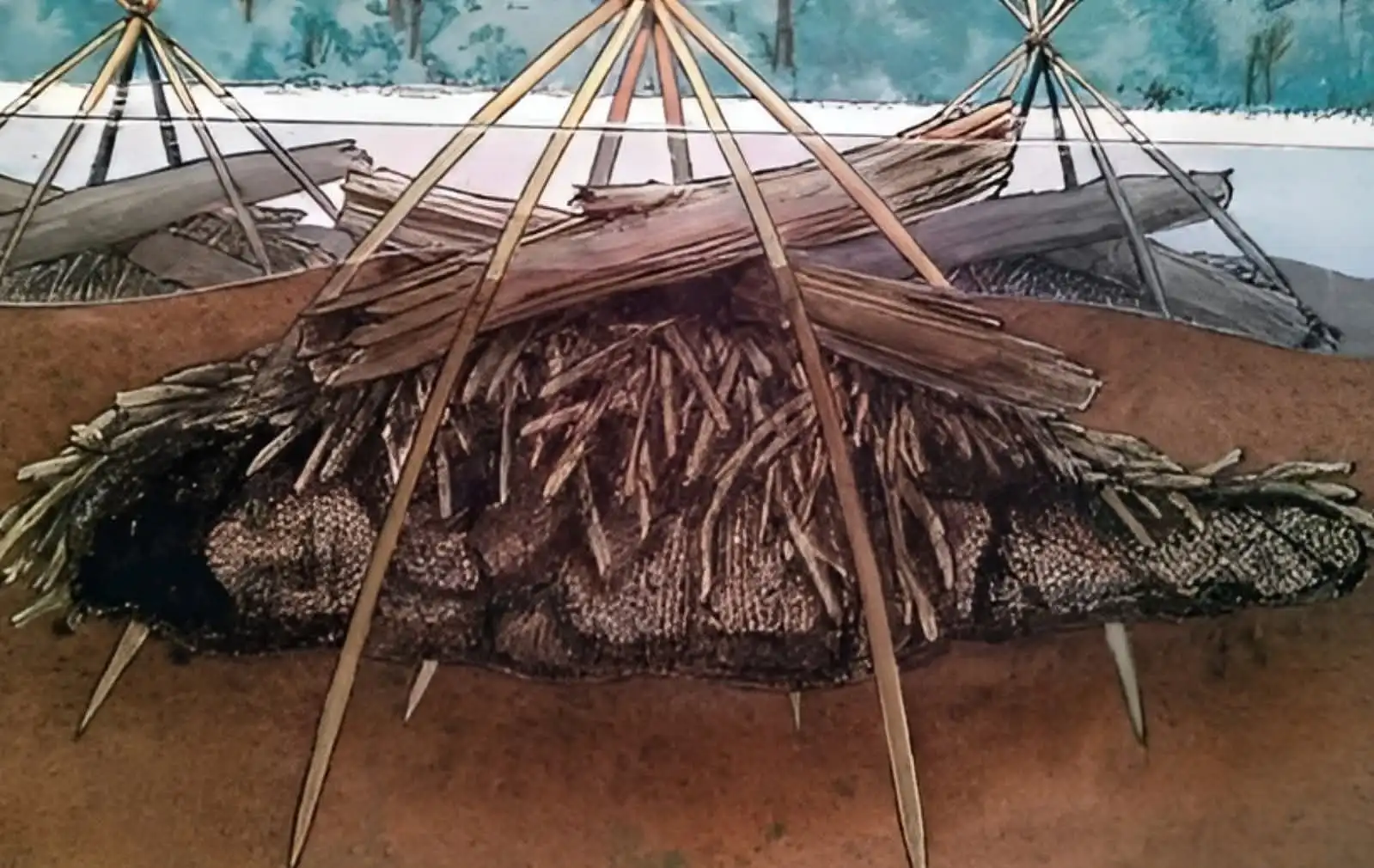
Even more crucially, the community buried their dead within 24 to 48 hours of death, staking the bodies underwater to prevent them from floating. This rapid burial in cold, still water allowed soft tissues — especially the brain — to survive for thousands of years.
The recovered brain tissue is the oldest preserved human brain material ever found in the Americas, and it has allowed researchers to extract ancient DNA, providing unprecedented genetic insights into early North American populations.
Ritual and Reverence: Burial Customs at Windover
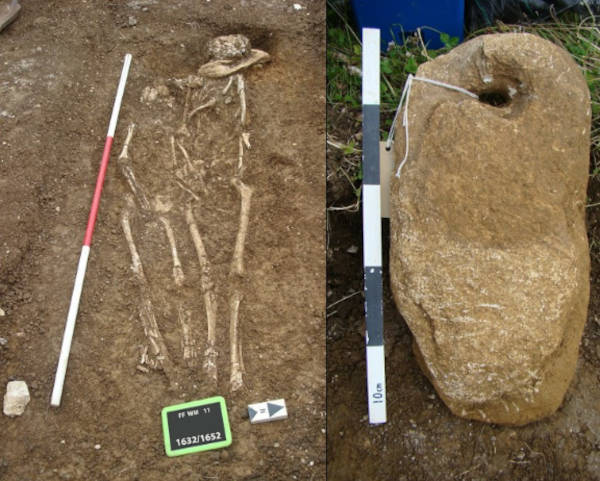
Each burial at Windover was performed with meticulous care and ritual significance. The deceased were typically placed on their left sides, with heads facing west and faces turned north — a pattern that may have reflected spiritual beliefs or cosmological symbolism.
Bodies were often curled into fetal positions, perhaps symbolizing rebirth or the cyclical nature of life. Archaeologists even found evidence that stakes were used to keep the bodies submerged, preventing them from rising to the surface of the pond.
Grave goods were carefully arranged alongside the bodies:
-
Children were buried with carved wooden toys and textiles.
-
Adults were interred with personal belongings, including bone awls, weaving tools, and plant remains.
-
Some individuals were wrapped in woven fabric shrouds, representing some of the earliest known examples of textile production in the Americas.
These practices reflect not only ritual but deep emotional and cultural meaning — an organized, empathetic society that honored its dead with remarkable tenderness.
Evidence of Compassion and Community Care
Windover’s remains reveal a society defined not by violence, but by care and compassion. One of the most compelling findings was that of a 15-year-old boy with spina bifida, a severe spinal condition that would have limited his mobility. Yet, he survived into adolescence — proof that his community nursed and supported him through life.
Another remarkable skeleton belonged to a 50-year-old woman, an advanced age for the period. She had multiple healed fractures and arthritis, suggesting long-term survival despite physical hardship — evidence of community caregiving and social cooperation.
These findings challenge outdated stereotypes of prehistoric life as brutal and short. Instead, Windover portrays an empathetic society, where individuals were valued and cared for, regardless of their abilities.
Ancient Medicine: Plants and Healing Practices
Among the most fascinating discoveries at Windover were remnants of thirty types of plants, many of which were edible or medicinal. Archaeologists found traces of elderberry, nightshade, holly, and wax myrtle — species known for their healing properties in later Indigenous traditions.
These findings suggest that the Windover people possessed a deep knowledge of botany and herbal medicine, using plants to treat illness, relieve pain, and possibly perform ritual purification. The plant remains, preserved in the peat alongside woven baskets and tools. Offer a rare glimpse into prehistoric healthcare practices and the early origins of medical knowledge in North America.
Who Were the Windover People?
The Windover population lived during the Early Archaic period, a time when Florida’s environment was cooler and drier than today. These people were hunter-gatherers, relying on the nearby wetlands for fish, plants, and small game.
Isotopic and DNA analysis reveals that they were ancestral to modern Indigenous peoples of the Southeast. Though not directly related to any single tribe. Their lifestyle was stable and sustainable, characterized by seasonal movement, strong kinship bonds, and an intimate relationship with nature.
Despite their prehistoric context, the Windover people displayed remarkable cultural sophistication — weaving textiles. Creating tools, and maintaining social systems rooted in cooperation and respect.
Scientific Breakthroughs: DNA and Forensic Insights
Because the brain tissue and bone collagen were so well preserved. Windover became the first prehistoric site in North America to yield viable ancient DNA. This genetic material offered groundbreaking insights into early human migration patterns and genetic diversity.
The DNA showed affinities with ancient Asian and Native American lineages. Supporting theories that early peoples migrated to Florida through coastal routes. After crossing the Bering land bridge thousands of years earlier.
Windover’s genetic findings continue to shape our understanding of how the Americas were populated. Bridging anthropology, genetics, and archaeology in unprecedented ways.
Preservation, Ethics, and Legacy
Today, the Windover site is recognized as a National Historic Landmark. And all excavations have ceased to protect the integrity of the burial ground. The human remains have been respectfully studied, documented, and reinterred in accordance with Native American cultural and ethical guidelines.
Artifacts recovered from the site — including tools, fabrics, and reconstructions. Are curated by the Florida Museum of Natural History and other research institutions. Ensuring that the story of Windover remains accessible for education and remembrance.
Conclusion: The Humanity Beneath the Waters
The Windover archaeological site in Florida is far more than an ancient burial ground. It is a story of humanity at its core. Through the quiet peat of a small pond, the Windover people speak across 8,000 years. Telling of compassion, care, and community long before the rise of civilization as we know it.
Their legacy reminds us that empathy, creativity, and reverence for life are not modern inventions but timeless traits of humankind. Beneath the waters of Windover, we do not simply uncover the dead; we rediscover what it means to be human.
ALSO READ: Tutankhamun’s Fire-Making Device: The Ancient Egyptian Flint-and-Steel Lighter