The Oseberg Ship: A Majestic Viking Burial Unearthed from Norway’s Past⚓
Unearthing a Viking Masterpiece
Discovered in 1904 at Oseberg Farm near Tønsberg, Norway, the Oseberg Ship stands as one of the most breathtaking archaeological finds of the Viking Age. Dating to the early 9th century (around 834 CE), this elaborately decorated wooden vessel offers an unparalleled glimpse into the artistry, social hierarchy, and spiritual beliefs of Viking society.
Unlike simple seafaring vessels, the Oseberg Ship was used for a burial of exceptional status—a resting place for two high-ranking women surrounded by an astonishing collection of grave goods. Though looters had stolen the precious metals long before its discovery, what remained revealed the Vikings’ mastery of craftsmanship and their deep reverence for the journey to the afterlife.
The Discovery at Oseberg Farm
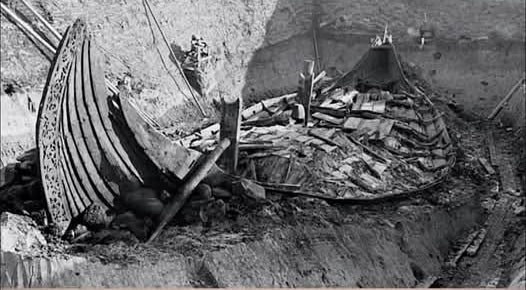
In August 1904, Norwegian farmer Olle Kløv stumbled upon pieces of wood while digging into a mound on his land in Vestfold County. Recognizing their significance, archaeologist Gabriel Gustafson and Professor Haakon Shetelig from the University of Oslo led the excavation that would soon make world history.
What they uncovered was nothing short of spectacular: a 21.5-meter-long oak ship, nearly intact after more than a thousand years underground. The vessel lay within a burial mound—known as the Oseberghaugen—along with the remains of two women and a stunning array of artifacts that reflected immense wealth and social prestige.
A Ship Fit for Royalty
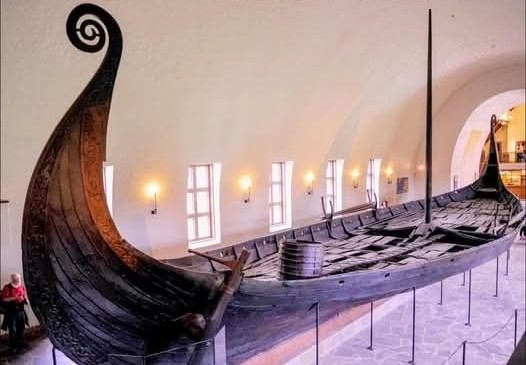
The Oseberg Ship is a masterpiece of Viking craftsmanship. Built around 820 CE, it features an elegant design with sweeping curves and intricately carved animal-head motifs adorning the prow and stern. Constructed primarily from oak planks, the ship had 15 pairs of oar holes, suggesting it was both a functional seafaring vessel and a ceremonial craft.
Measuring approximately 21.5 meters (70 feet) long and 5 meters (16 feet) wide, the ship could carry a crew of up to 30 rowers. Its beauty and elaborate detailing indicate that it was likely a symbol of power and prestige, possibly belonging to a noblewoman or queen.
The Burial Chamber and Its Mysteries
At the center of the ship lay a burial chamber constructed from timber, containing the remains of two women. Archaeological analysis revealed that one was between 70–80 years old, while the other was in her 50s. The older woman appeared to have been of high status, possibly a queen, priestess, or chieftain’s wife, while the younger may have been a companion or servant sacrificed to accompany her in death.
Adding to the enigma, archaeologists found the remains of 15 beheaded horses, an ox, and four dogs—animals believed to have been ritually sacrificed to serve the deceased in the afterlife. This vivid tableau provides valuable insights into Viking spiritual beliefs, where death was viewed not as an end but as a voyage to another realm.
A Treasure Trove of Artifacts
The grave goods found aboard the Oseberg Ship were remarkable in both quantity and craftsmanship. They included:
-
Beautifully carved wooden sleighs and carts, adorned with intricate animal motifs
-
Textiles and tapestries, including fragments of silk imported from Asia
-
Buckets, chests, and beds crafted from fine wood
-
Kitchen utensils and tools, symbolizing domestic life and ritual needs
-
Animal-head posts, whose exact purpose remains mysterious
Each item reflected the deceased’s high rank and the Viking belief that material possessions accompanied the soul on its journey beyond death. The textiles, in particular, are among the oldest surviving woven fabrics in Scandinavia, revealing a surprising sophistication in Viking textile production.
The Artistry of the Oseberg Ship
The ship’s carvings are among the finest examples of Viking art in the “Oseberg style”, a decorative tradition characterized by intertwining animal figures and flowing geometric patterns. These carvings depict serpents, dragons, and other mythological creatures, suggesting symbolic connections to protection, rebirth, and transformation.
Such designs were not merely ornamental—they represented the Viking worldview, blending mythology with maritime life. The ship itself likely symbolized the journey to Valhalla or the afterlife, carrying the deceased across the cosmic seas toward eternal rest.
Who Were the Oseberg Women?
The identity of the women buried in the Oseberg Ship has long fascinated historians. While their names are lost to time, scholars have proposed several theories:
-
One may have been Queen Åsa, mother of Halfdan the Black and grandmother of Harald Fairhair, Norway’s first king.
-
Others suggest she was a völva or seeress, a female shaman of immense spiritual power in Norse society.
The inclusion of ritual objects, ceremonial wagons, and sacrificial animals supports the idea that she held religious or political authority, symbolizing the sacred role of women in Viking culture.
Looting and Loss
Unfortunately, by the time archaeologists excavated the mound. Grave robbers had already plundered the burial centuries earlier, taking all precious metals and jewelry. However, what remained—wooden artifacts, fabrics, and skeletal remains—offered invaluable insight into Viking life, death, and artistry.
Despite the looting, the Oseberg Ship remains one of the best-preserved Viking vessels ever found. Far surpassing similar finds in richness and completeness.
Preservation and Display: From Earth to Museum
After the excavation, the ship was carefully restored and reconstructed. Today, the Oseberg Ship is displayed at the Viking Ship Museum in Oslo, Norway, alongside the Gokstad and Tune ships.
Conservation efforts continue to protect the fragile wood, which began deteriorating after exposure to air. Modern preservation techniques, including humidity control and chemical stabilization, ensure that this ancient masterpiece endures for future generations.
In 2025, the ship will move to the new Museum of the Viking Age in Oslo. Featuring advanced preservation facilities and immersive exhibits that tell the story of Viking seafaring and spirituality in greater depth.
The Cultural Legacy of the Oseberg Ship
The Oseberg discovery reshaped global understanding of the Viking Age. Far from being mere raiders and warriors, the Vikings were also artists, engineers, and spiritual thinkers. The ship exemplifies their sophisticated craftsmanship, complex social hierarchies, and deep connection to both land and sea.
Moreover, the Oseberg Ship symbolizes the central role of women in Norse culture—leaders, priestesses, and visionaries. Whose influence shaped Viking spiritual and political life. The burial underscores the respect and reverence accorded to powerful women within early Scandinavian society.
Conclusion: The Timeless Voyage of the Oseberg Ship
More than a millennium after its burial, the Oseberg Ship continues to capture the world’s imagination. It is not just a relic of the past but a living story carved into oak and myth. A window into the Viking soul that celebrates art, honor, and the eternal voyage beyond death.
Standing before it today, visitors are transported across centuries. To an age when ships were sacred, craftsmanship divine, and the sea itself a bridge between worlds.
The Oseberg Ship remains a powerful symbol of Norway’s cultural heritage. Echoing the voices of those who once sailed the northern seas and reminding us that history, like the ocean, never truly stands still.