Tutankhamun’s Fire-Making Device: The Ancient Egyptian Flint-and-Steel Lighter
The Mysterious “Lighter” of Tutankhamun’s Tomb
Among the thousands of treasures discovered in Tutankhamun’s tomb (r. 1332–1323 BC), few have sparked as much curiosity as a small, unassuming wooden tool with holes and burn marks. Some modern scholars and enthusiasts have proposed that this object might represent an ancient Egyptian fire-starting device — a type of flint-and-steel lighter long before such tools were common in human history.
Discovered in 1922 by Howard Carter in the Valley of the Kings, this artifact offers a glimpse into the ingenuity and ritual sophistication of ancient Egypt. Whether used for lighting sacred incense, ceremonial lamps, or domestic fires, it highlights the Egyptians’ remarkable understanding of mechanical friction and controlled ignition — the very principles behind modern fire-making tools.
Discovery in the Tomb of Tutankhamun
When British archaeologist Howard Carter opened KV62, the tomb of Tutankhamun, he uncovered a wealth of artifacts — over 5,000 items, from golden thrones and jewelry to simple household tools. Among these, a small wooden device, roughly the size of a palm, stood out for its peculiar design.
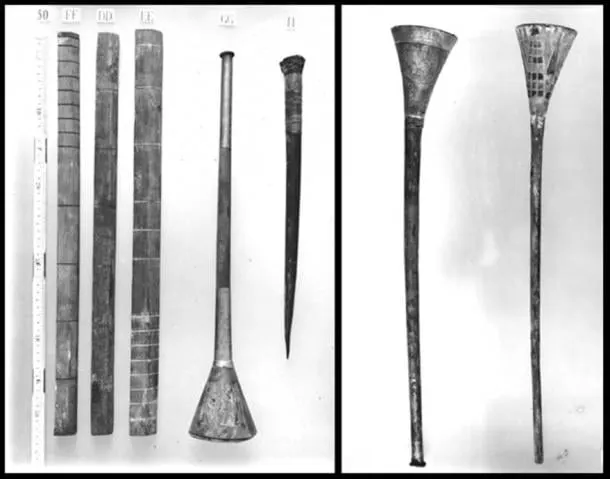
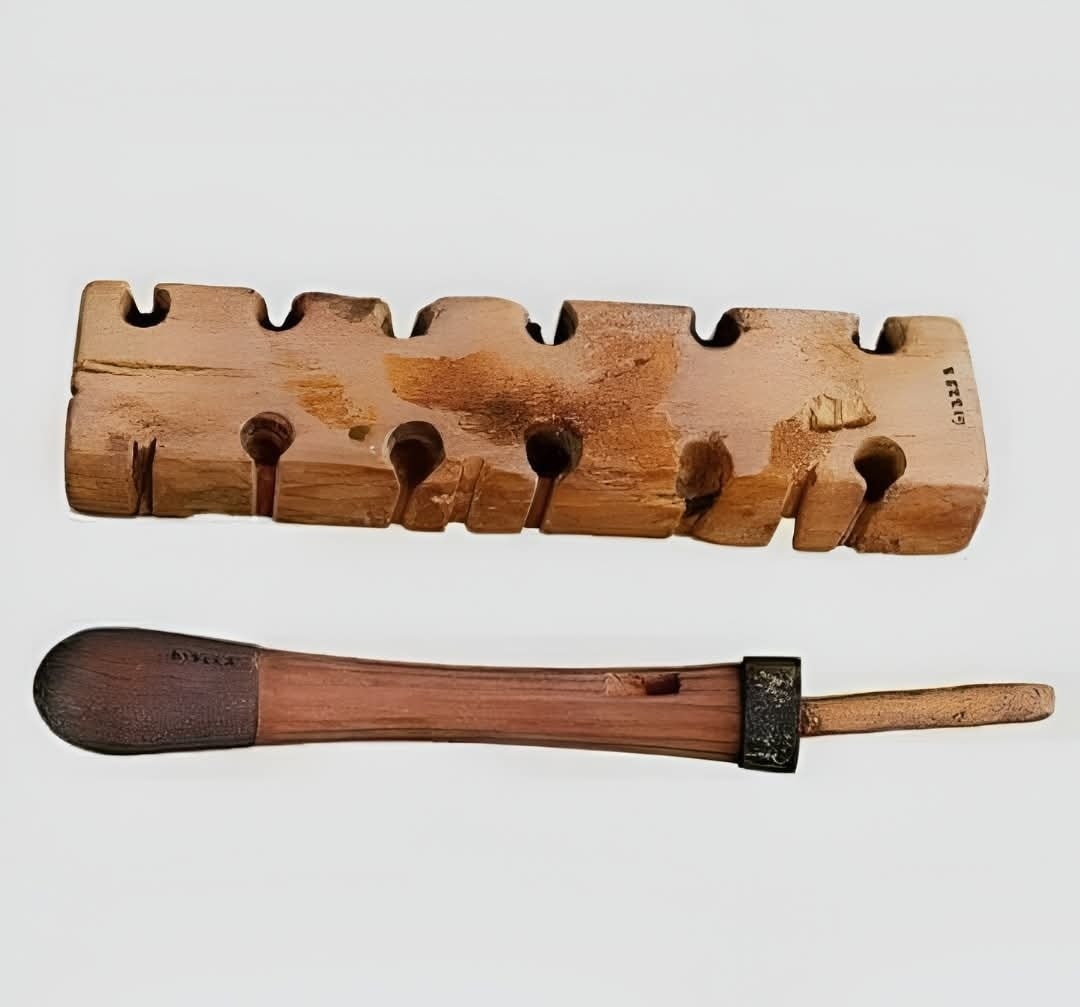
The artifact contained multiple small holes, each showing signs of friction or wear, and was accompanied by slender spindles or rods that might have been rotated within these cavities. Though its purpose was initially uncertain, later interpretations suggested it could have been a fire-making tool, a hypothesis supported by experimental archaeology and ethnographic parallels.
Description of the Artifact
The so-called Tutankhamun fire-starting device is made primarily of wood, with several circular cavities or sockets carved into its surface. These sockets may have been designed to hold spindles, which, when rotated rapidly, generated heat through friction — eventually creating sparks or embers capable of igniting kindling.
In some interpretations, the device may have worked in tandem with bow drills or flint pieces, similar to how later fire-drilling methods operated across ancient civilizations. The presence of scorch marks and blackened residue on the surface suggests it indeed came into contact with heat or flame at some point.
How the Device Worked: Ancient Fire-Making Techniques
The ancient Egyptians were no strangers to the art of fire-making. Long before Tutankhamun’s reign, they had mastered the use of flint, pyrite, and friction-based tools to generate sparks.
This artifact likely functioned on the same principles used in fire drills:
-
A wooden base with small sockets (the one found in Tutankhamun’s tomb).
-
A wooden or reed spindle inserted into one of the holes.
-
The spindle rotated rapidly, either by hand or with a bow mechanism, generating frictional heat.
-
Dried tinder or fibrous material placed nearby would catch the spark, allowing a small flame to form.
Once ignited, this flame could be used to light oil lamps, incense burners, or ritual fires in temples and tombs.
Symbolism of Fire in Ancient Egyptian Culture
In ancient Egyptian religion and daily life, fire held deep symbolic meaning. It represented life, transformation, protection, and divine energy. The flame was not just practical but spiritual, believed to connect the human and divine realms.
Priests used fire to:
-
Light incense during rituals dedicated to the gods.
-
Purify offerings and temple spaces.
-
Symbolize the eternal flame of the sun god Ra, who journeyed across the sky each day and through the underworld each night.
Given this sacred context, a fire-starting device in a royal tomb like Tutankhamun’s may not have been a mere utility. It could have held ritual significance, symbolizing the eternal renewal of light and life for the young pharaoh in the afterlife.
The Modern Interpretation: A “Flint-and-Steel” Lighter of Antiquity
The term “flint-and-steel lighter” is, of course, a modern analogy — ancient Egyptians did not use steel or mechanical spark wheels. However, this artifact’s function and ingenuity closely resemble the concept behind modern lighters: a portable tool for creating controlled fire.
Scholars emphasize that the interpretation remains theoretical, as no written record explicitly describes such a device. Still, similar fire-drilling tools have been documented in other ancient cultures, from Mesopotamia to China, lending credibility to the hypothesis.
The combination of wood, friction, and mechanical precision demonstrates that the Egyptians possessed advanced knowledge of physics and materials. They understood how to generate and sustain fire — not only for survival but for ceremony, worship, and symbolism.
Ritual Use in the Afterlife
Why would Tutankhamun’s tomb contain a fire-making device? The answer likely lies in Egyptian funerary beliefs.
Fire was central to the concept of rebirth and transformation. The Egyptians believed that light and flame could guide the soul (ka) through the darkness of the underworld, ensuring safe passage to the realm of the gods.
The inclusion of such an object may have symbolized:
-
The renewal of light in the afterlife.
-
The purification of the tomb and offerings.
-
The continuation of ritual practice even beyond death.
Thus, what might appear as a simple tool was likely imbued with profound spiritual meaning.
Technological Ingenuity of the Ancient Egyptians
This fire-starting artifact is one of many examples demonstrating the technological sophistication of ancient Egypt. From constructing the pyramids to crafting surgical instruments, the Egyptians combined artistry with scientific understanding in nearly every aspect of life.
Their experimentation with frictional heat, combustion, and material properties shows an early grasp of mechanical energy conversion — concepts that form the foundation of modern engineering.
While the device may not be a direct ancestor of the modern lighter, it represents a remarkable precursor to later fire-making innovations, bridging the gap between ritual craftsmanship and practical invention.
Scholarly Perspectives and Experimental Archaeology
Researchers have conducted replica experiments using similar materials to reconstruct how the Tutankhamun device might have functioned. These experiments confirmed that with proper materials — such as softwood bases, hardwood spindles, and dry tinder — it is indeed possible to generate enough heat to produce fire.
While not all Egyptologists agree on this interpretation, most acknowledge the artifact as a demonstration of ancient mechanical skill. Whether it was used for ritual ignition or symbolic representation, its design reflects intentional craftsmanship and scientific awareness.
Legacy: Fire as the Eternal Symbol of Life
The fire-making device of Tutankhamun stands as a small yet powerful reminder of ancient Egypt’s brilliance. It merges science, ritual, and symbolism in a single object — a testament to a civilization that understood not only how to build great monuments, but how to harness the elemental forces of nature.
Over 3,000 years later, this artifact continues to fascinate historians, engineers, and archaeologists alike. It represents humanity’s timeless quest to control fire — the same force that shaped civilization, technology, and spiritual belief.
ALSO READ: The Sail Rock – Nature’s Monument by the Sea