The Sleeping Guardian of the Desert – Nature’s Accidental Sculpture
The Desert’s Silent Guardian
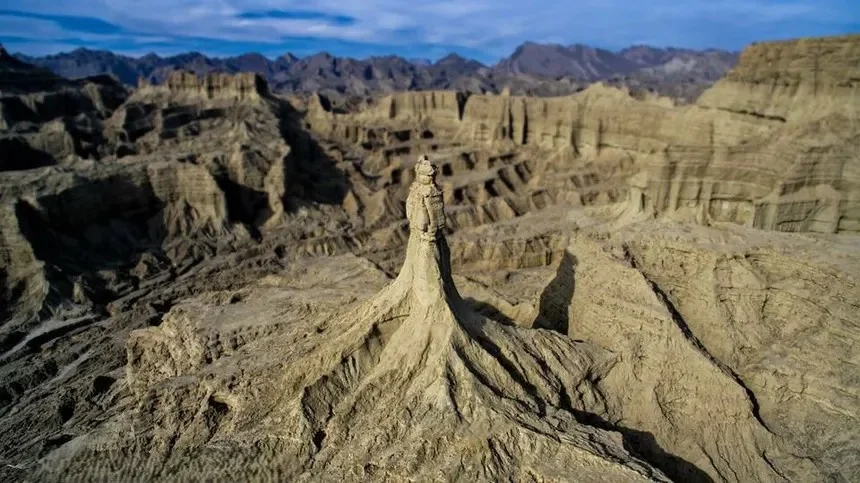
In the vast, sunbaked expanse of Balochistan’s Makran Desert, a silent figure gazes toward eternity — her features calm, her stance regal. She is known as the Princess of Hope, a breathtaking rock formation that seems almost alive, as though carved by ancient hands to guard the horizon.
But this “princess” is no human creation. She is the Sleeping Guardian of the Desert, shaped by millennia of wind, sand, and erosion. Nature itself has sculpted her — layer by layer, grain by grain — from the sedimentary rocks of an ancient seabed, transforming geological time into living form.
Standing tall within Hingol National Park, the Princess of Hope is more than a landmark. She is a symbol of resilience, solitude, and the mysterious artistry of nature — a masterpiece born not of design, but of patience.
The Location: A Desert of Wonders
📍 Where the Princess Watches
The Princess of Hope is located within Hingol National Park, Pakistan’s largest national park, spread across the rugged Makran coastal region of Balochistan. The park stretches along the Arabian Sea, about 190 kilometers from Karachi, and encompasses arid plains, rocky cliffs, and winding river valleys.
The formation stands within a landscape that feels almost otherworldly — a labyrinth of erosional pillars, mudstone ridges, and weathered spires that seem frozen mid-transformation. In this setting, the Princess of Hope rises gracefully from the desert floor, her silhouette unmistakable against the pale golden sky.
Hingol National Park is also home to unique wildlife — ibex, chinkara, and the rare Sindh leopard — as well as geological phenomena like the mud volcanoes of Kund Malir, making it one of the most diverse natural reserves in South Asia.
The Formation: Nature’s Accidental Sculpture
🌬️ Sculpted by Wind and Time
The Princess of Hope was not carved by human tools but forged by erosion, shaped over millions of years by the forces of wind, rain, and tectonic uplift.
Originally part of sedimentary rock layers laid down under an ancient sea, these cliffs were gradually exposed through plate movement and weathering. Constant abrasion by windborne sand slowly etched away softer layers, leaving behind harder ridges that now resemble the folds of a robe and the contours of a face.
The result is astonishing: a naturally formed figure that appears to stand upright, her head tilted slightly upward, as though gazing into infinity. Her “features” — though entirely coincidental — mirror human expressions of serenity and strength.
🪨 The Science of Erosion
Geologists classify the Princess of Hope as an erosional remnant, formed when surrounding material is stripped away by natural elements. The Makran coastal range is composed primarily of mudstone, shale, and sandstone, which respond differently to erosion.
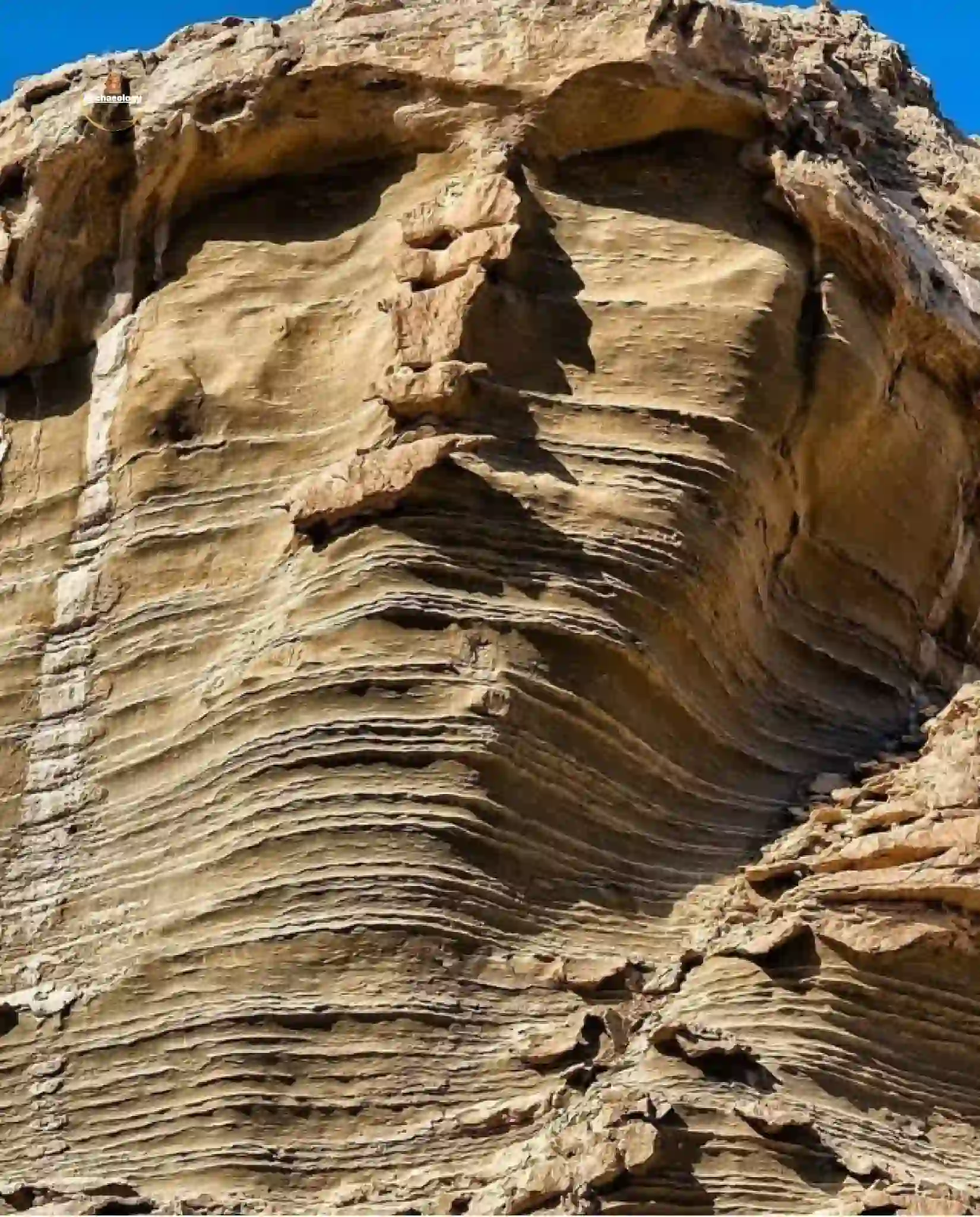
Over time, this uneven weathering creates the illusion of shape and form. The fine details — such as the folds, edges, and apparent facial lines — emerge as light and shadow play across the rock’s surface, accentuating its lifelike appearance.
In short, the princess is the product of physics and patience, a geological coincidence that echoes the artistry of sculpture.
The Name and Discovery
👑 From Unknown to Icon
The formation gained global attention when it was named “Princess of Hope” by Hollywood actress Angelina Jolie during her 2002 visit to Pakistan as a UN Goodwill Ambassador. Captivated by its elegance and resemblance to a standing woman, Jolie bestowed the poetic title — and it has endured ever since.
The name beautifully captures the essence of the landscape: a figure standing tall amid desolation, embodying endurance and optimism. To travelers and locals alike, she represents both hope and timeless beauty, an emblem of nature’s quiet strength.
📸 A Symbol of Tourism and National Pride
Today, the Princess of Hope has become one of Pakistan’s most photographed natural landmarks. Her image often appears in travel guides, documentaries, and promotional materials highlighting the country’s hidden wonders.
Tourists visiting Hingol National Park frequently pair their journey with a trip to the nearby Hinglaj Mata Temple, a sacred Hindu pilgrimage site nestled within the same desert terrain. Together, these destinations reflect the fusion of geology, spirituality, and cultural heritage that defines the region.
The Geological and Historical Context
🌊 From Sea to Desert
Millions of years ago, the area now known as Balochistan’s Makran coast lay beneath a shallow sea. Over time, sediments accumulated layer by layer, compacting into mudstone and sandstone. Later, tectonic shifts associated with the collision of the Indian and Eurasian plates uplifted the seabed, forming dramatic cliffs and ridges.
As sea levels receded and the coastline retreated, wind erosion took over, shaping the landscape into surreal formations. The Princess of Hope, standing tall among these natural sculptures, is a direct result of this geological evolution — a remnant of Earth’s ancient transformation from ocean floor to arid desert.
The Symbolism: Hope in the Harshness
🌅 A Figure of Strength and Solitude
The Princess of Hope resonates not just for her beauty but for what she represents. Against a backdrop of vast emptiness, she stands alone — unmoved by storms or time. For many, she has become a symbol of perseverance, a poetic embodiment of human emotion within the stillness of stone.
Travelers often describe her presence as haunting yet peaceful. From some angles, her profile resembles that of a woman gazing skyward; from others, a sentry keeping watch over the endless desert.
In this way, she reflects the universal archetype of guardianship and endurance — timeless, solitary, and steadfast amid the shifting sands.
Visiting the Princess of Hope
🚙 How to Get There
The Princess of Hope is accessible via the Makran Coastal Highway, one of Pakistan’s most scenic routes, connecting Karachi to Gwadar. The journey takes about 4 to 5 hours by car from Karachi, passing through Kund Malir Beach, another stunning coastal attraction.
Travelers should plan their visit during winter or spring, when temperatures are moderate. The site has minimal infrastructure, so it’s best to bring water, sun protection, and a sense of adventure.
📷 Best Viewing Times
-
Sunrise and Sunset: Soft light enhances the contours of the rock, making its human-like form most visible.
-
Full Moon Nights: The pale desert illuminated by moonlight gives the Princess an ethereal glow, perfect for photography.
The Eternal Artist: Nature’s Hand at Work
While the Princess of Hope looks sculpted, her existence reminds us that nature itself is the greatest sculptor. Given enough time, wind and water can achieve what human chisels cannot — turning ordinary rock into art.
Across the world, similar formations — from Utah’s hoodoos to Turkey’s fairy chimneys — echo this truth. Yet the Princess of Hope remains uniquely graceful and haunting, as if she were a guardian dreaming through eternity.
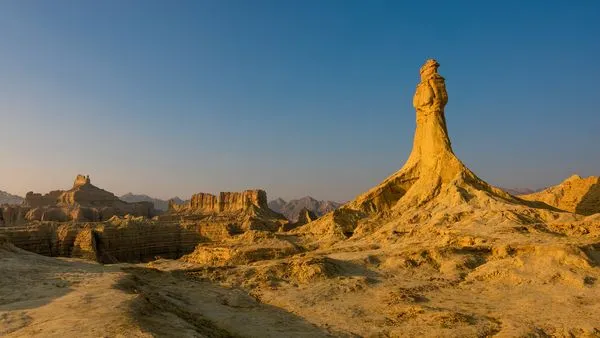
Her form challenges our understanding of beauty, urging us to see artistry not as human invention, but as the slow conversation between matter and time.
Conclusion: The Desert That Dreams
In the silence of the Makran Desert, the Princess of Hope stands eternal — not as a relic of human history, but as a monument to nature’s imagination.
Her chiseled form, born from wind and stone, whispers a timeless message: even in the harshest places, hope endures. She is both the Sleeping Guardian of the Desert and a reminder that within every grain of sand lies the potential for creation, beauty, and wonder.
ALSO READ: Ollantaytambo: The Living Inca Fortress of Precision and Power