The Perfect Chevron Mystery — Nature’s Precision or Ancient Engineering?
When Nature Imitates Art
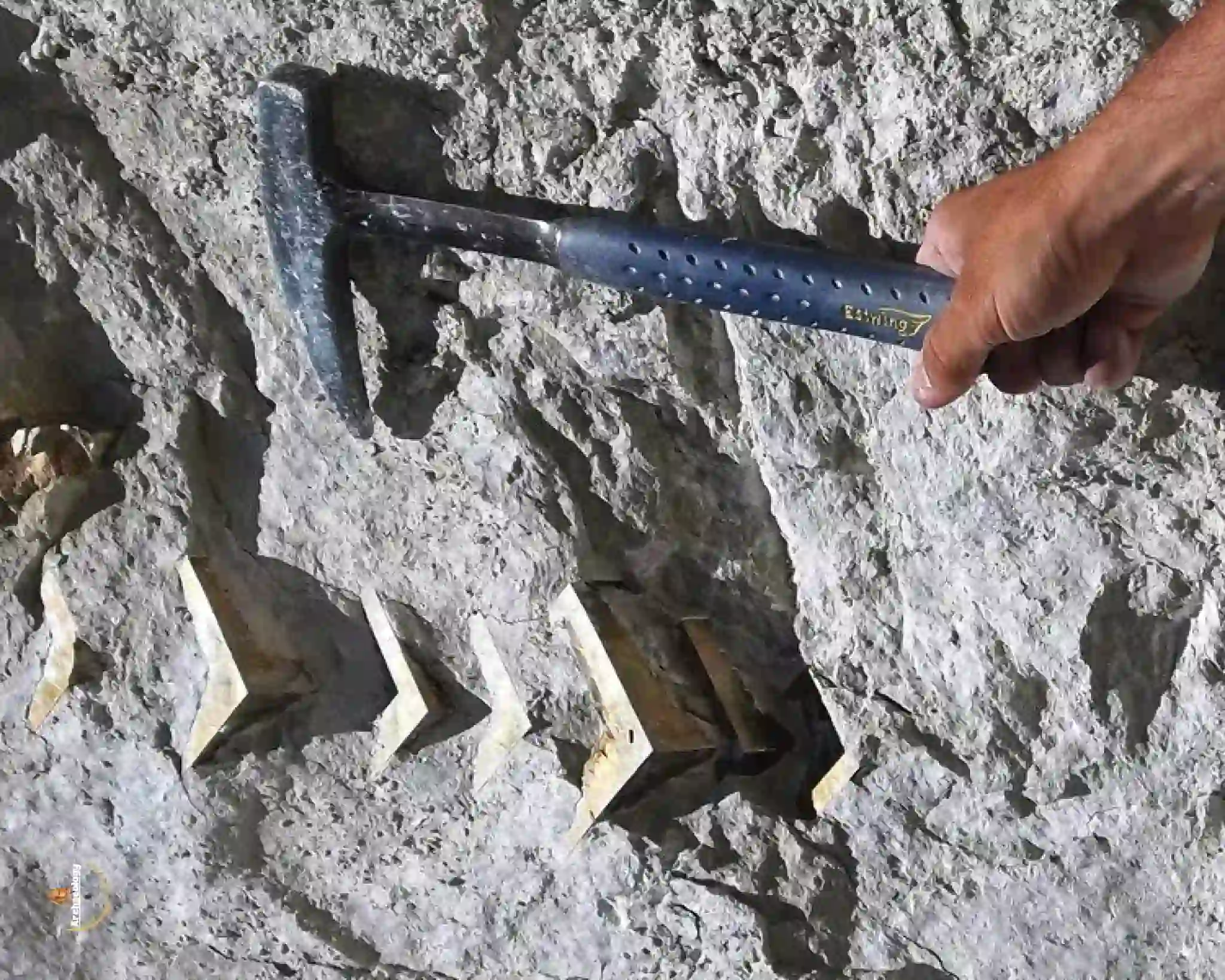
In the quiet majesty of the Alps, deep within ancient limestone outcrops, lies a geological enigma that has fascinated scientists and philosophers alike — the Perfect Chevron Mystery.
These chevron-shaped formations, sharp and symmetrical like precision carvings, are made not by human hands but by the slow and powerful artistry of nature itself. Formed over tens of millions of years, each chevron records the immense tectonic forces, mineral crystallization, and geological evolution that shaped the mountains.
To the untrained eye, the pattern appears almost engineered — deliberate V-shaped layers, perfectly aligned, as if some ancient civilization had etched geometry into stone. Yet beneath this illusion of design lies the truth of Earth’s own precision, a story of pressure, heat, and time woven into the very bones of the planet.
The Geological Context: Birth of the Chevron Formations
🌍 A Story Written in Stone
The chevron formations of the Alps are not unique to one location, but the examples found here are among the most striking on Earth. These patterns occur within limestone and metamorphic rock, often filled with calcite or quartz veins that crystallized in fractures caused by tectonic movement.
Over time, repeated cycles of compression and uplift caused the rock to fold and crack. Groundwater rich in dissolved minerals seeped into these fractures, depositing layers of calcite or quartz as it cooled. The process repeated, forming symmetrical V-shaped bands — the “chevrons.”
Each chevron represents a moment in geological time — a frozen record of stress, movement, and mineral growth. The result is a breathtaking pattern that seems almost too precise to be accidental.
The Science Behind the Symmetry
🔬 Tectonic Forces and Mineral Veins
Chevron formations arise from a combination of structural geology and mineral chemistry. When tectonic plates collide, they generate shear zones and compression folds in sedimentary rock.
These zones act as conduits for hydrothermal fluids — hot, mineral-laden water that fills fractures within the rock. As the fluid cools, minerals crystallize along the cracks, forming layered veins.
The V-shaped geometry occurs because the fractures often form at consistent angles during successive stress events, creating parallel mineral infill patterns. Over millions of years, erosion exposes these veins, revealing the spectacular chevrons we see today.
🧪 The Role of Calcite and Quartz
The most common minerals in these veins are calcite (CaCO₃) and quartz (SiO₂).
-
Calcite veins form under lower temperature and pressure conditions, often in limestone host rocks.
-
Quartz veins develop under higher pressure and temperature, indicating deeper or more intense tectonic activity.
By analyzing these minerals, geologists can trace tectonic histories — learning when and how the rocks folded, fractured, and healed. Each vein, therefore, is not just an aesthetic wonder but a scientific record of Earth’s mechanical evolution.
The Allure of Ancient Engineering
🏗️ Natural Geometry or Human Craftsmanship?
Throughout history, natural formations with geometric precision have often inspired speculation about ancient engineering or lost civilizations. The Perfect Chevron Mystery is no exception.
To some observers, the sharp symmetry and deliberate angles resemble ancient architectural motifs — from Egyptian chevron carvings to Mesopotamian zigzag reliefs. Could ancient builders have been inspired by these natural shapes, or is it possible that some of these patterns were even mistaken for human creations?
While no archaeological evidence suggests human intervention, the psychological impact of symmetry is undeniable. Humans are hardwired to associate order with intention — so when nature produces near-perfect geometry, it naturally evokes wonder.
🧭 A Dialogue Between Science and Mystery
Rather than diminishing the awe of discovery, understanding the geological origins of these formations deepens our appreciation. Nature, through sheer persistence and physics, achieves levels of precision that rival any human engineer.
It is in this intersection — between chaos and order, accident and artistry — that the Perfect Chevron Mystery truly lives.
Tools of Discovery: How Geologists Study the Chevron Veins
🪓 Fieldwork and Observation
In the field, geologists use rock hammers, compasses, and mapping grids to study chevron formations. The hammer often seen in photos serves not just as a scale reference but as a key tool for breaking open rock samples and revealing cross-sections of mineral veins.
📏 Data and Analysis
Researchers measure the angles of the V-shapes, the composition of the minerals, and the orientation of fractures. These data points help reconstruct the tectonic stress directions that shaped the formations.
💻 Modern Technology in Geology
Today, advanced technologies like X-ray diffraction (XRD), isotopic analysis, and 3D geological modeling allow scientists to analyze the chevrons in microscopic detail. These methods reveal mineral growth sequences, fluid origins, and the precise geological timeline of formation.
In essence, every chevron becomes a window into Earth’s deep-time processes, allowing scientists to decode the language of rocks.
The Beauty of Symmetry in Nature
🌐 Patterns Across Scales
The Perfect Chevron Mystery is part of a broader theme — nature’s love for symmetry and repetition. Similar V-shaped or zigzag patterns appear in tree growth rings, river deltas, and even in biological structures like fish bones and leaves.
From the microscopic crystals of snowflakes to the folded strata of mountains, nature follows mathematical rules that give rise to order. The chevrons are simply one of the most visible expressions of this universal tendency.
🎨 Nature’s Design and Human Inspiration
Artists, architects, and philosophers have long drawn inspiration from such natural geometry. The precise V-shaped motifs seen in ancient temples, textiles, and sculptures may reflect humanity’s fascination with the same symmetrical order displayed in rocks like these.
In this sense, the Perfect Chevron Mystery isn’t just a geological curiosity — it’s a symbol of the shared language between nature and art, written across both stone and imagination.
Enduring Legacy: Lessons from the Chevron Formations
The chevrons of the Alps remind us of a profound truth: time and pressure create beauty. What appears as a sculpted design is, in fact, the product of slow, relentless natural processes — millions of years of geological transformation expressed in a single elegant pattern.
They teach us that precision is not exclusive to human hands. Nature itself can craft with intention, forming patterns so perfect they defy comprehension.
As we study and admire the Perfect Chevron Mystery, we glimpse not just the power of Earth’s forces but the artistry embedded in creation itself — an eternal dance between physics and poetry.
Conclusion: Where Science Meets Wonder
The Perfect Chevron Mystery stands at the crossroads of geology and imagination. It bridges the gap between science and spirituality, between what we can measure and what we can marvel at.
Whether seen as Earth’s geometry or ancient craftsmanship, these chevron veins remind us that nature is the ultimate engineer — capable of sculpting order from chaos, symmetry from stress, and beauty from the silent passage of time.
ALSO READ: The Giant Dragonfly of Prehistoric Skies — Earth’s First Aerial Predator