Uncovering Guthlac’s Legacy: Archaeological Discoveries at Crowland Abbey
Uncovering Guthlac’s Legacy: Archaeological Discoveries at Crowland Abbey
The rich tapestry of England’s history often lies hidden beneath the surface, waiting to be unearthed by curious eyes and careful hands. One such fascinating story revolves around the archaeological exploration of Crowland Abbey, where experts sought to identify the repurposed barrow of a medieval English hermit named Guthlac, chronicled in an 8th-century A.D. account. This journey has not only shed light on Guthlac’s life but also revealed a landscape of prehistoric monuments intertwined with medieval structures, offering an extraordinary glimpse into England’s layered past.
Who Was Saint Guthlac?
Saint Guthlac of Crowland was an Anglo-Saxon hermit and monk who lived during the late 7th and early 8th centuries. Born into a noble family, Guthlac renounced worldly life to embrace a solitary existence in the marshlands of Crowland, Lincolnshire. His devout lifestyle and reputed miracles made him a celebrated figure, inspiring religious devotion and chronicled accounts that have survived for centuries.
According to hagiographic texts, Guthlac resided in a repurposed barrow, a burial mound from earlier times, which he transformed into a hermitage. These accounts, preserved in manuscripts like Felix’s Vita Sancti Guthlaci, have guided modern archaeologists in locating and interpreting the hermit’s dwelling.
Archaeological Excavations at Crowland Abbey
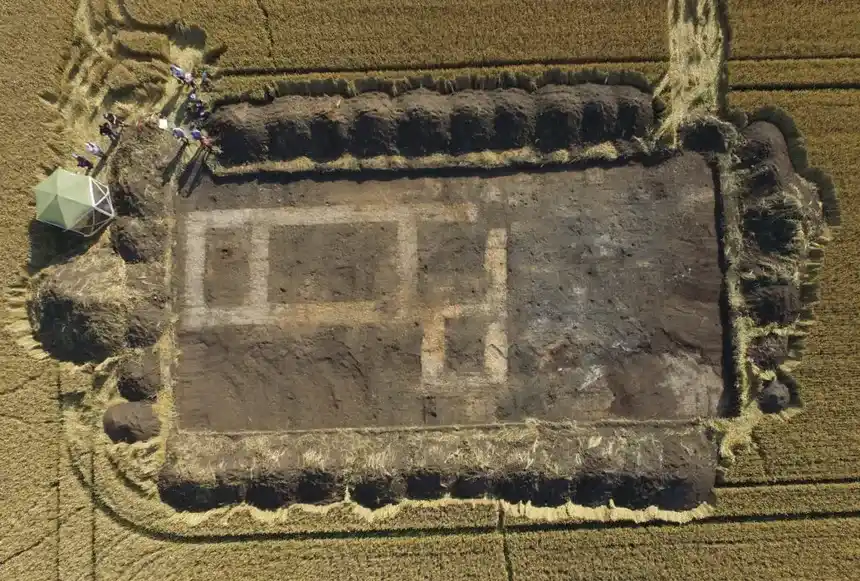
Recent archaeological investigations aimed to identify Guthlac’s barrow and understand the surrounding landscape. Excavators discovered not only the medieval remnants linked to Guthlac but also an impressive collection of prehistoric monuments, suggesting that the area had long-standing spiritual and cultural significance.
The excavations revealed layers of human activity spanning centuries:
-
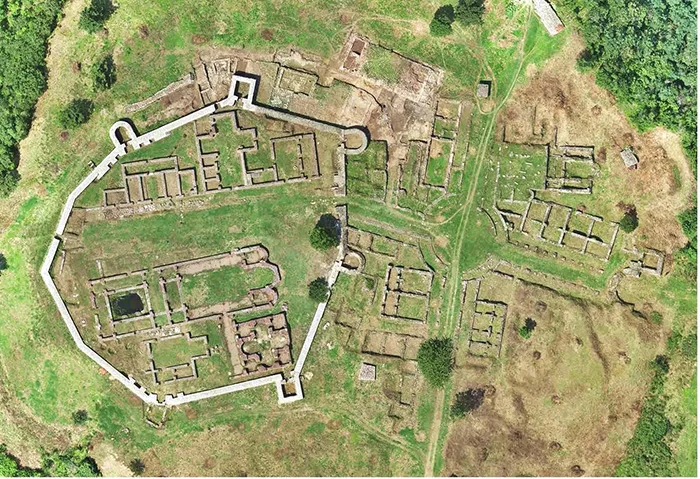
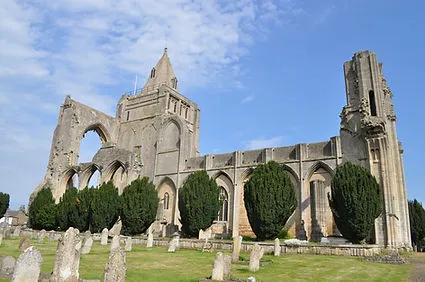
Medieval Structures: Archaeologists uncovered the remains of Crowland Abbey’s 12th-century hall and chapel, showing how the monastic community developed around Guthlac’s original hermitage. These structures highlight the evolution of religious architecture in the region and the Abbey’s significance as a spiritual center.
-
Prehistoric Monuments: Beneath the medieval layers lay evidence of earlier human occupation, including burial mounds, ritual sites, and other monumental constructions. This discovery emphasizes that Guthlac’s choice of hermitage was not arbitrary; he settled in a place already imbued with cultural and spiritual importance.
The interplay of prehistoric and medieval features in this landscape offers a unique opportunity to study continuity and change in human settlement and religious practice over time.
The Significance of Guthlac’s Barrow
Identifying Guthlac’s barrow provides crucial insights into the hermit’s life and the broader historical context of Crowland. The barrow, originally constructed for prehistoric burials, demonstrates the reuse of sacred spaces in medieval Christian practices. By converting a pagan site into a Christian hermitage, Guthlac and subsequent monastic communities symbolically connected with the land’s ancient heritage while asserting new religious ideals.
Archaeologists noted that the barrow’s orientation and structure align with both medieval ecclesiastical practices and older ritual traditions. This duality illustrates how religious and cultural memory persisted across centuries, bridging gaps between prehistory and the medieval period.
Crowland Abbey: A Medieval Religious Center
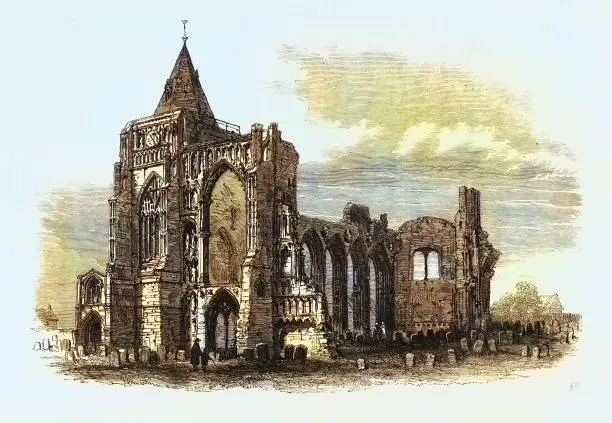
Crowland Abbey became an influential religious institution after Guthlac’s death in 714 A.D. Pilgrims flocked to the site to venerate the hermit, spurring the growth of a monastic community. Archaeological studies show how the Abbey expanded from humble beginnings into a complex with a hall, chapel, and ancillary buildings, reflecting both devotional needs and practical functions.
The 12th-century hall and chapel, in particular, provide a window into medieval monastic life. Excavations uncovered intricate stonework, remnants of altars, and burial markers, highlighting the Abbey’s architectural sophistication and its role as a spiritual hub in Lincolnshire.
Prehistoric Connections: Understanding the Ancient Landscape
Beyond the medieval structures, the discovery of prehistoric monuments underscores Crowland’s long-standing sacred significance. Burial mounds, earthworks, and other ritual installations suggest the area served as a cultural and religious center for centuries before Guthlac’s arrival.
Archaeologists propose that Guthlac’s selection of this site was deliberate, leveraging the spiritual resonance of earlier generations to enhance his hermitage’s sanctity. The coexistence of prehistoric and medieval elements exemplifies the layering of human activity, offering a rare opportunity to study how sacred landscapes evolve over time.
Implications for Heritage Preservation
These findings have far-reaching implications for heritage preservation and public education. Recognizing Crowland Abbey as a multi-layered archaeological site encourages efforts to protect both its medieval structures and underlying prehistoric features.
Preservation strategies focus on:
-
Structural Conservation: Maintaining the integrity of medieval ruins while preventing further degradation.
-
Landscape Management: Protecting prehistoric monuments and ensuring they remain visible within the Abbey’s grounds.
-
Public Engagement: Creating interpretive materials, guided tours, and digital reconstructions to educate visitors about the site’s complex history.
By combining conservation with educational outreach, Crowland Abbey can continue to inspire appreciation for England’s rich historical tapestry.
Conclusion
The archaeological exploration of Crowland Abbey has revealed a remarkable narrative that spans centuries. From Guthlac’s hermitage in a repurposed barrow to the medieval hall and chapel, and down to the prehistoric monuments beneath the surface, this site encapsulates the depth and continuity of human occupation in Lincolnshire.
Understanding Guthlac’s legacy within this layered landscape allows historians, archaeologists, and visitors alike to appreciate the intertwining of spiritual devotion, cultural memory, and architectural ingenuity. Crowland Abbey stands as a testament not only to the hermit’s enduring influence but also to the long history of human engagement with sacred spaces.
By preserving and studying this heritage, we ensure that the stories of Guthlac and the generations before him continue to inform and inspire future generations.