The Alutiiq Hunter’s Hat: A Masterpiece of Art, Identity, and Spiritual Connection in 19th-Century Alaska
A Glimpse Into Alutiiq Ingenuity
Among the many artistic and cultural treasures of Alaska’s Indigenous peoples, few are as evocative and meaningful as the Alutiiq hunter’s hat. Crafted between 1820 and 1860, this extraordinary piece of headwear stands as both a practical tool and a profound symbol of identity, spirituality, and achievement.
Created by the Alutiiq people—also known as the Sugpiaq—these hats were more than protection against the elements. They represented a fusion of artistry and survival, a tangible link between the hunter, the animal world, and the spiritual forces believed to guide both.
The Alutiiq People: Masters of the North Pacific Coast
The Alutiiq are an Indigenous people of the southern coast of Alaska, traditionally inhabiting areas around Kodiak Island, the Alaska Peninsula, and Prince William Sound. Skilled mariners, fishers, and hunters, they thrived in an environment where the ocean was both a provider and a powerful spiritual presence.
For the Alutiiq, subsistence was inseparable from spirituality. Every tool, garment, or ritual item held cultural and symbolic meaning. Within this worldview, the hunter’s hat was far more than a utilitarian object—it was an embodiment of a man’s identity, his skill, and his relationship with the sea and its creatures.
Craftsmanship: Precision in Every Curve
The creation of an Alutiiq hunter’s hat required exceptional craftsmanship and deep ecological knowledge. Traditionally, these hats were carved from driftwood or spruce, materials chosen for their lightness and durability in a marine environment.
Design and Structure
Each hat was shaped to a long, tapered form, designed to shield the hunter’s eyes from the sun’s glare and ocean spray. The shape was both functional and aesthetic—streamlined for sea travel and visually striking as a mark of individuality.
Hats were often painted with intricate patterns or adorned with natural materials, each choice reflecting personal and spiritual significance. The curvature of the brim and the angle of the crown were tailored to the wearer’s preference and role, revealing how closely artistry and practicality were intertwined.
Adornments That Tell a Story: Sea Lion Whiskers and Symbolism
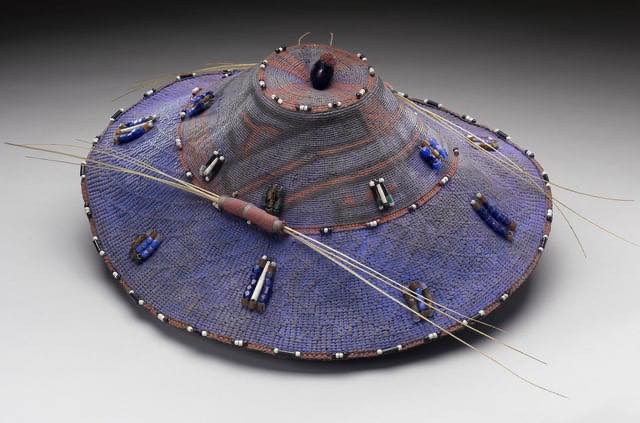
One of the most striking features of the Alutiiq hunter’s hat is its decoration with sea lion whiskers. Far from being mere ornamentation, these whiskers carried deep symbolic meaning.
Each Whisker as a Record of Triumph
Every whisker represented a sea lion successfully hunted, transforming the hat into a visual record of the hunter’s accomplishments. The more whiskers a hat bore, the more respect the wearer commanded within the community. These adornments celebrated not only individual skill but also a deep reverence for the animal itself.
Connection Between Hunter and Animal
In Alutiiq cosmology, hunting was a spiritual exchange. Animals were thought to offer themselves to hunters who showed proper respect and humility. Thus, the whiskers symbolized not just victories, but a reciprocal relationship—a recognition of the sea lion’s spirit and the interconnectedness of life.
The hat, adorned with these whiskers, became a sacred extension of this relationship, worn during hunts and ceremonies alike.
Function Meets Spirituality: More Than Just Protection
While richly symbolic, the Alutiiq hunter’s hat also served vital practical purposes. Its design was adapted to the harsh Arctic and subarctic climate, where hunters braved cold winds and blinding glare while navigating kayaks or umiaks (open skin boats).
Practical Advantages
-
Protection: The wide brim shielded the eyes from sunlight reflecting off the water and snow.
-
Visibility: Brightly painted designs helped other hunters spot companions across the waves.
-
Hydrodynamics: Lightweight construction ensured the hat stayed secure and balanced even in strong winds or during paddling.
In this sense, the hat’s elegance was inseparable from its utility—its artistry directly supported survival.
Social and Ceremonial Roles
Beyond hunting, the Alutiiq hunter’s hat was a marker of social identity and status. Wearing one was both a privilege and a declaration of one’s place within the community.
Symbols of Rank and Prestige
The level of decoration, complexity of design, and number of adornments often reflected the wearer’s rank, experience, or family heritage. Skilled hunters and community leaders would possess elaborately carved hats, sometimes passed down through generations as cherished heirlooms.
Ceremonial Significance
In ceremonial contexts, the hats were used to honor ancestors, spirits, and animal deities. They were worn during ritual dances, feasts, and hunting ceremonies, symbolizing gratitude for successful hunts and invoking protection for future ones.
These gatherings reinforced the Alutiiq worldview: that human success depended on harmony with the spiritual and natural worlds.
Materials and Techniques: Resourcefulness in Design
The materials used to construct an Alutiiq hunter’s hat reveal the ingenuity of Arctic peoples in utilizing the resources around them.
-
Wood: Typically spruce or driftwood, steam-bent into the desired shape.
-
Pigments: Natural paints derived from charcoal, ochre, and minerals, applied to create striking geometric or animal designs.
-
Adornments: Sea lion whiskers, feathers, and occasionally beads or ivory inlays for added detail.
-
Finish: Some hats were coated with natural oils or seal fat to make them water-resistant.
These methods required not only artistic skill but also deep environmental understanding—knowledge of materials’ properties, weather conditions, and spiritual significance.
The Hat as a Cultural Artifact
Today, surviving examples of Alutiiq hunter’s hats are preserved in museums around the world, including the Alutiiq Museum in Kodiak and major ethnographic collections in Europe and North America.
Each hat tells a story—not just of the individual who wore it, but of a people who thrived through ingenuity, artistry, and respect for nature. For modern Alutiiq descendants, these artifacts represent cultural resilience and continuity, serving as powerful symbols of identity and heritage.
Preservation and Revival of Alutiiq Traditions
In recent decades, there has been a revival of Alutiiq art and craftsmanship, driven by cultural leaders, artists, and educators seeking to reconnect with ancestral knowledge.
Reviving Ancient Techniques
Contemporary Alutiiq artisans are studying historic hats to relearn traditional carving, painting, and ornamentation techniques. This revival is part of a broader movement to reclaim and revitalize Indigenous identity after centuries of colonial disruption.
Educational and Cultural Importance
Workshops, museum programs, and exhibitions now celebrate the Alutiiq hunter’s hat not just as a museum piece, but as a living symbol of cultural expression. Through these efforts, the artistry and spiritual depth of the hat continue to inspire both Alutiiq communities and global audiences.
Conclusion: A Legacy of Art, Spirit, and Survival
The Alutiiq hunter’s hat stands as a masterpiece of both practical design and spiritual expression. Each curve, color, and whisker reflects a deep relationship between humans and the sea—a relationship based on respect, balance, and gratitude.
More than an artifact, it embodies the enduring spirit of the Alutiiq people—their ingenuity, adaptability, and profound connection to the world around them. In every sense, this remarkable hat is not merely a relic of the past. But a living testament to Indigenous artistry and resilience that continues to resonate today.
ALSO READ: A Radical Rewrite of Early Medieval Britain