A Radical Rewrite of Early Medieval Britain
In a discovery that is reshaping how we think of early medieval England, archaeologists and geneticists have uncovered definitive evidence that two individuals buried in seventh-century England had recent West African ancestors. Published in Antiquity, the studies mark the first time that genetic data conclusively link sub-Saharan Africa to Anglo-Saxon Britain. The find suggests that the demographic and cultural tapestry of early medieval England was far more diverse—and globally connected—than historians and archaeologists had long assumed.
The Cemeteries: Updown (Kent) and Worth Matravers (Dorset)
Updown, Kent
Situated near the old royal center of Finglesham in Kent, the Updown cemetery lies in a region long known for continental ties with Frankish and other European powers. This location has historically acted as a conduit for external influence.
The genetic study at Updown focused in particular on a young female buried there (sometimes referred to as the “Updown girl”).
Worth Matravers, Dorset
Worth Matravers lies farther west on England’s south coast, in a zone that has historically been more peripheral to core Anglo-Saxon zones. Yet the cemetery here also yielded surprising insight into the reach of ancient mobility and cultural interaction.
The contrast between Kent (a hub of continental connections) and Dorset (a more marginal region) makes the discovery even more remarkable, showing that such ancestry was not limited to central loci of power.
Genetic Findings: Recent West African Connections
-
Recent ancestor timeline
In both individuals, the DNA shows that their African connection is not ancient or distant but likely recent—on the order of a grandparent or similar generational proximity. -
Mitochondrial vs autosomal DNA
Their mitochondrial DNA (inherited maternally) aligns with Northern European lineages — meaning their mothers (or maternal line) likely came from European genetic pools.
However, their autosomal DNA (which combines ancestry from both parents) shows clear signals of non-European ancestry. Specifically affinity with present-day West African populations such as the Yoruba, Mende, Mandenka, and Esan. -
Degree of African ancestry
Estimates suggest the African contribution may lie in the 20–40 percent range, indicating substantial mixed descent. -
Integration into local communities
Notably, in both cemeteries these individuals were buried in the same manner as others in their communities—implying that they were assimilated, treated as part of their local society despite their distinct ancestry.
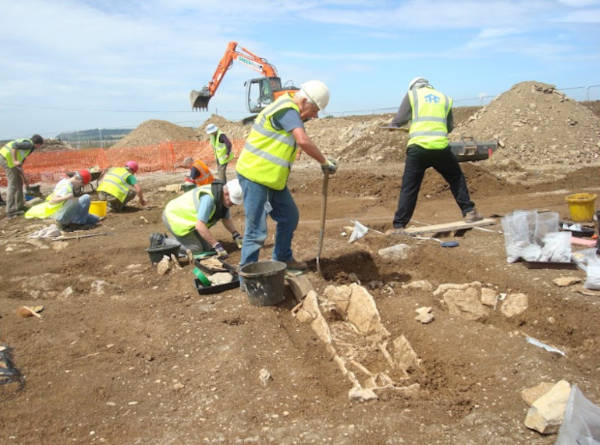
Archaeological Context & Grave Goods
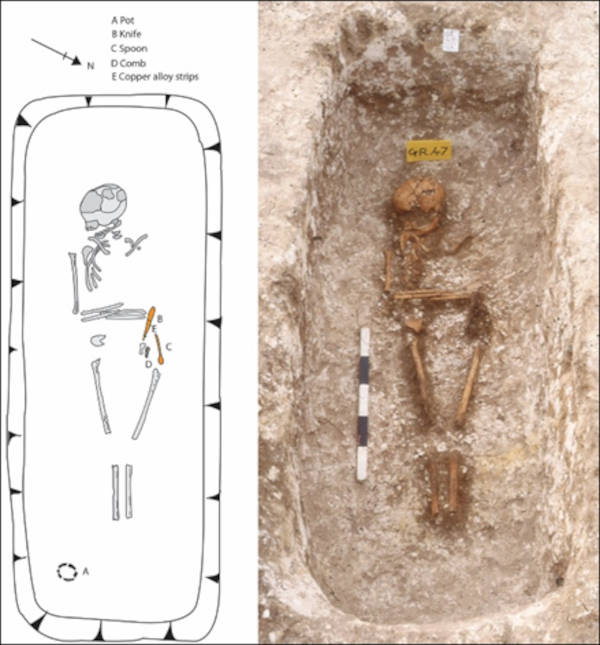
At Updown, the girl (often “Grave 47”) was interred with grave goods. Including a Frankish pot and an iron spoon, which may point to continental connections or Christian affiliations.
These artifacts dovetail with Kent’s known history of continental exchange. Especially during its so-called “Frankish Phase” in the sixth century, when ties with the European mainland were strong.
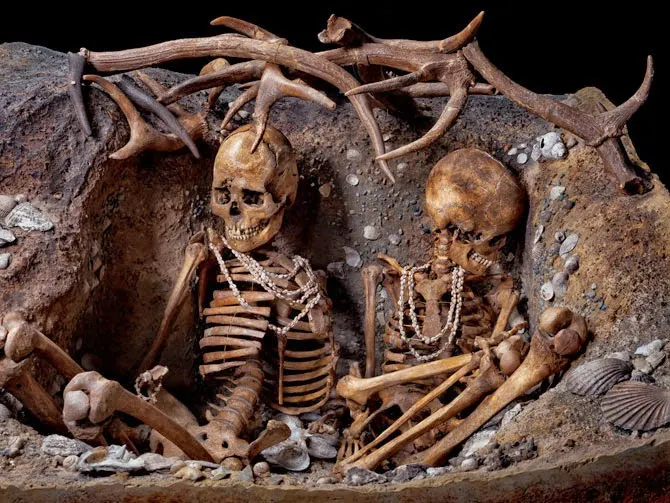
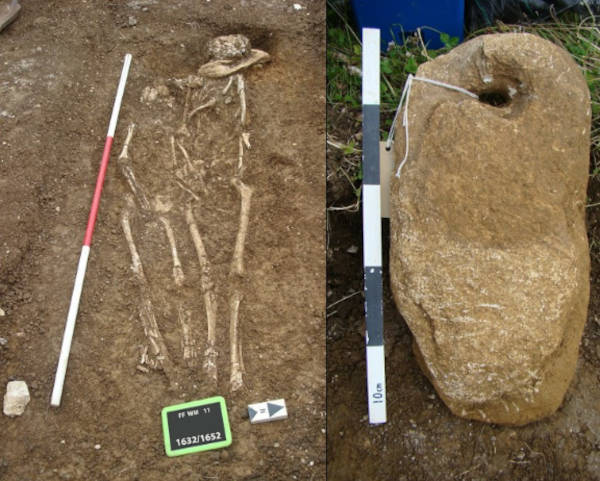
The Worth Matravers individual was buried in a double grave. Alongside another person whose ancestry was typically British, and an anchor stone was found beneath one of the skulls. This burial arrangement again signals integration into local mortuary traditions.
Implications: Rethinking Anglo-Saxon Demography & Mobility
A Cosmopolitan Early Medieval England
These genetic discoveries push back against the image of a homogeneous, insular Anglo-Saxon England. Instead, they reveal that even in the seventh century. Global connections and human mobility extended all the way from West Africa to southern Britain.
Migration Beyond Northern Europe
While the migration of Angles, Saxons, Jutes and other Germanic groups has long been studied. The presence of sub-Saharan African ancestry adds a new, less expected dimension to migration narratives. This suggests that people moved across far greater distances. And that ancient Britain was part of broader networks than previously acknowledged.
Social Identity & Assimilation
The fact that these individuals were buried in local cemeteries without apparent difference in treatment. Suggests that their ancestry did not preclude them from integration into Anglo-Saxon communities. Their identity may have been local, even as their genetic heritage was trans-continental.
Historical & Archaeological Reassessment
This finding invites historians and archaeologists to reassess how they view trade, diplomacy, conversion, and migration in early medieval Europe. Cultural and biological exchange may have been more fluid and far-reaching than written records alone suggest.
Challenges & Future Research Directions
-
Chronology & dating refinement
Deeper radiocarbon and isotopic analyses may help pin the burial and life spans more precisely, and perhaps reveal migration timelines. -
Wider sampling and genetic surveys
This discovery prompts broader sampling across Anglo-Saxon cemeteries to determine how widespread such ancestry may have been, and whether these two individuals were exceptional or part of a pattern.
-
Material provenance & trade routes
Studying the origin of grave goods (pots, metal, objects) could further illuminate the pathways by which people, ideas, and goods moved between Africa, continental Europe, and Britain. -
Contextualizing within late antique and post-Roman dynamics
Some scholars frame these connections in relation to the Byzantine reconquest of North Africa (circa 533–534 AD), which might have stimulated movement from Africa into Mediterranean and European networks.
Conclusion
The discovery of West African ancestry in early Anglo-Saxon England radically expands our understanding of medieval British demography and mobility. That individuals in Kent and Dorset cemeteries, dating to the seventh century. Had recent ancestors from sub-Saharan Africa challenges long-held narratives of isolation and homogeneity in early medieval Britain. Instead, we see a picture of cosmopolitan societies, of identity and integration beyond genetic origin. And of intercontinental human stories that ripple outward through time.
ALSO READ: A Stunning Discovery: Elite Teenage Burial at Tepe Chalow