A Stunning Discovery: Elite Teenage Burial at Tepe Chalow
A Stunning Discovery: Elite Teenage Burial at Tepe Chalow
Archaeologists in North Khorasan province, northeastern Iran. Have made a remarkable find: the burial of an 18-year-old young woman. Richly endowed with grave goods. Including gold jewelry and a cosmetics box decorated with snakes and scorpions. The tomb, known as Grave 12 at the Tepe Chalow archaeological site. Dates back to the late third millennium B.C., placing it well over 3,000 years ago, during the era of the Greater Khorasan Civilization (GKC).
This extraordinary find not only underscores the wealth and artistry of the period. But also offers insight into social structure, ritual practices, burial customs, and trade networks in Bronze Age Greater Khorasan.
The Grave & Its Context: Tepe Chalow and the GKC
-
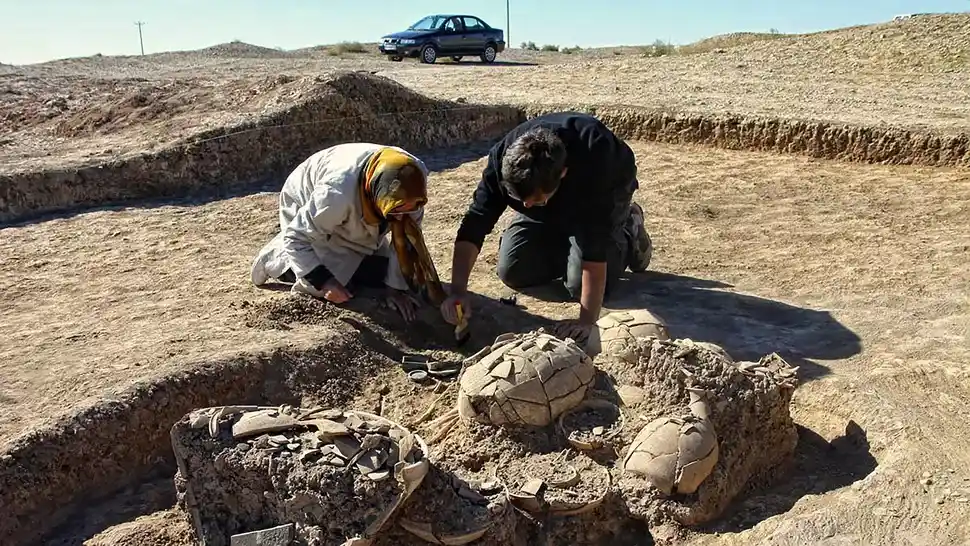
Location & Excavation: Tepe Chalow (also called “Chalow Hills”) lies in a remote region of North Khorasan, Iran. Initially identified in 2006, excavation began in earnest from 2011, revealing clusters of graves under low mounds.
-
Civilizational Setting: The site is part of what scholars call the Greater Khorasan Civilization. This culture is closely linked to the Bactria-Margiana Archaeological Complex (BMAC). Which spans parts of Turkmenistan, northern Afghanistan, Uzbekistan and extends into northeastern Iran.
-
Dating: Grave 12 is thought to date to the late third millennium B.C., with many artifacts aligning with early second millennium B.C. styles. Most graves at Chalow are Bronze Age; some are earlier (late Chalcolithic).
What Was Found: Luxurious Grave Goods
Grave 12’s wealth is exceptional, especially for someone so young. Key findings include:
-
Jewelry & Metal Objects
Gold earrings, a gold ring; multiple bronze and ivory pins; bronze bracelets; a bronze mirror. One pin is distinctively shaped like a hand holding a rosette. -
Stone & Cosmetic Containers
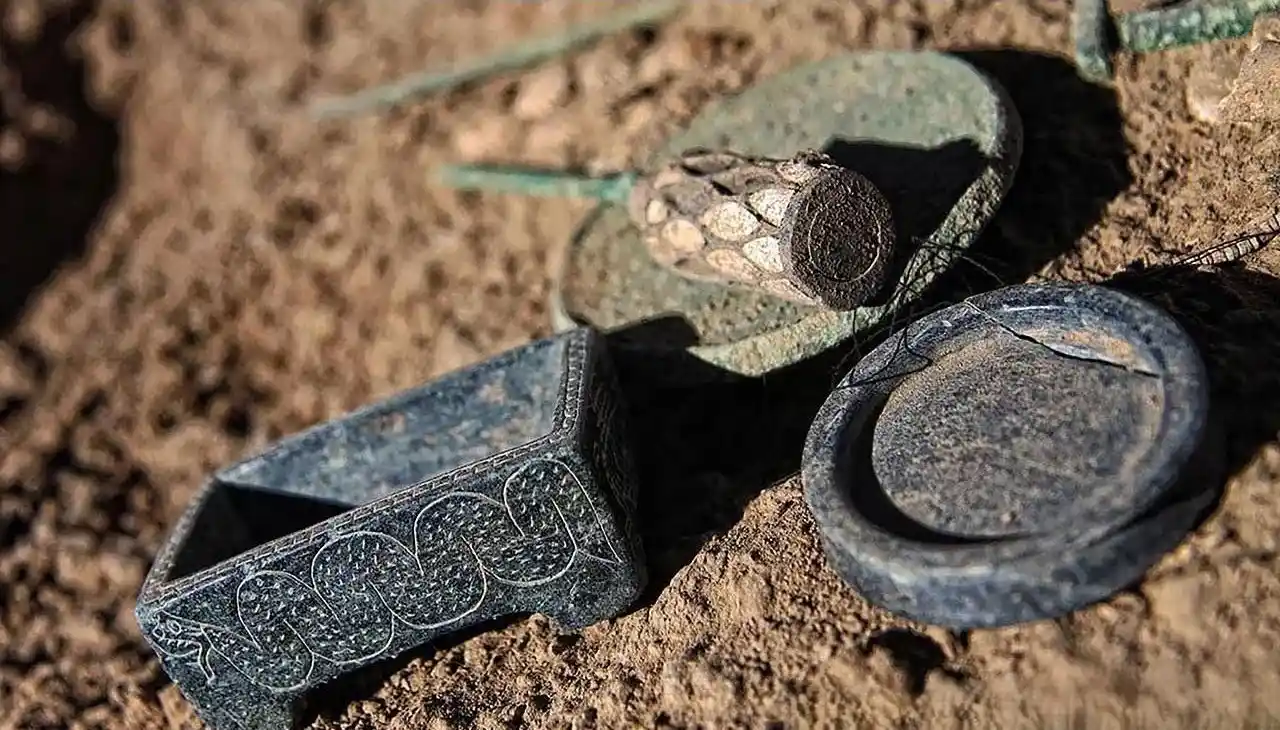
Several containers made of black stone rich in chlorite minerals. Most notable is a rectangular cosmetics box, with carvings of snakes and scorpions. This box likely held kohl, the black mineral powder used as eyeliner. -
Seals & Symbolic Artifacts
A bronze stamp seal engraved with human feet; other seals; carved items; beads possibly including lapis lazuli (which suggests long-distance trade). -
Pottery & Other Items
Pottery vessels placed in specific positions in the grave (behind the back, above the head, near the feet) following what seems to be local funerary tradition.
Positioning, Rituals & Burial Custom
The body under Grave 12 was laid in a crouched position, on the right side, with face turned southeast. This orientation appears consistent with broader traditions at Tepe Chalow.
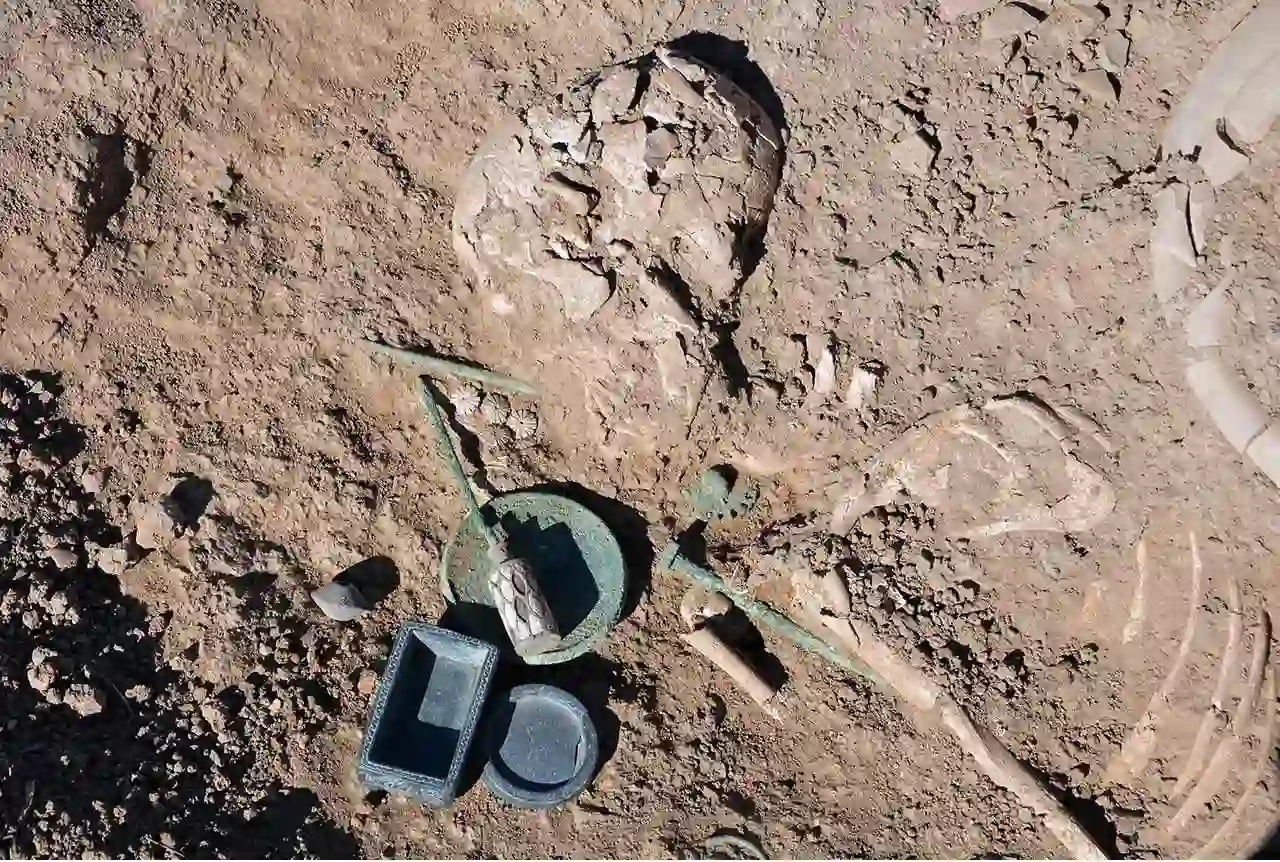
The arrangement of possessions around the body—mirrors, containers, jewelry, vessels. Implies ritual meaning, perhaps connected with beliefs about protection, afterlife, or the status of the individual. The snake and scorpion motifs carved onto the cosmetic box may have had protective or ritual functions.
Social Implications: Wealth, Status & Trade
-
Inherited Status: The richness of Grave 12, together with the age of the deceased, suggests the wealth was inherited rather than earned during her lifetime. Such a grave underscores family lineage and elite status in Greater Khorasan society.
-
Women’s Roles: Female burials in Tepe Chalow often have more luxury goods than male ones, including mirrors, cosmetics, and jewelry, which may hint at elevated status for certain women in GKC social structure.
-
Trade & Cultural Contacts: The use of stone materials like chlorite, beads such as lapis lazuli, and stylistic parallels (e.g. similar cosmetics boxes in Bactria) demonstrate active trade or exchange networks. The box may have been made from stone imported from Bactria.
Broader Significance
This burial is not just another tomb—it offers a lens into several aspects of ancient life:
-
Cultural Identity: The burial rites, orientation, and symbolic motifs (snakes, scorpions, human feet seals) help archaeologists piece together cultural beliefs and symbolic systems of Greater Khorasan.
-
Wealth & Hierarchy: Grave 12 is among the richest found in this region, suggesting that by the Bronze Age, strong social stratification existed, with elites having access to luxurious goods and external trade.
-
Interregional Connections: Material origin (stone, metal, precious stones) shows that even remote northeastern Iran was part of a larger network connecting Mesopotamia, Bactria, Indus Valley, etc.
-
Gender Dynamics: The lavish nature of this female burial invites further research into the role of elite women, inheritance, authority and ritual roles for young women in Bronze Age societies of this region.
Challenges & Next Steps
-
Precise Dating: So far, the grave is estimated to be from the late third millennium B.C. Future radiocarbon dating and material analysis may refine that chronology.
-
Material Provenance: Identifying exact source locations (for stones like chlorite, lapis lazuli, metals) will enhance understanding of trade routes and connections.
-
Interpretation of Symbols: What did the motifs like snakes, scorpions, human-foot seals mean in context? Were they protective, religious, status symbols / identifiers? More comparative work needed.
-
Genetics & Bio-anthropology: Studying remains could tell us about lineage, health, diet, mobility, population structure in Greater Khorasan.
Conclusion
The discovery of Grave 12 at Tepe Chalow is a landmark in understanding the Greater Khorasan Civilization. The combination of exquisite grave goods, symbolic artefacts, and ritualized burial practices. Reveals a society with complex social hierarchies. Wide trade connections, and rich symbolic traditions. The young woman’s burial powerfully shows how people in ancient societies inherited status and power, expressing it through art, ritual, and even death.
ALSO READ: Ashfall Fossil Beds: The Tragic Tale of Nebraska’s Prehistoric Rhinos Frozen in Time