The Tomb of a Roman Aristocrat Unearthed in Northern Greece: Echoes Beneath the Red Earth⚱️
A Whisper from the Roman Past Beneath Greek Soil
In the heart of northern Greece, archaeologists have uncovered a remarkable window into antiquity — the tomb of a Roman aristocrat, resting undisturbed for nearly two thousand years beneath layers of red earth. Dating to the 2nd century CE, when Macedonia thrived as a prosperous Roman province, this discovery offers a rare glimpse into the social prestige, artistry, and cross-cultural identity of an elite figure living at the crossroads of two great civilizations.
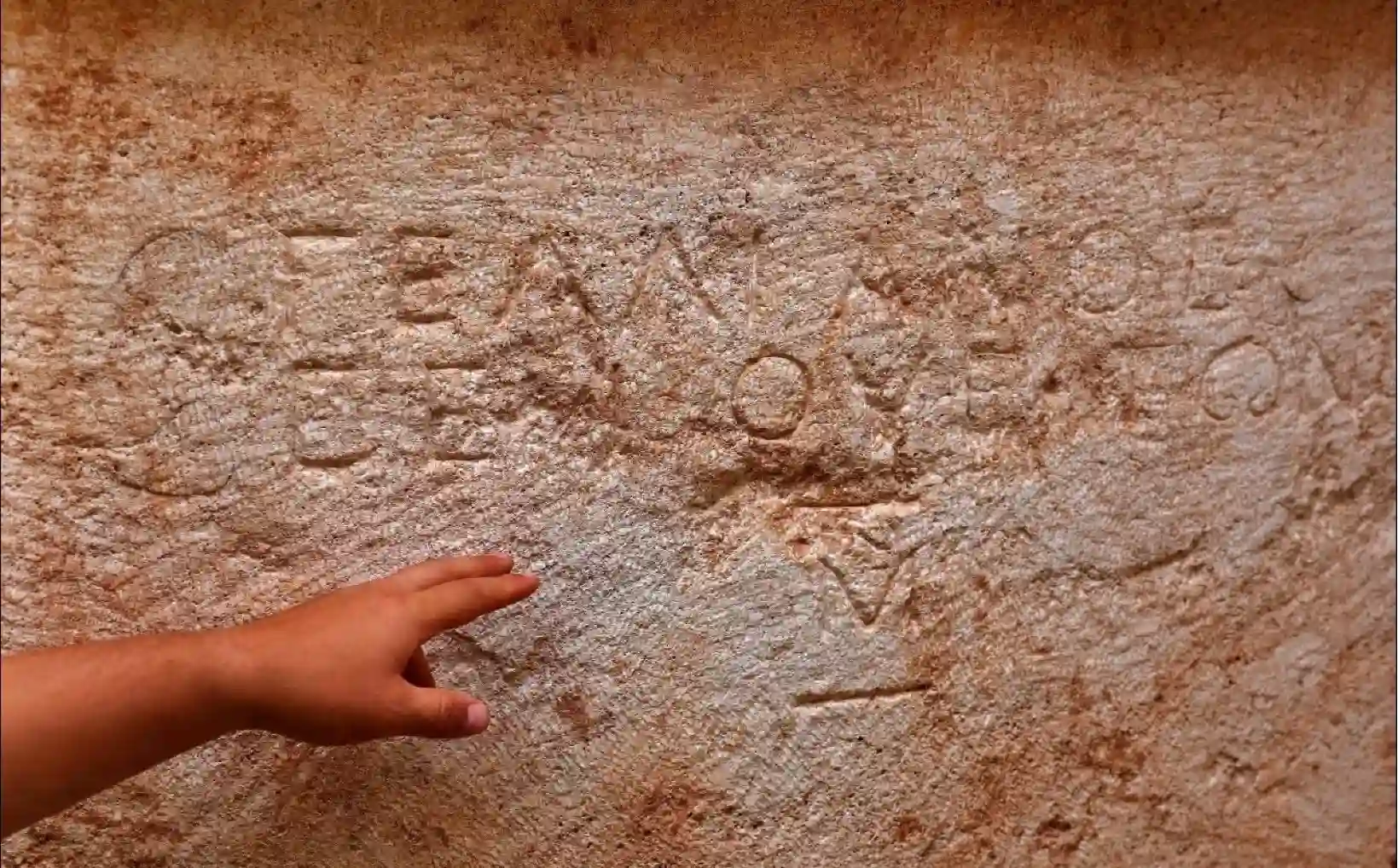
The chamber, sealed with carefully fitted stone slabs, preserved both human remains and funerary offerings. An inscribed Latin epitaph carved into marble bears traces of a name, perhaps once celebrated in local administration or imperial service. As sunlight touches the ancient script for the first time in centuries, the silent story of a life once entwined with empire begins to unfold.
1. Discovery in the Macedonian Landscape
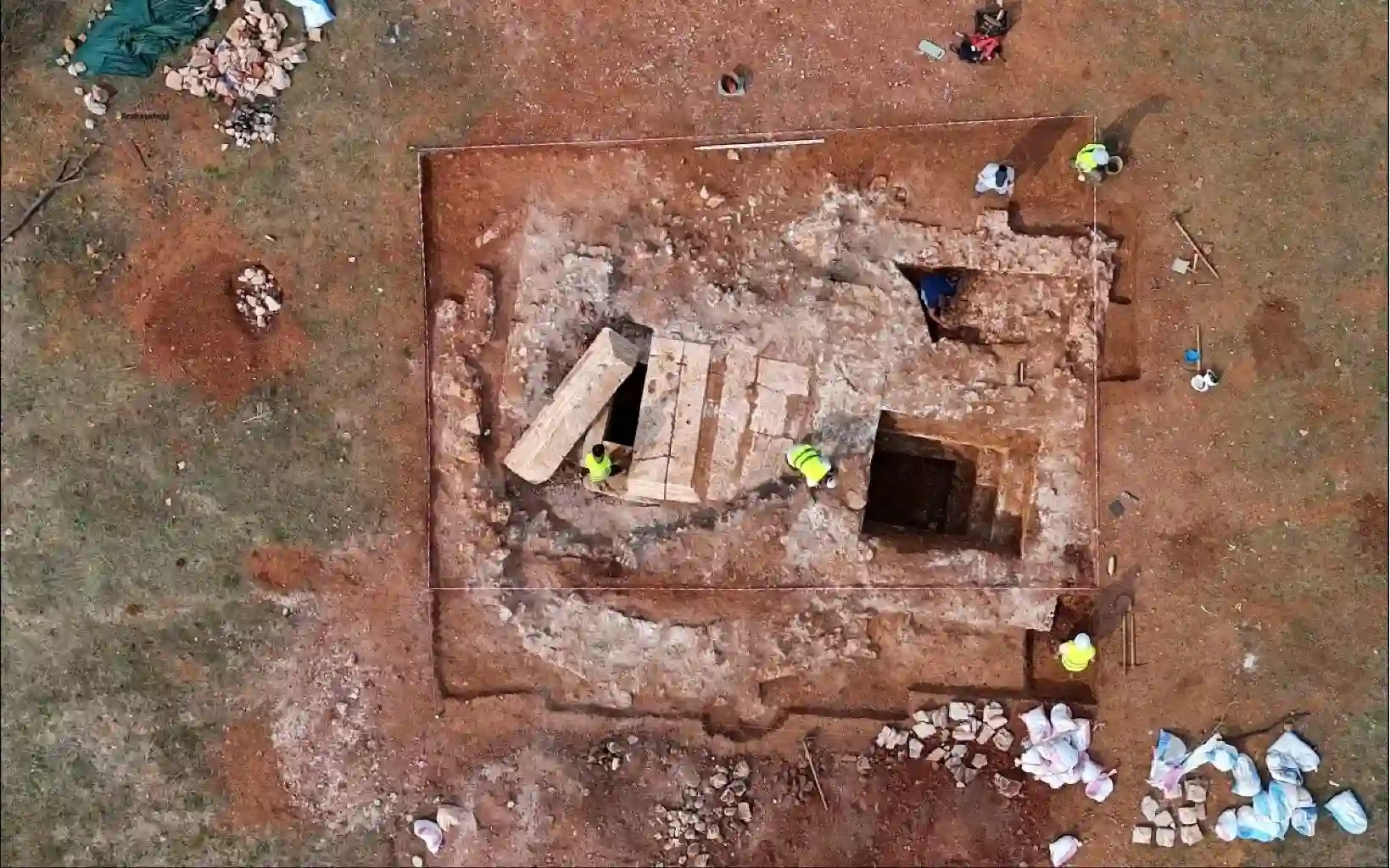
The tomb was unearthed near a rural site in northern Macedonia, Greece, a region known for its rich tapestry of Greek and Roman heritage. Archaeologists conducting a rescue excavation stumbled upon the buried structure while surveying land slated for construction.
Aerial imaging revealed the outlines of a rectangular burial chamber, constructed with local limestone and red clay mortar, typical of the Roman funerary architecture that spread throughout the provinces. Despite minor soil shifts, the tomb remained largely intact, its ceiling slabs carefully aligned to protect the chamber below.
Inside lay the skeletal remains of an adult — likely male — accompanied by pottery fragments, oil lamps, and metal fittings once belonging to a wooden coffin long decayed. The combination of Roman materials and Greek craftsmanship immediately caught the attention of scholars.
2. The Tomb’s Architecture: A Blend of Greek and Roman Design
The structure of the tomb reflects the architectural duality of the era — a synthesis of Greek artistry and Roman engineering. The chamber’s masonry was executed with precision, featuring finely cut limestone blocks set in neat courses.
Decorative motifs on the stone slabs suggest the influence of Greek funerary aesthetics, emphasizing balance, proportion, and symbolic ornamentation. Yet the tomb’s internal organization — with a central burial niche and offering pits — aligns with Roman burial conventions, showcasing how local builders adapted imperial customs to traditional Greek design principles.
This hybrid form illustrates the cultural fusion that defined the eastern provinces of the Roman Empire, where artistic expression remained deeply rooted in Hellenic ideals even as Roman political power shaped daily life.
3. The Inscription: A Voice from Antiquity
The most compelling feature of the find is a Latin inscription engraved on a marble stele placed above the burial. Though partially weathered, the text preserves fragments of the deceased’s name and titles, possibly identifying him as a municipal magistrate or Roman official.
Early translation suggests the phrase “in pace aeternam” — “in eternal peace” — a common epitaph in Roman funerary tradition. The script’s elegant lettering and formal Latin phrasing reflect a person of education and administrative standing.
Inscriptions such as these served not only to memorialize the dead but also to project social prestige. To carve one’s name in stone was to resist the erasure of time — an enduring reminder of status, devotion, and belonging within the imperial order.
4. Grave Goods: Symbols of Life and Legacy
Archaeologists recovered several artifacts from within the chamber:
-
Ceramic vessels, likely used for libations or funerary meals.
-
A bronze mirror fragment, possibly a symbolic reflection of the soul.
-
Oil lamps, representing the eternal light guiding the departed.
-
Fragments of jewelry and metal fittings, hinting at wealth and refinement.
Each item embodies both ritual significance and personal identity. The offerings reflect a belief in the continuity of existence — that the dead required light, nourishment, and beauty even beyond the grave.
Such burials were not mere acts of mourning but of commemoration and status affirmation. They signified familial devotion and reaffirmed the deceased’s place in both the mortal and divine order.
5. Roman Macedonia: Prosperity and Prestige
By the 2nd century CE, Macedonia had become a vibrant Roman province, its cities thriving under imperial rule. Towns like Thessaloniki, Pella, and Dion served as key administrative and cultural hubs, where Greek traditions merged with Roman governance.
The individual buried in this tomb likely belonged to the provincial elite — descendants of Greek nobility or Roman settlers who held positions in local councils or tax administration. Their wealth afforded them the means to commission elaborate burials, blending Roman status symbols with Greek artistic sensibility.
Such tombs reflect not only personal stories but also the broader social harmony of the era, when civic life in the provinces mirrored the cosmopolitan ideals of the empire itself.
6. The Art of Commemoration: Roman Funerary Ideals
In Roman culture, death was not the end of public identity but its ultimate display. Tombs, inscriptions, and sculptures served to eternalize memory, proclaiming the virtues, lineage, and achievements of the deceased.
The phrase “Monumentum” in Latin — from which we derive “monument” — literally means “that which reminds.” This tomb, with its refined masonry and carved epitaph, embodies that ideal perfectly.
Funerary architecture was also a medium of emotional expression. The combination of Greek artistry and Roman gravitas speaks of a culture where remembrance was both aesthetic and moral duty. Death offered an opportunity to articulate what life had meant — and what it aspired to be.
7. A Reflection of Faith and Philosophy
Although Roman religion was richly polytheistic, funerary inscriptions often reflect Stoic and philosophical undertones. The reference to eternal peace (in pace aeternam) suggests a worldview that embraced tranquility after life’s trials, rather than fear of the afterworld.
Greek influences introduced a more spiritual dimension — the idea of the soul’s immortality, shaped by Platonic thought. Thus, the tomb at Lato symbolizes more than social prestige; it reflects a profound philosophical synthesis, merging Roman pragmatism with Greek metaphysics.
8. Echoes of an Empire: The Legacy of the Tomb
The discovery of this Roman aristocrat’s tomb enriches our understanding of life, death, and identity in the ancient Mediterranean world. Each artifact, inscription, and architectural detail speaks of integration and adaptation — of how Greek provinces both adopted and reinterpreted Roman customs.
It also invites a deeply human reflection: the universal desire to be remembered and revered, to leave behind a tangible echo of existence.
As archaeologists clean the marble slabs and trace the Latin letters carved by long-departed hands, they bridge centuries of silence. Through their work, a forgotten voice speaks once again — of empire, of artistry, and of humanity’s enduring dialogue with time.
Conclusion: When Stone Speaks Across Millennia
The tomb of a Roman aristocrat uncovered in northern Greece stands as a powerful testament to the intertwined legacies of Greece and Rome. Beneath its weathered stones lies more than a burial — it is a story of empire, memory, and cultural unity.
As the earth releases its ancient secrets, we are reminded that every discovery is not merely about what we find, but what we remember. The red soil of Macedonia has given voice to a long-silent Roman citizen — whose wish “to be remembered forever in stone” has, indeed, been fulfilled.
ALSO READ: Golden Laurel Wreath Burial Unearthed in Crete Reveals Ancient Greek Funeral Rituals🏺