Ancient Marble Slab Discovered in Hisarya Reveals Secrets of Roman Thrace and Imperial Baths
A Window Into Ancient Roman Thrace
In the quiet spa town of Hisarya, nestled in central Bulgaria, archaeologists have unearthed an extraordinary relic that connects us directly to the heart of the Roman Empire. A 1,900-year-old marble slab, bearing an ancient Greek inscription, was recently discovered — and it’s rewriting what historians know about Thrace, Roman governance, and the imperial bath culture that once flourished in the region.
This find doesn’t just confirm the existence of monumental Roman baths dating back to the reign of Emperor Antoninus Pius (138–161 AD); it also provides rare insight into how these grand public structures were financed and maintained. The inscription, dedicated jointly to Antoninus Pius and his adopted son Marcus Aurelius, speaks of donations made by a local benefactress, Elia Bendida, and her husband — an act of civic generosity that bridges ancient power and community life.
The Discovery: Unearthing a Marble Message from the Past
The marble slab was unearthed during archaeological excavations in Hisarya, a town known since antiquity for its thermal springs and as a center of Roman settlement. In ancient times, the city was known as Diocletianopolis, one of the most important Roman towns in the province of Thrace.
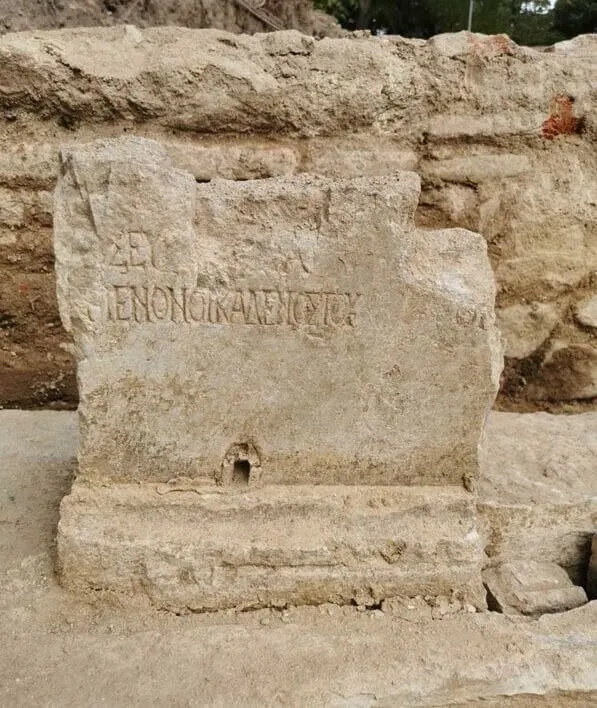
Archaeologists working near the remains of the Roman baths complex uncovered the slab in remarkably good condition. Measuring over a meter in height, it bears a finely carved Greek inscription, complete with formal dedicatory language typical of the imperial period. The marble’s craftsmanship and the quality of the lettering suggest it was made by skilled artisans commissioned by the local elite.
Early translations of the text reveal that it was dedicated to the emperors Antoninus Pius and Marcus Aurelius, affirming the construction and dedication of the thermal baths around 152 AD. Even more fascinating, it contains records of financial contributions from wealthy locals — specifically Elia Bendida and her husband, who sponsored part of the building or renovation of the baths.
Thrace Under the Roman Empire: Prosperity and Civic Pride
To fully grasp the significance of the inscription, one must look at the province of Thrace during the Roman era. Incorporated into the Roman Empire in 46 AD, Thrace (modern-day Bulgaria, northern Greece, and European Turkey) became a vital frontier province and cultural crossroads between East and West.
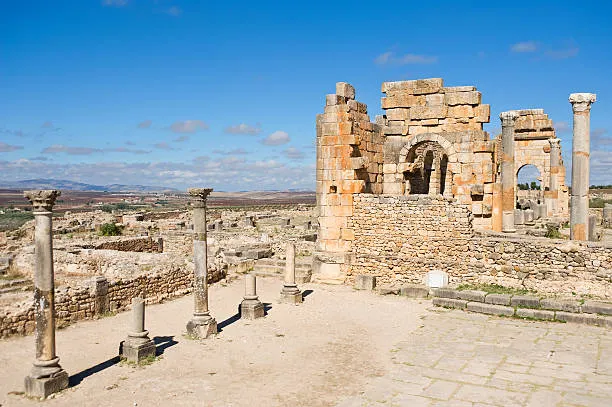
By the second century AD, Thrace was experiencing economic growth and urban development, driven by trade, agriculture, and mining. Cities such as Philippopolis (modern Plovdiv), Serdica (Sofia), and Diocletianopolis (Hisarya) flourished with public buildings, temples, and bathhouses, symbols of Roman civilization and urban life.
Public baths, or thermae, were not merely places of hygiene; they were social centers where citizens gathered to relax, exercise, and conduct business. The construction of such grand facilities required substantial investment, often provided through imperial funding or local benefactors — and this is where Elia Bendida’s story comes into play.
Elia Bendida: The Generous Benefactress of Hisarya
The inscription honors Elia Bendida and her husband for their financial contribution to the imperial baths. Her name — “Bendida” — likely derives from Bendis, the Thracian goddess of the moon and hunt, suggesting a local aristocratic lineage. Her participation in funding a public building reflects not only wealth but also social responsibility and prestige.
In Roman society, it was common for elites to sponsor public works as acts of civic duty, gratitude, or loyalty to the emperor. Such benefactions reinforced their social standing and integrated local leaders into the broader imperial hierarchy.
Elia Bendida’s gesture embodies the fusion of Roman and Thracian traditions — a Roman-style public donation made by a woman bearing a distinctly Thracian name. It also highlights the role of women in ancient civic life, an aspect often overlooked in discussions of Roman provincial culture.
Emperors Antoninus Pius and Marcus Aurelius: The Age of Peace and Public Works
The dedication to Antoninus Pius and Marcus Aurelius places the slab’s creation around 152 AD, during one of the Roman Empire’s most stable and prosperous periods.
Antoninus Pius, who ruled from 138 to 161 AD, was celebrated for his administrative reforms, diplomacy, and commitment to public welfare. Under his reign, cities across the empire flourished with new temples, theaters, and baths. Symbols of a thriving Roman peace (Pax Romana).
His adopted son and successor, Marcus Aurelius, would later become one of Rome’s most revered philosopher-kings. The inclusion of both names in the inscription underscores the continuity of imperial patronage and the unity between emperor and heir.
The Hisarya inscription, therefore, is more than a civic record. It’s a political statement of loyalty and gratitude to the imperial family, testifying to Thrace’s integration into the Roman world.
Roman Baths in Hisarya: Engineering Marvels of the Ancient World
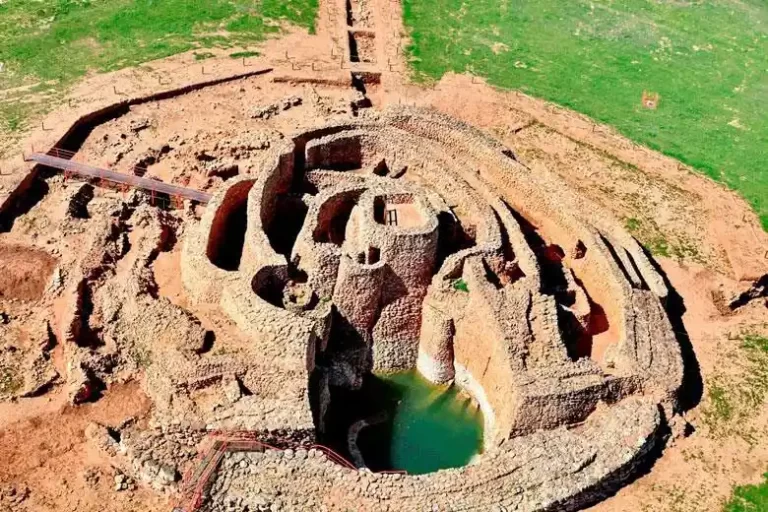
Hisarya’s Roman baths were among the largest in the Balkans, taking full advantage of the area’s abundant thermal springs. Archaeological excavations have revealed complex systems of hypocausts (underfloor heating), vaulted chambers, and cold and hot pools.
The inscription confirms that these baths were either constructed or renovated around 152 AD. A time when public bathing had become central to urban life throughout the empire.
These facilities were architectural marvels — combining function, luxury, and social importance. For Roman citizens and provincial elites alike, the baths were a place of community and comfort. Reflecting both the empire’s technological prowess and its emphasis on public welfare.
A Glimpse Into Ancient Economics: The Management of Roman Thrace
One of the most valuable insights from the Hisarya marble slab is its reference to local financial administration. It demonstrates that even in provincial towns, there existed organized systems for managing civic projects. Donations like those of Elia Bendida were formally recorded and likely overseen by municipal councils or local magistrates.
This inscription thus adds to our understanding of Roman economic life in Thrace. Showing how imperial oversight worked alongside local initiative. It paints a picture of a society that balanced imperial authority, local governance, and civic pride. A dynamic that sustained Rome’s provinces for centuries.
From Ancient Baths to Modern Discovery: Hisarya Today
Modern Hisarya, known for its healing mineral waters and Roman ruins, continues to attract visitors seeking both relaxation and history. The newly discovered slab will likely become one of the town’s most significant archaeological attractions, drawing scholars and tourists alike.
For archaeologists, the find is invaluable — not only does it confirm the dating of the Roman baths. But it also offers a personal human connection to the people who built and used them nearly two millennia ago.

As excavation and conservation efforts continue, experts hope that further finds will emerge from the site. Shedding more light on Roman Thrace’s civic life, economy, and multicultural society.
Conclusion: Carved in Stone, Preserved in Time
The 1,900-year-old marble slab from Hisarya is more than a beautiful artifact; it is a stone witness to history. A record of faith, generosity, and human enterprise. It reminds us that even in antiquity, communities thrived on cooperation, public spirit, and respect for shared heritage.
Through the elegant script of its Greek inscription, we hear echoes of a society that valued culture, order, and generosity. Values that continue to resonate in Bulgaria’s living history today.
ALSO READ: The Lapedo Child: New Radiocarbon Dating Reveals a 28,000-Year-Old Human-Neanderthal Hybrid