The Mayan Corn God Unearthed in Palenque: A 1,300-Year-Old Discovery That Illuminates Ancient Beliefs
A Divine Discovery in Palenque
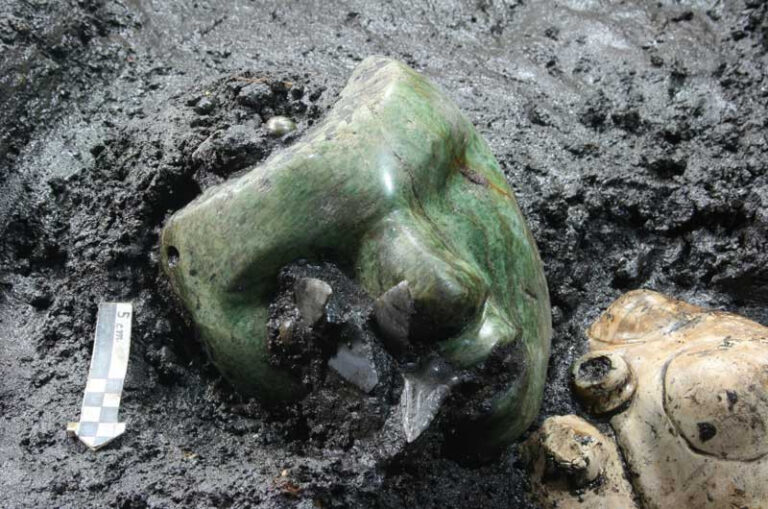
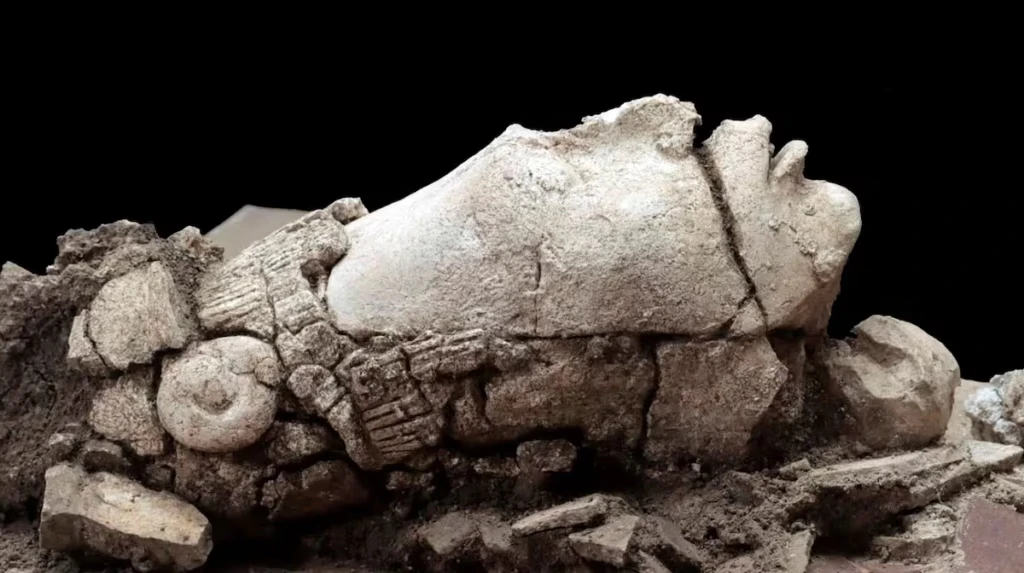
In the lush jungles of Chiapas, Mexico, archaeologists from the National Institute of Anthropology and History (INAH) have uncovered a remarkable artifact: a stucco head of the Mayan corn god, more than 1,300 years old. This discovery, found within the ancient city of Palenque, reveals profound insights into Mayan cosmology, mythology, and artistic expression.
The corn god, or maize deity, was central to Mayan religion and daily life. Corn was not merely food — it was life itself, the divine substance from which humanity was created. The discovery of this sculpted head within a ceremonial pond adds a rich layer of understanding to how the Mayans perceived the cycles of birth, death, and rebirth through the symbolism of maize.
Corn: The Sacred Source of Life in Mayan Mythology
According to the Popol Vuh, the sacred book of the K’iche’ Maya, the gods attempted several times to create humanity. Their first efforts — shaping people from mud and wood — failed. Only when they formed humans from corn dough did the creation succeed. These corn-formed beings possessed both strength and spiritual essence, capable of honoring and worshipping the gods.
In this mythic context, corn was more than sustenance — it was the essence of human existence. The white corn symbolized human flesh, while red corn represented blood. The Mayan corn god embodied this divine duality, connecting the heavens, earth, and underworld through the cycles of planting, growth, and harvest.
Archaeologist Alberto Ruz Lhuillier, who discovered King Pakal’s tomb in Palenque’s Temple of the Inscriptions, once described the maize deity as “a young man, whose elongated head resembles the shape of a cob and is surrounded by leaves.” This divine figure represented youth, fertility, and renewal, essential to both the Mayan worldview and agricultural life.
The Discovery at Palenque: Unearthing the Corn God
During conservation work in El Palacio, one of Palenque’s most important architectural complexes, researchers made an extraordinary find — a stucco sculpture depicting the young Mayan corn god. The discovery took place in a corridor pond, suggesting deep ritual significance.
Archaeologist Arnoldo González Cruz, from the INAH Chiapas Center, explained that this find allows researchers “to understand how the ancient Maya of Palenque constantly relived the mythical passage about the birth, death, and resurrection of the maize deity.”
This unique artifact — the first stucco head ever found at Palenque — was part of a larger ceremonial offering, carefully placed within the water to symbolize the god’s journey into the underworld and eventual rebirth.
A Detailed Look at the Corn God’s Face
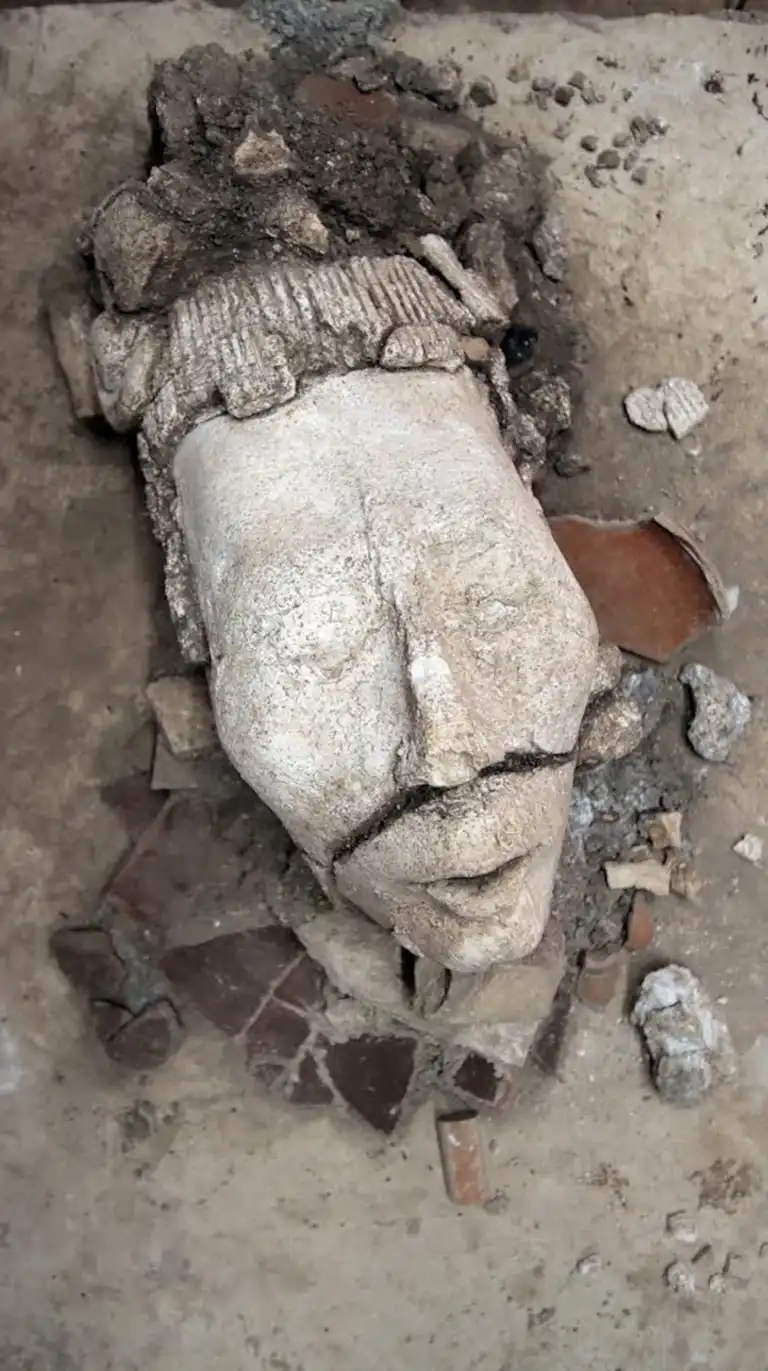
The sculpture measures 45 centimeters long, 16 centimeters wide, and 22 centimeters high. Crafted with stunning realism and spiritual depth, it portrays a youthful face with elongated features, representing both the physical and symbolic aspects of corn.
Archaeologists Carlos Varela Scherrer and Wenceslao Urbina Cruz, who led the excavation, described the artifact in detail:
“The sculpture, which must have been modeled around a limestone support, has graceful features: the chin is sharp and split; the lips are thin and slightly open; the lower lip is angled downward, exposing the upper incisors. The cheekbones are fine and rounded, the eyes are elongated, and the nose emerges prominently from a long, wide forehead.”
The head’s cranial deformation — a common Mayan aesthetic associated with nobility and divinity — resembles the shape of a corncob, while the long, flowing hair imitates corn silk. Every element of the sculpture reinforces its connection to the sacred plant.
A Sacred Offering Beneath the Waters
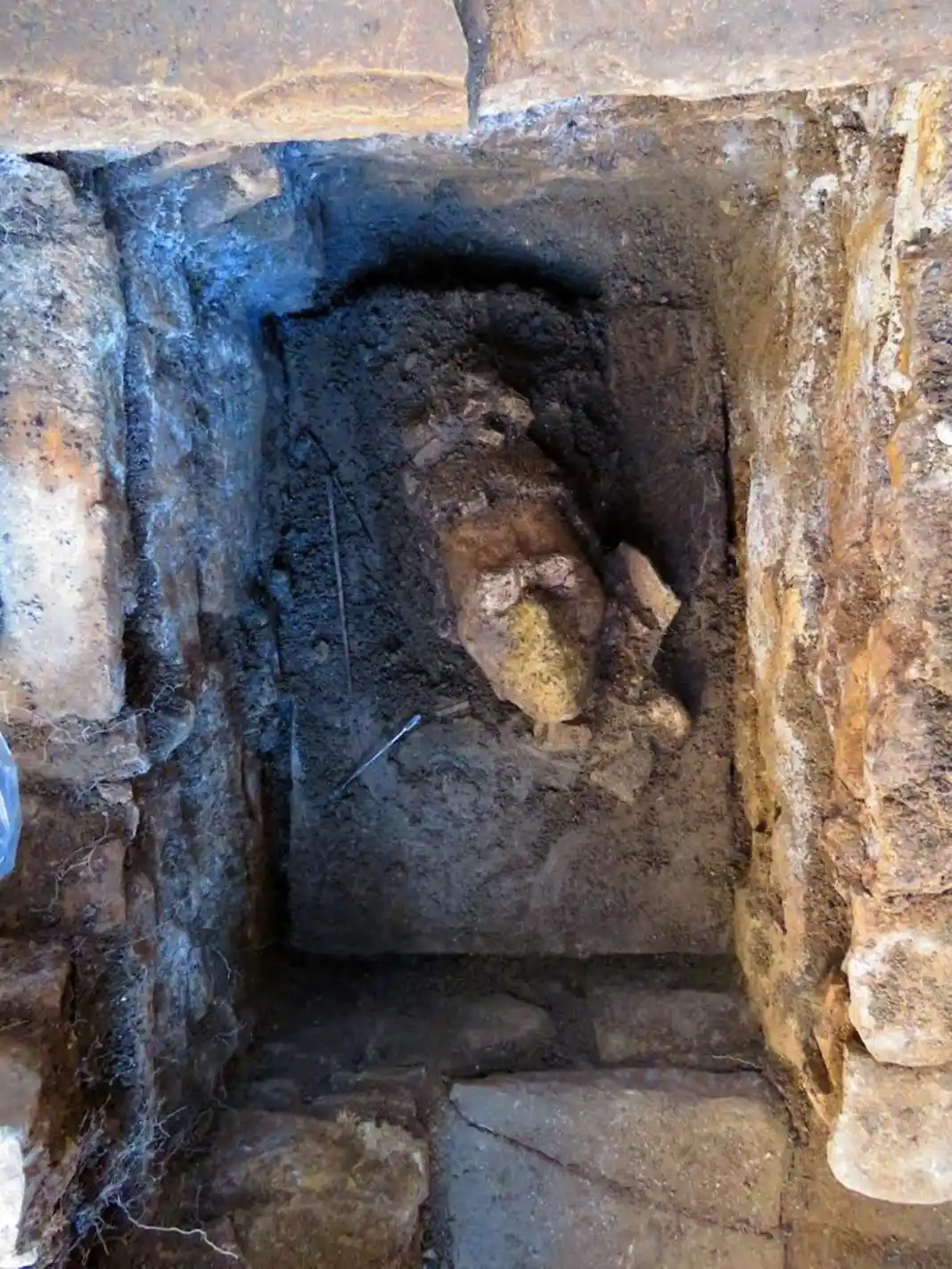
The corn god’s head was discovered within a semi-square stone receptacle, approximately one meter wide by three meters long, situated inside a ritual pond. Its east-west orientation symbolizes the daily journey of the sun, aligning with the concept of rebirth and the emergence of corn with the dawn.
Archaeologists believe the pond served as a water mirror, reflecting the sky — a symbolic link between the earthly and divine realms. The placement of the sculpture underwater likely represented the entry of the maize deity into the underworld, a critical step in the Mayan cycle of regeneration.
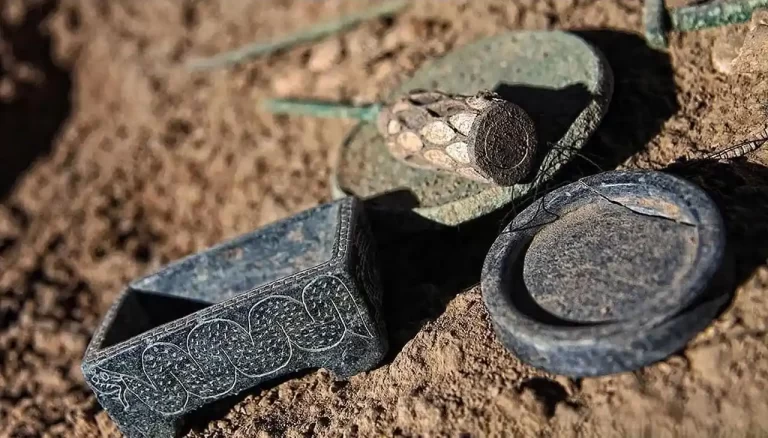
As excavation continued, researchers found additional ceremonial items, suggesting the pond was a ritual deposit site. The offering was designed to emulate the mythic rebirth of maize — a divine reenactment central to Mayan spiritual practice.
The Myth of the Corn God’s Journey
In Mayan mythology, the maize god’s narrative mirrors the agricultural cycle. After being sown in the earth, the god descends into the underworld, where he performs sacred rites before returning to the surface — a metaphor for germination and renewal.
According to archaeologist Tomás Pérez Suárez from the Center for Mayan Studies at the National Autonomous University of Mexico (UNAM), the maize god’s underworld journey is described as follows:
“The god travels in a canoe driven by the rowing gods, is dressed by young women, and finally germinates from the shell of a turtle, a symbol of the earth.”
In this mythic moment of rebirth, he appears flanked by two deities — Hun Ajaw and Yax B’alam — believed to be versions of the hero twins Hunahpú and Xbalanqué, central figures of the Popol Vuh. These twins embody the struggle between life and death, light and darkness — the eternal balance that sustains existence.
Dating the Artifact: The Late Classic Period
Based on the ceramic tripod plate found alongside the sculpture, archaeologists have dated the offering to the Late Classic period (700–850 CE). This era marked a time of artistic brilliance and spiritual intensity within Mayan civilization. Particularly in Palenque, which was then a thriving center of political and religious power.
The stylistic details of the sculpture. Including its refined modeling, expressive realism, and symbolic iconography — align perfectly with the Late Classic artistic canon. It stands as a masterpiece of Mayan craftsmanship and religious devotion.
Cultural and Archaeological Significance
The discovery of the Mayan corn god’s head is not only an artistic triumph but also a cultural revelation. It confirms that Palenque’s inhabitants actively recreated and celebrated mythological cycles, integrating them into their urban and ritual landscapes.
For archaeologists, the find opens new pathways for understanding how Mayan religious beliefs were expressed. Through architecture, art, and water symbolism. The offering pond — acting as both a mirror and a portal. Reflects the sophisticated cosmological worldview of a civilization deeply attuned to the rhythms of nature.
Moreover, this find demonstrates the continuity of agricultural worship, linking cosmic creation with everyday sustenance. For the Maya, maize was not merely food — it was the very substance of life and spirit.
Conclusion: The Living Legacy of the Corn God
The 1,300-year-old stucco head of the Mayan corn god. Discovered in Palenque is more than an archaeological marvel — it is a window into the soul of an ancient people. Through its delicate features and symbolic placement. It embodies the eternal story of creation, sacrifice, and rebirth that defined Mayan civilization.
As researchers continue to uncover the mysteries of Palenque. This remarkable find reminds us of a profound truth: for the Maya, life and divinity grew from the same seed — the sacred corn.
ALSO READ: The Lost Royal Jewelry of the Nemanjić Dynasty: Hidden Treasures of Medieval Serbia