Childhood in Ancient Greece: Insights from the Kylix and Athenian Agora Potty
Beyond Gods and Heroes
When most people think of ancient Greek art, images of heroic battles, Olympian gods, and mythological narratives often come to mind. These themes dominated Greek pottery, sculpture, and painting, reinforcing the cultural emphasis on glory, divinity, and civic pride. Yet, within this mythological grandeur, fragments of domestic life occasionally surface—reminding us that ancient Greece was also home to families, children, and ordinary routines.
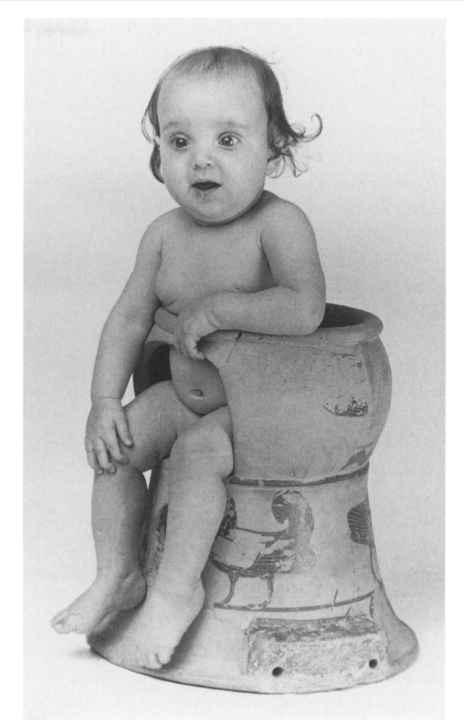
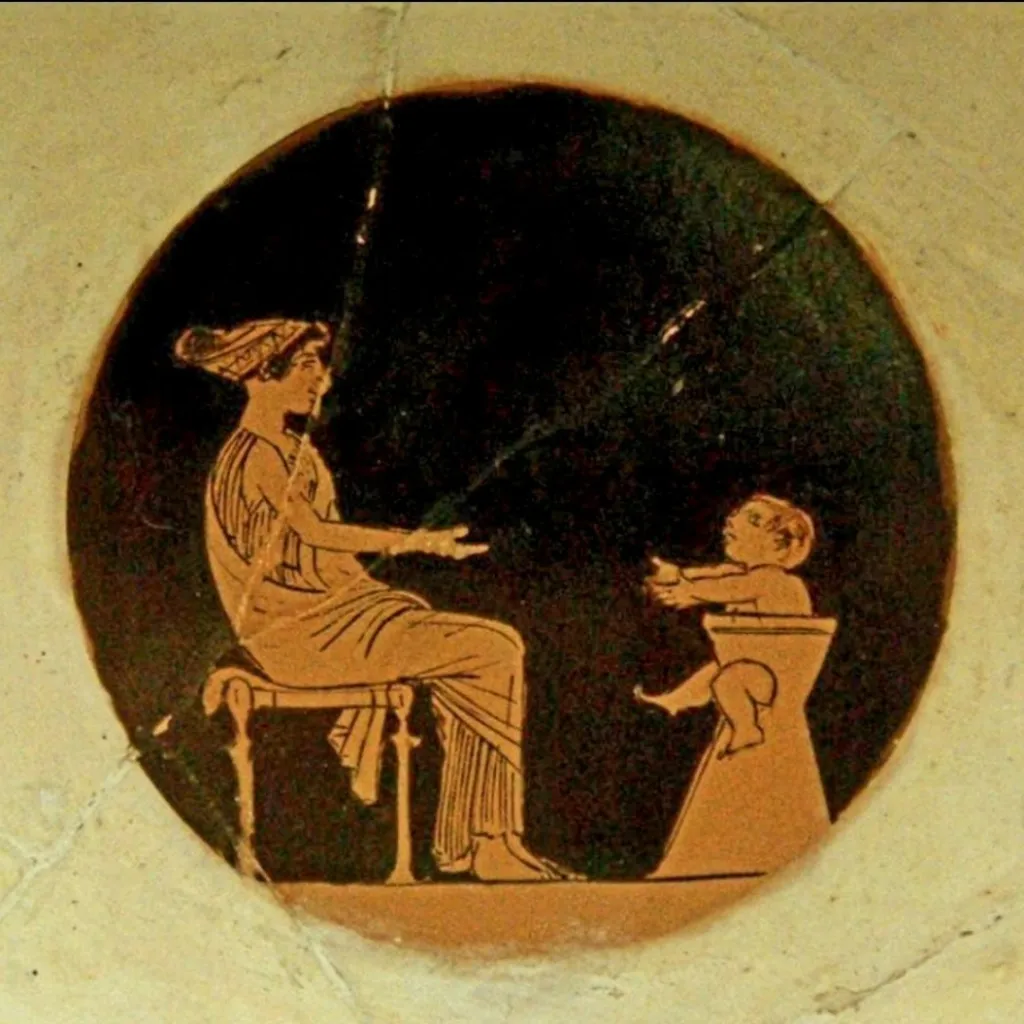
One of the most extraordinary examples is a kylix (drinking cup) dating to around 480 BCE, currently housed in the Royal Museums of Art and History in Brussels. Unlike depictions of warriors or deities, this kylix shows something far more intimate: a baby sitting on a potty chair, calling out to his mother. Combined with the discovery of an actual child’s potty in the Athenian Agora, these artifacts provide a rare window into childhood in ancient Greece.
The Kylix: A Rare Glimpse of Domestic Life
Everyday Life on Pottery
The kylix, a shallow two-handled drinking cup often used in symposiums, typically carried decorative scenes of mythology, athletic contests, or revelry. For one kylix, however, the artist chose to depict something more personal: a child in the middle of toilet training.
This image is extraordinary because it sheds light on the domestic realities of family life, a subject seldom prioritized in Greek art. It reveals that parenting, care, and even playful moments with children were not only part of Greek society but could be considered worthy of artistic expression.
Symbolism of the Scene
On a symbolic level, this depiction could represent the natural cycle of life, emphasizing that even the great warriors and thinkers of Greece began as dependent children. It may also reflect the values of care, maternal responsibility, and the significance of child-rearing in maintaining the strength of the household (oikos), the foundation of Greek society.
The Athenian Agora Potty: Daily Tools of Childcare
Archaeological Discovery
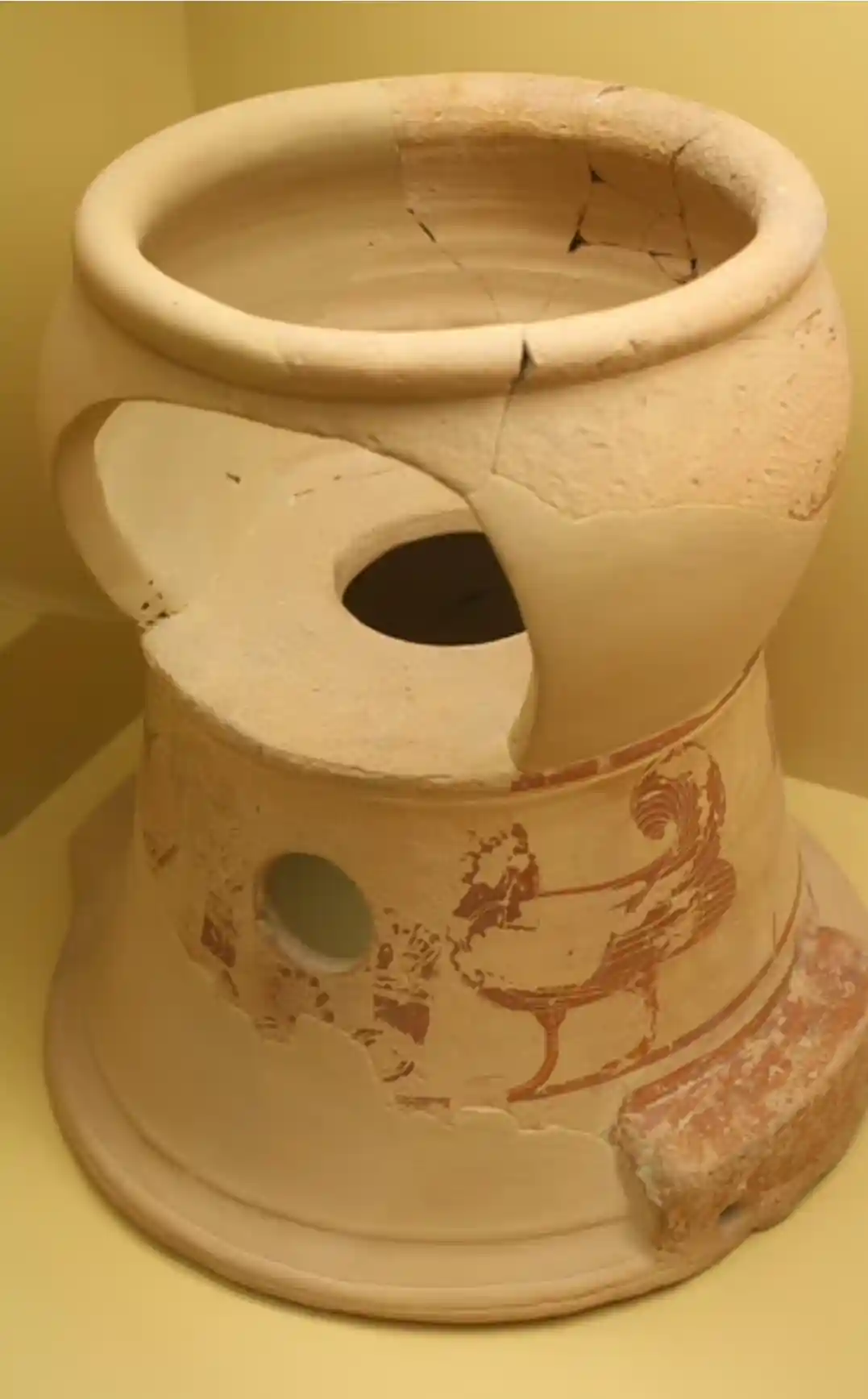
Complementing the kylix is a remarkable archaeological find from the Athenian Agora, the heart of public life in ancient Athens. Excavators uncovered a 6th-century BCE child’s potty, now displayed in the Agora Museum. Crafted from clay, this potty provides a tangible, functional artifact of childrearing in antiquity.
Significance of the Potty
The presence of such an object demonstrates that ancient Greek parents were attentive to the practical needs of their children. Far from neglecting the mundane, they devised tools to make childcare easier and more efficient. It also suggests that training in hygiene and discipline began early in Greek households, reflecting values of order and responsibility that would later extend to civic life.
Connecting the Kylix and the Potty: Family Life in Ancient Greece
When viewed together, the kylix and the potty offer a holistic picture of childhood in ancient Greece. One artifact provides an artistic representation of the child-parent bond, while the other gives us a functional object from daily life.
Humanizing Greek Society
These discoveries remind us that while Greek civilization is remembered for its philosophy, politics, and art, it was also built upon the daily rhythms of family life. Children were nurtured, disciplined, and integrated into society through the oikos (household), which was central to Greek identity.
Childhood as Cultural Foundation
Although children are rarely depicted in Greek art, their presence in material culture reveals that they were seen as essential to the continuity of society and the polis. Raising children was not only a private matter but also a civic duty, as future citizens, soldiers, and leaders were shaped within the home.
Childhood in Ancient Greece: What We Know
Stages of Childhood
Greek texts and archaeology suggest that childhood was divided into stages:
-
Infancy: Children were cared for primarily by mothers, wet nurses, or family servants.
-
Early childhood: Training in basic tasks, including hygiene, began early, as reflected by artifacts like the potty.
-
Education: Boys, in particular, were prepared for public life through literacy, music, and athletic training, while girls learned household skills.
Daily Care and Maternal Roles
Artifacts like the kylix illustrate the strong maternal role in caring for children. Mothers or female caretakers oversaw the practical and emotional aspects of child development. Such scenes underline that, despite the public emphasis on male roles, the foundation of Greek society relied heavily on the care provided within households.
Why These Artifacts Matter
The kylix and Agora potty highlight the importance of everyday objects and depictions in reconstructing history. While monumental temples and statues tell us about public ideals, small domestic artifacts reveal the private lives of people who lived thousands of years ago.
By examining these items, historians gain a richer, more human picture of ancient Greece—not just as a civilization of philosophers and warriors, but as a society of parents, children, and families navigating the same kinds of challenges we do today.
Legacy of Childhood in Ancient Greece
The study of childhood in ancient Greece is still developing. For centuries, scholars overlooked these aspects in favor of grander narratives. However, discoveries like the kylix and potty show that childhood, care, and domesticity deserve as much attention as myth, politics, and war.
These artifacts have also inspired modern exhibitions on daily life in antiquity. Shifting the focus from gods and heroes to the ordinary human experience. By including scenes of play, care, and parenting, museums today paint a more holistic picture of the ancient world.
Conclusion: A More Complete Picture of Ancient Greece
The kylix depicting a baby on a potty and the child’s potty from the Athenian Agora. Together provide invaluable insights into childhood in ancient Greece. They remind us that beyond the temples and battlefields, ancient Greek society was made up of families. Who cared for their children with love, attention, and practical tools.
These artifacts serve as a testament that everyday life mattered. Even in a culture so deeply invested in myth and glory. They allow us to see ancient Greeks not only as creators of democracy and philosophy. But also as parents and children living familiar experiences across the millennia.
By studying these rare glimpses of domesticity, we connect with the shared humanity of the past. Enriching our understanding of ancient Greece as a civilization of both extraordinary achievements and ordinary family moments.
ALSO READ: Cleopatra Pools: Ancient Thermal Springs of Hierapolis in Turkey