Native American Armor and Shields: Protection, Symbolism, and Craftsmanship
Protection and Power in Native American Warfare
Across cultures worldwide, warriors relied on armor and shields not only for physical protection but also for spiritual defense and symbolism. In Native American societies, this was no different. Though Indigenous peoples of North America did not use heavy metal armor like Europeans, they developed innovative methods of protection using natural resources such as wood, bone, leather, and animal hides.
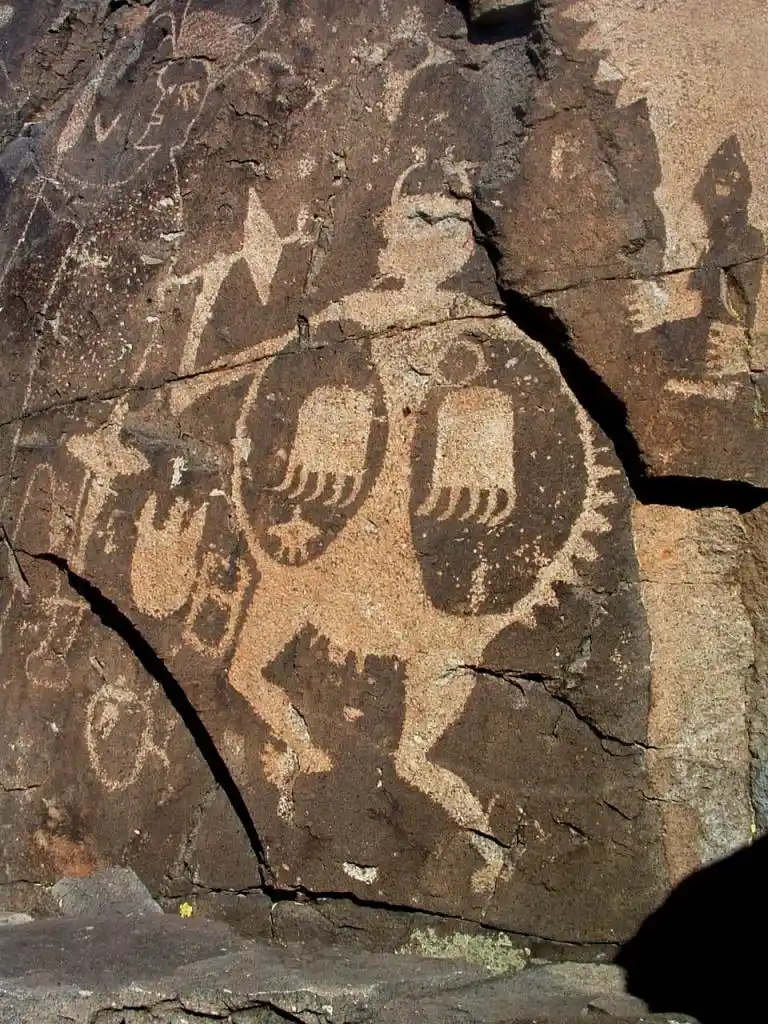
One of the most iconic images of Native protection and warfare comes from the Southern Tewa petroglyphs at Comanche Gap near Galisteo, New Mexico, which depict a warrior holding a shield alongside a “star person.” These powerful symbols remind us that Native American shields and armor were not just defensive tools but also objects of cultural identity and spiritual significance.
Native American Armor: Materials and Design
The Absence of Metal
Before European contact, most Native American tribes did not work extensively with metal. As a result, their armor took on unique forms crafted from natural materials readily available in their environments.
-
Wood – used in some regions for body coverings and reinforcement.
-
Bone – shaped into protective plating.
-
Animal hides – especially buckskin, became the most common and versatile material.
The Navajo and Buckskin Armor
The Navajo tribe developed an especially distinctive form of armor made from buckskin reinforced with quilted cloth:
-
The armor fit snugly around the neck and extended to the elbows.
-
The first layer of buckskin was tied at the front and coated with a sticky cactus-derived substance for durability.
-
Another layer of buckskin was then added, sometimes reaching up to eight layers thick, creating an extremely heavy yet resilient form of armor.
Though cumbersome, this armor provided significant protection against arrows and blows, giving warriors an advantage in close combat.
Native American Shields: More Than Protection
Size and Structure
For many Southwestern tribes, shields provided the main form of protection in battle. Typically:
-
Shields measured around 17 inches in diameter.
-
They were constructed from stretched rawhide layered for strength.
-
The outer surface was often painted and decorated with meaningful symbols.
Symbolic Decoration
The designs on Native American shields carried deep spiritual and symbolic meanings:
-
Animals, celestial beings, and geometric patterns served as protective emblems.
-
Decorations were not merely artistic but invoked spiritual guardianship.
-
Shields were often blessed through rituals, linking them to the sacred world.
This combination of physical and spiritual protection made the shield both a practical weapon and a sacred artifact.
Armor and Shields in Native Warfare
Strategy and Function
While European knights relied on full suits of armor, Native American warriors emphasized mobility, agility, and speed. Shields and lighter armor allowed fighters to move quickly, dodge, and strike effectively.
In plains and desert environments, heavy metal armor would have been impractical. Instead, Native innovations provided a balance of defense and maneuverability.
Psychological Warfare
Shields were not just about defense—they also played a role in psychological warfare. Bright colors, bold animal symbols, and intricate designs were meant to:
-
Intimidate opponents.
-
Project strength and spiritual power.
-
Inspire confidence among allies.
Thus, the shield became as much a psychological weapon as a physical one.
Regional Variations of Native Armor
Southwestern Tribes
-
Relied heavily on shields and occasionally layered buckskin armor.
-
Decorations often featured sun, star, and animal symbols, reflecting deep cosmological beliefs.
Plains Tribes
-
Shields were often lighter, carried on horseback, and decorated with feathers and paint.
-
Armor was rare, but warriors relied on speed and protective rituals for defense.
Northeastern and Northwestern Tribes
-
Some used wooden armor or woven bark breastplates, particularly in forested areas where arrows were common weapons.
-
Shields were less widespread, but spiritual protective symbols were often painted on bodies and clothing.
Spiritual and Cultural Dimensions
The Sacred Role of Armor
Armor and shields in Native traditions were not merely battlefield gear. They were imbued with spiritual energy:
-
Shields were sometimes passed down across generations, carrying ancestral blessings.
-
Warriors might seek visions or dreams to determine what symbols to paint on their shields.
-
The crafting process itself often involved rituals and prayers to empower the shield.

Connection to the Cosmos
The Southern Tewa petroglyphs depicting a warrior with a shield and a “star person” illustrate this connection. Just as shields protected warriors in battle, their designs connected them to cosmic forces, invoking guidance and strength from the stars and spiritual beings.
Comparison with European Armor
European explorers and colonizers brought with them metal armor and weapons that contrasted sharply with Indigenous designs. However, Native armor reflected an entirely different philosophy:
-
Europeans prioritized maximum physical defense with steel plates.
-
Native Americans prioritized speed, agility, and spiritual protection.
-
Shields in Native traditions were both practical tools and sacred objects, unlike the purely functional shields of Europe.
This difference highlights how armor across cultures reflects environment, resources, and worldview.
Legacy of Native American Armor and Shields
Today, Native American shields and armor are preserved in museums and continue to inspire scholars, artists, and Indigenous communities. They stand as:
-
Artifacts of survival and protection in a dangerous world.
-
Symbols of cultural identity and spiritual strength.
-
Works of art showcasing the creativity and craftsmanship of Native peoples.
Even beyond the battlefield, shields became symbols of resilience and cultural continuity.
Conclusion: Strength in Spirit and Craft
The history of Native American armor and shields reveals much more than methods of protection in battle. These objects embodied the fusion of physical defense, spiritual guardianship, and cultural expression. From the Navajo’s layered buckskin armor to the painted shields of the Southwest, each creation told a story of survival, devotion, and identity.
Unlike European armor, Native protective gear emphasized agility, environment, and the unseen power of spiritual forces. To this day, petroglyphs like the warrior with shield at Comanche Gap remind us that armor was not just worn on the body—it was carried in the soul, symbols, and traditions of Native peoples.
ALSO READ: Shesha Naga: The Infinite Cosmic Serpent in Hinduism