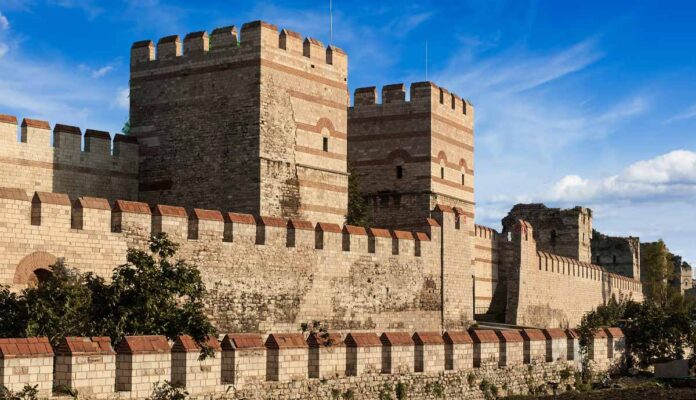
The Theodosian Walls of Constantinople: The Impenetrable Fortress of the Byzantine Empire
A Fortress That Defied Time
The Theodosian Walls of Constantinople are among the most formidable defensive structures in world history. Built in the early fifth century under the reign of Emperor Theodosius II, these massive fortifications shielded the Byzantine capital from countless sieges for more than a millennium.
For centuries, the walls were considered impenetrable, saving Constantinople from Goths, Persians, Arabs, Avars, Bulgars, and even Crusaders. Only in 1453, with the rise of gunpowder artillery, did the Ottoman cannons under Sultan Mehmed II finally breach the legendary defenses.
Yet even in ruin, the Theodosian Walls continue to stand today in modern Istanbul, a lasting reminder of Byzantine engineering brilliance and imperial power.
The Need for Stronger Defenses
From Constantine to Theodosius II
When Constantine the Great dedicated his new imperial capital in 330 CE, he enclosed it with defensive walls. For decades, these sufficed. However, after the catastrophic Battle of Adrianople in 378 CE, where the Eastern Roman army suffered a crushing defeat at the hands of the Goths, it became clear that stronger defenses were required.
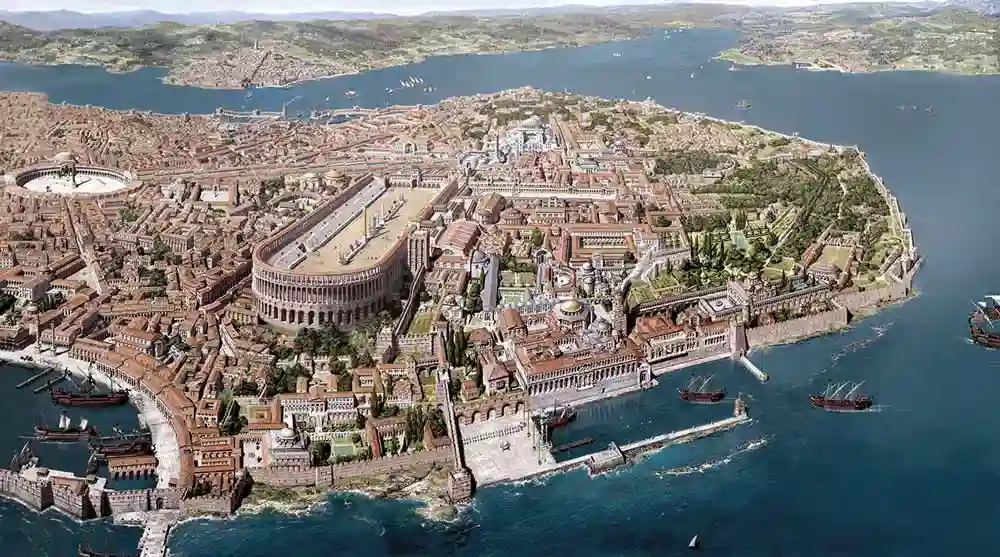
Constantinople was the jewel of the Eastern Roman (Byzantine) Empire—a city of immense wealth, strategic importance, and cultural brilliance. Protecting it was paramount, not only for security but also for the survival of the empire itself.
The Commissioning of the Theodosian Walls
In the early fifth century, Emperor Theodosius II ordered the construction of a new defensive system. Completed around 413 CE, the Theodosian Walls came just in time, stopping the advance of Attila the Hun and later waves of barbarian invasions.
The walls were not just fortifications—they were a technological marvel and a powerful symbol of Byzantine resilience.
The Architecture of the Theodosian Walls
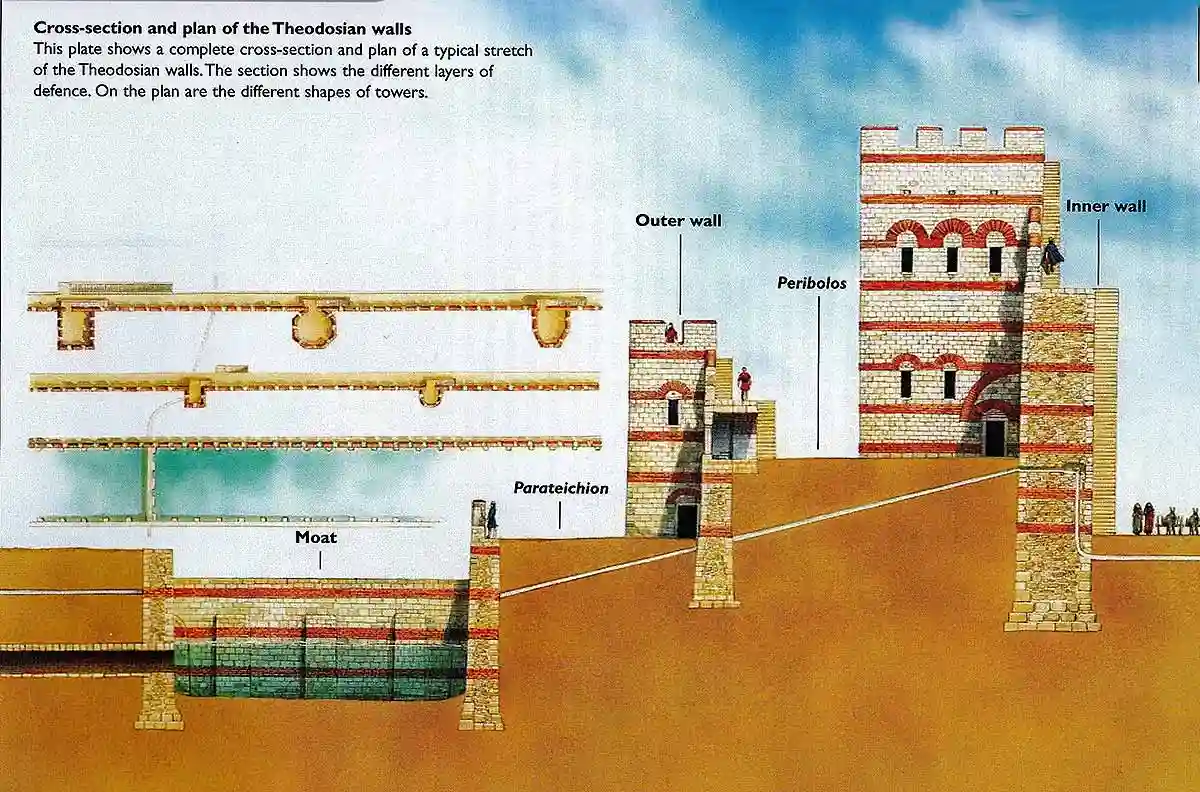
The Theodosian Walls stretched for approximately 12 kilometers, spanning the landward side of Constantinople from the Sea of Marmara to the Golden Horn. Their design consisted of three distinct defensive layers, creating a nearly impregnable barrier.
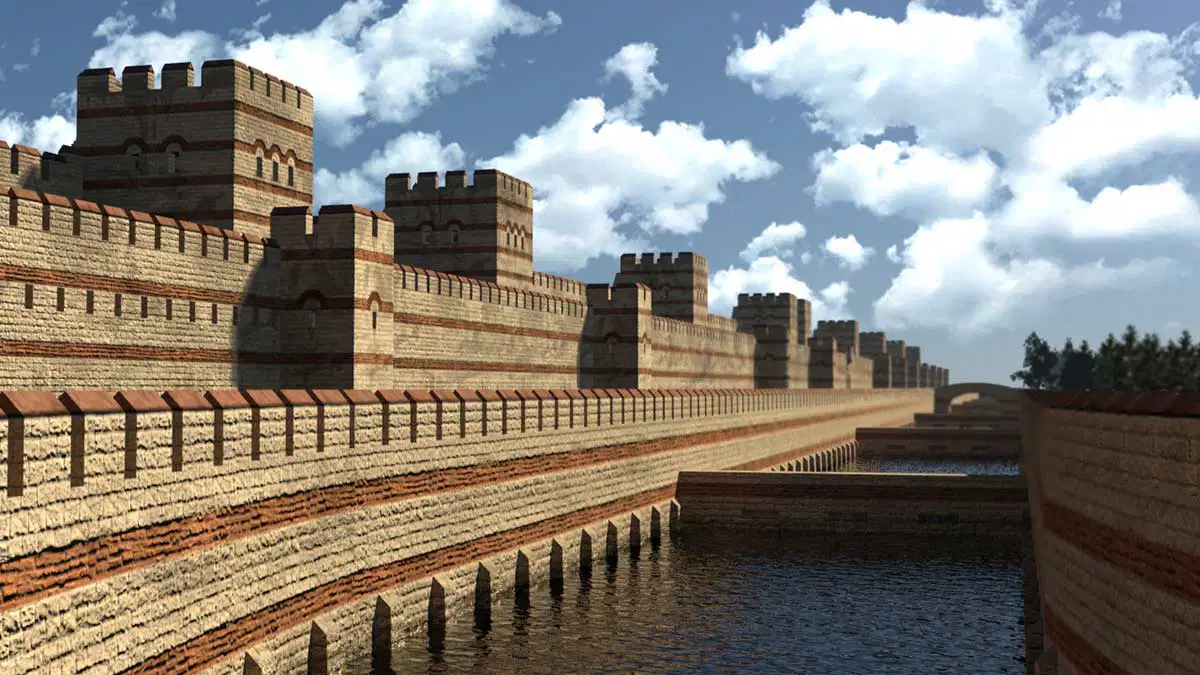
1. The Moat
-
A wide moat, often filled with water, formed the first obstacle.
-
Protected by a low wall about 1.5 meters high, it slowed invaders and funneled them into open killing zones.
2. The Outer Wall
-
Standing 8–9 meters tall, the outer wall was the next hurdle.
-
It was reinforced by towers and provided defenders with a strong secondary line of protection.
3. The Inner Wall
-
The strongest and most critical part of the system.
-
Measuring 12 meters high and nearly 5 meters thick, the inner wall was a colossal stone barrier.
-
Intersected with towers every 55 meters, it gave defenders platforms to launch arrows, stones, and later, Greek fire.
Together, these elements created one of the most advanced military defense systems of the ancient and medieval worlds.
Symbol of Imperial Power
Beyond their military purpose, the Theodosian Walls projected imperial grandeur. For travelers, merchants, and ambassadors approaching Constantinople, the sight of these colossal fortifications was awe-inspiring.
The Golden Gate (Porta Aurea)
The most magnificent entrance was the Golden Gate, originally built as a triumphal arch by Theodosius I in 391. Later incorporated into the walls, it became the ceremonial gateway through which emperors departed for campaigns or returned in victory processions.
The Golden Gate was adorned with marble blocks and gilded decorations, setting the tone for the imperial capital within. From here began the Mese Avenue, leading to Constantinople’s monumental heart: the Hagia Sophia, the Hippodrome, and the Great Palace.
Besides the Golden Gate, the system featured nine additional gates, used by civilians and military forces alike, ensuring both functionality and grandeur.
Sieges and Survival: The Walls Tested
Over their long history, the Theodosian Walls were attacked many times—but rarely breached.
Major Sieges Against the Walls
-
Attila the Hun (5th century): His forces could not overcome the defenses.
-
Arab Sieges (7th–8th centuries): Despite years of attempts, including the use of naval fleets, the Arabs failed to capture the city.
-
Rus’ Attacks (9th–10th centuries): Repelled by both the walls and Byzantine naval power.
-
The Fourth Crusade (1204): The Crusaders eventually captured Constantinople, but not by storming the land walls. Instead, they breached the weaker sea walls.
-
Ottoman Siege (1453): Using massive cannons, Sultan Mehmed II’s army finally destroyed parts of the inner wall, ending over a thousand years of Byzantine defense.
The fact that the walls stood for so long, in an era of shifting warfare, is a testament to their ingenious design.
The Fall of the Walls in 1453
By the mid-15th century, warfare had changed dramatically. Gunpowder artillery rendered traditional fortifications vulnerable. During the final siege of Constantinople in 1453, Mehmed II deployed massive bombards capable of smashing through stone walls.
After weeks of relentless bombardment, sections of the Theodosian Walls collapsed. On May 29, 1453, Ottoman soldiers poured through the breaches, ending the Byzantine Empire and ushering in a new era under Ottoman rule.
Even in defeat, however, the walls had delayed the inevitable for decades, buying the Byzantines precious time in an age of decline.
Legacy and Preservation
Today, portions of the Theodosian Walls still stand in Istanbul, running along busy streets and neighborhoods. Though damaged by earthquakes, sieges, and time, they remain a UNESCO World Heritage Site and a tangible link to both the Roman and Byzantine worlds.
Preservation efforts continue, and the walls remain a powerful symbol of the city’s layered history—from Roman and Byzantine Constantinople to Ottoman Istanbul and modern Turkey.
Conclusion: More Than Just Stone and Mortar
The Theodosian Walls of Constantinople were more than defensive structures. They were a statement of power, a marvel of engineering, and a symbol of resilience.
For over a thousand years, they protected the heart of the Byzantine Empire, preserving a city that was the crossroads of Europe and Asia, Christianity and Islam, antiquity and the medieval world.
Even today, as they stand among the bustling streets of Istanbul, the Theodosian Walls remind us of the enduring legacy of the Byzantine Empire and its determination to defend its capital at all costs.
ALSO READ: Beauty in the Bronze Age: Minoan and Mycenaean Fashion