5,000 Years Ago, Ancient Scientists Used Chemical Reactions to Create Pigments in the Altai Mountains
Prehistoric Art with a Scientific Twist
In the remote Altai Mountains of Siberia, scientists have unlocked the 5,000-year-old secrets of prehistoric illustrators who painted vivid tomb decorations in the village of Karakol. These ancient pigments, created through early chemical processes, represent one of the most fascinating discoveries of the Bronze Age.
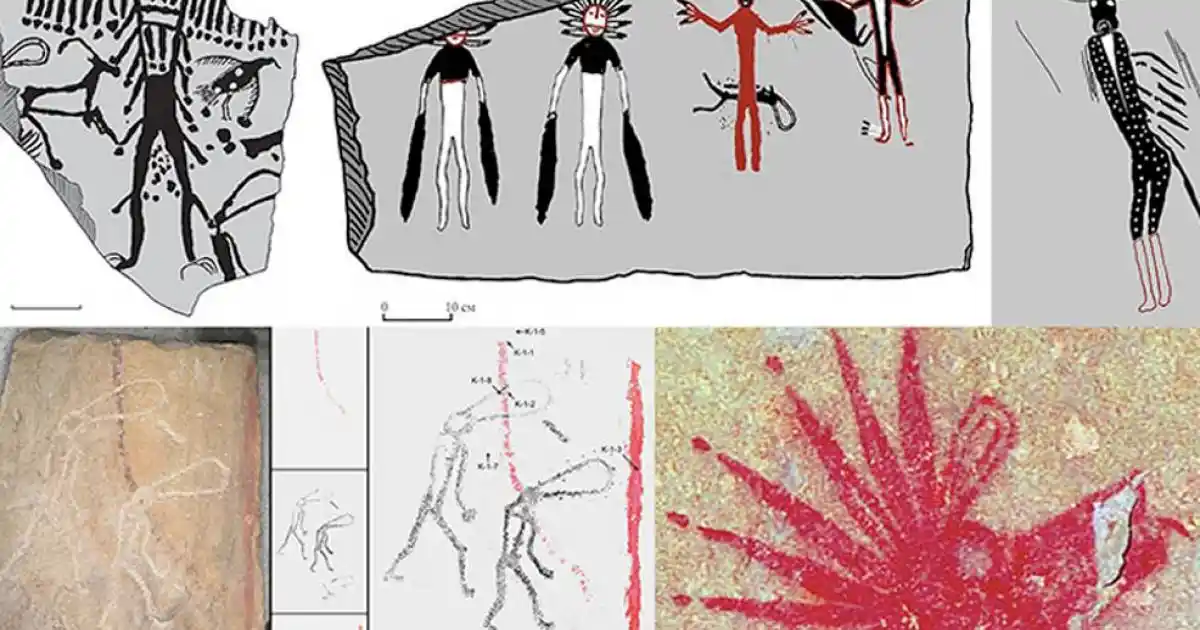
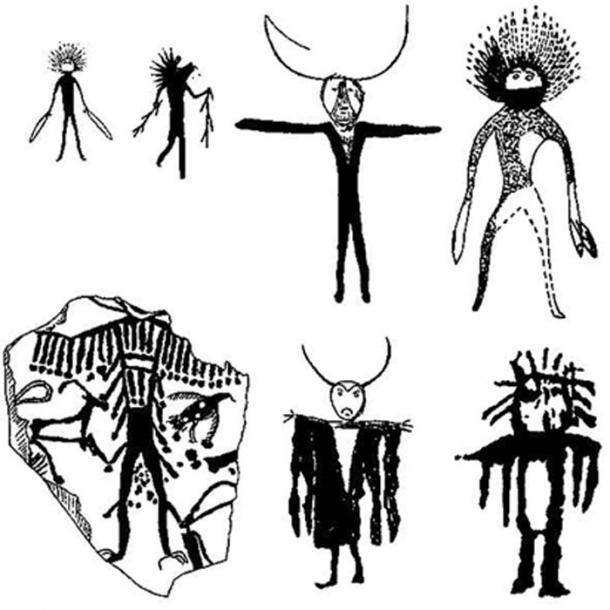
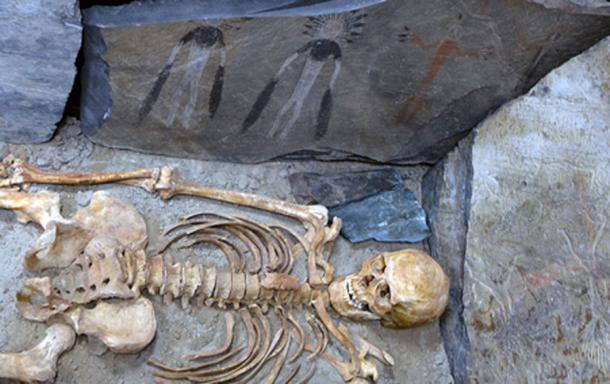
The artwork includes human figures with round horns, feathered headdresses, celestial symbols, animals, and birds, painted in striking red, white, and black. What astonished researchers was not only the sophistication of the images but also the scientific techniques used to achieve them.
For the first time, evidence shows that Bronze Age people in Siberia understood thermal modification of minerals—a chemical reaction used to create specific pigment tones.
The Discovery at Karakol
The Karakol burials were first unearthed in 1985 in the Altai Republic of Russia. Within the stone tombs, archaeologists found stone slabs decorated with polychrome paintings, making it the first discovery of multicolored prehistoric rock art in Siberia.
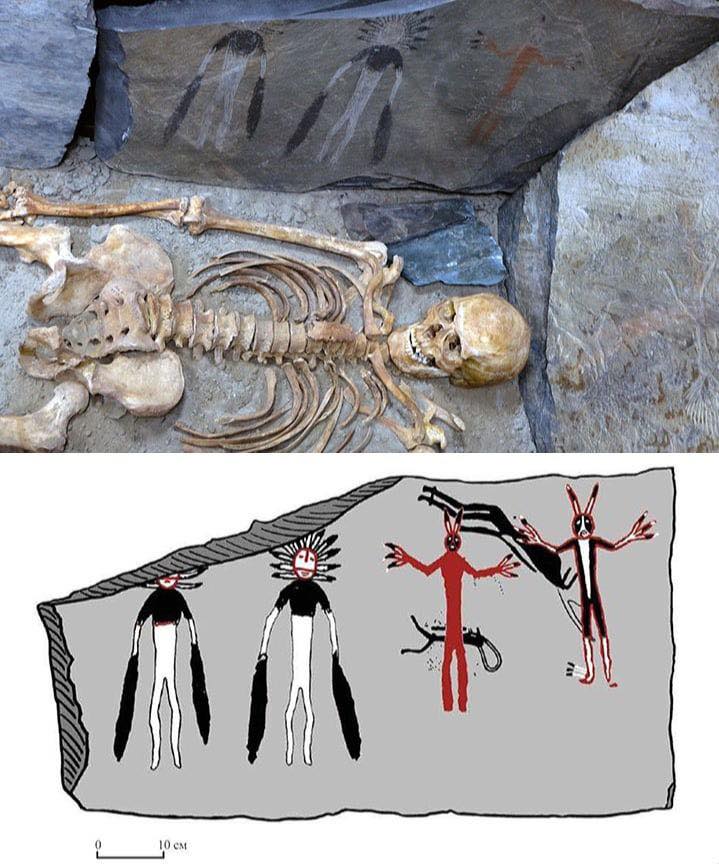
The slabs were originally mountain rocks engraved with petroglyphs. These slabs were later broken off, transported into tombs, and turned upside down to form internal walls. The engraved images of elks, mountain goats, and horned humans became the base layer of decoration.
Over these petroglyphs, Bronze Age artists painted eleven human-like figures, uniting them with a continuous red line—possibly symbolic of a ritual or spiritual connection.
The Colors of Life and Death
The pigments found at Karakol reveal that prehistoric painters used three primary colors:
-
Red Ochre (thermally modified) – applied on stone walls and human remains, especially beneath the eyes.
-
Black Specularite (silvery mineral) – highlighted the eyebrows of the deceased.
-
White Pigment – created by scraping the slabs to reveal reflective rock crystals.
On the buried individuals themselves, traces of these same pigments were discovered, suggesting that both the living ritual participants and the dead were part of a larger symbolic narrative.
Ancient Artists as Early Scientists
The most groundbreaking discovery came from a team at the Kurchatov Institute in Moscow, working with the Paleo-Art Centre of the Institute of Archeology. Through advanced synchrotron analysis, they proved that the red pigment was not natural ochre but thermally modified ochre.
What Does That Mean?
This indicates that ancient artists deliberately heated minerals to precise temperatures to produce the exact red tone they wanted.
Roman Senin, head of the synchrotron research department, explained:
“Some structures are not typical for natural samples, but are the product of heat treatment. Simply put, the primitive artist heated the mineral to a certain temperature in order to get the colour he needed.”
In other words, 5,000 years ago, humans in Siberia were already experimenting with controlled chemical reactions—a remarkable scientific achievement for the time.
Step-by-Step: How Ancient Pigments Were Made
-
Engraving the Base Layer – Early petroglyphs of animals and humans carved into stone.
-
Constructing Tombs – Slabs with engravings were cut, transported, and reassembled upside down inside burial chambers.
-
Creating Pigments:
-
Red – Ochre heated to specific temperatures.
-
Black – Soot and specularite mineral.
-
White – Exposed quartz crystals via scraping.
-
-
Layered Painting – Human-like figures painted over earlier engravings, united with a symbolic red line.
-
Funeral Ritual Use – Pigments applied not only to stone walls but also to the bodies of the deceased.
This process shows a multi-stage artistic and ritual effort, combining art, science, and spirituality.
Polychrome Rock Art in Siberia: A First
While rock art is found across many cultures, Karakol stands out as the first recorded case of polychrome rock paintings in Siberia. Most prehistoric art in the region had been monochrome.
The use of multiple colors—and the ability to engineer pigments—signals a cultural and intellectual leap for Bronze Age communities of the Altai.
Interpreting the Figures
The exact meaning of the Karakol tomb art remains a mystery. The eleven horned human figures arranged in a composition may represent:
-
Funeral rituals involving the deceased.
-
Spiritual guides or shamans wearing horns and feathers.
-
Celestial beings or mythological entities.
-
Narratives of life, death, and afterlife journeys.
The continuous red line uniting the figures suggests a ritualistic connection, possibly symbolizing blood, life force, or a path to the spirit world.
Alexander Pakhunov of the Institute of Archeology notes that the different tones of pigments likely carried symbolic meanings—still undeciphered but clearly intentional.
Science Meets Spirituality
The dual nature of Karakol art is what makes it unique:
-
Artistic Expression – Animals, humans, and symbolic imagery carved and painted in vivid polychrome.
-
Scientific Innovation – Controlled heating of ochre to achieve specific hues, an early form of chemistry.
-
Ritualistic Purpose – Pigments used on tomb walls and human remains suggest a spiritual role in burial practices.
This blend highlights how prehistoric communities viewed art, science, and ritual as interconnected, not separate disciplines.
A Bronze Age Legacy
The Karakol artworks date to the early and middle Bronze Age (around 3000 BCE). For modern scientists, they represent:
-
The earliest evidence of chemical pigment modification in Siberia.
-
The first example of polychrome burial paintings in the region.
-
A rare insight into funeral rituals of ancient Altai inhabitants.
These discoveries expand our understanding of how prehistoric societies combined technology, creativity, and belief systems in ways previously underestimated.
Why This Discovery Matters Today
-
History of Science – It pushes back the timeline of chemical experimentation by thousands of years.
-
Cultural Heritage – Highlights the sophistication of Bronze Age Altai communities.
-
Global Archaeology – Adds Siberia to the list of regions with significant prehistoric art innovation.
-
Artistic Inspiration – Demonstrates the timeless human drive to create beauty, meaning, and symbolism.
By proving that prehistoric people were capable of scientific problem-solving, the Karakol discovery challenges stereotypes of early humans as purely primitive.
Conclusion: Painting the Past with Fire and Imagination
The ancient Altai pigments of Karakol show that 5,000 years ago, humans already understood and harnessed chemical reactions to shape their world. By heating ochre, carving stone, and painting ritual figures, they created not only art but also a lasting fusion of science and spirituality.
These discoveries remind us that the human quest for knowledge, creativity, and meaning is as old as civilization itself. The Karakol tombs, with their logic-defying pigments and mysterious horned figures, stand as a bridge between prehistory and modern science, waiting for future researchers to unravel their final secrets.
ALSO READ: One of the Oldest Windmills in the World: The Neştifan Windmills of Iran