Ancient Metal Clamps: The Lost High-Tech Secret of Ancient Civilizations
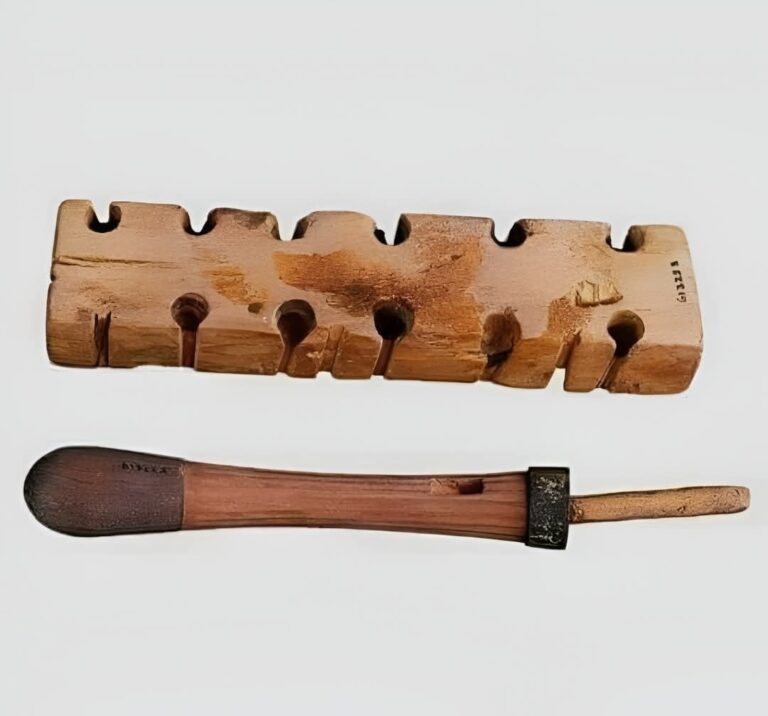
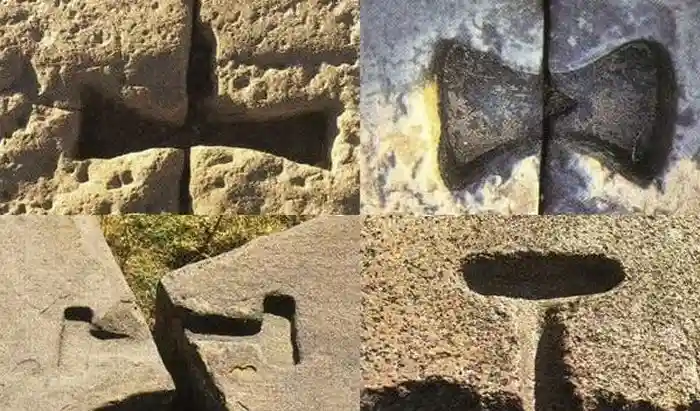
Across the world, from the ruins of Egypt to the sacred sites of Peru and Cambodia, archaeologists have uncovered an astonishing and perplexing detail in ancient megalithic architecture: metal clamps used to hold giant stone blocks together. These clamps, found in T-shaped grooves carved into monumental stonework, represent one of the greatest unresolved mysteries of ancient engineering.
How could civilizations separated by thousands of miles and oceans have developed the same advanced construction technique? Even more puzzling is the metallurgy: alloys discovered in South America and beyond require temperatures far higher than what mainstream archaeology believes ancient societies could achieve.
This article explores the mystery, spread, technology, and significance of ancient metal clamps—and why their existence challenges our understanding of history.
What Are Ancient Metal Clamps?
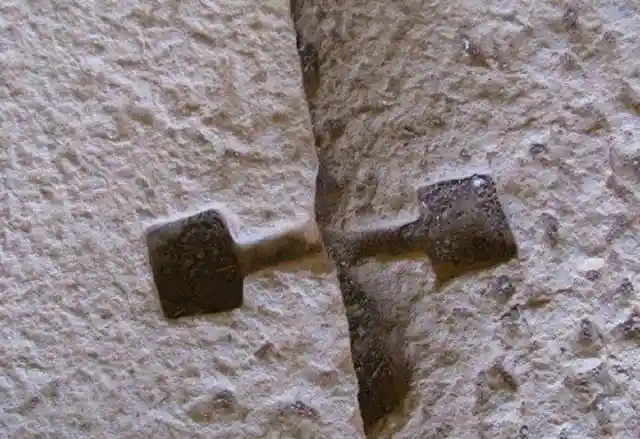
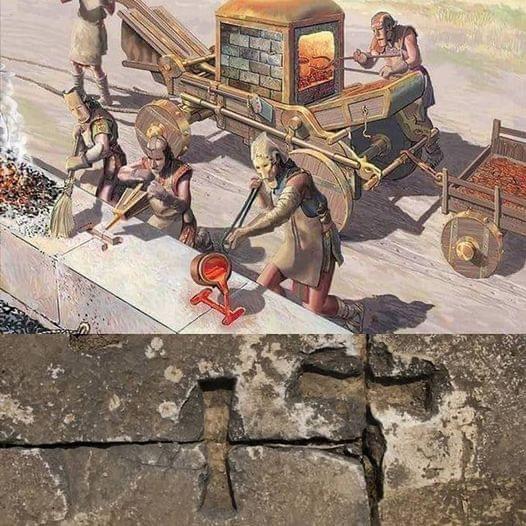
Metal clamps, also called I-shaped or T-shaped clamps, are small pieces of metal that were set into carved grooves on massive stone blocks. Their purpose appears to have been to lock the blocks together, preventing shifts over time.
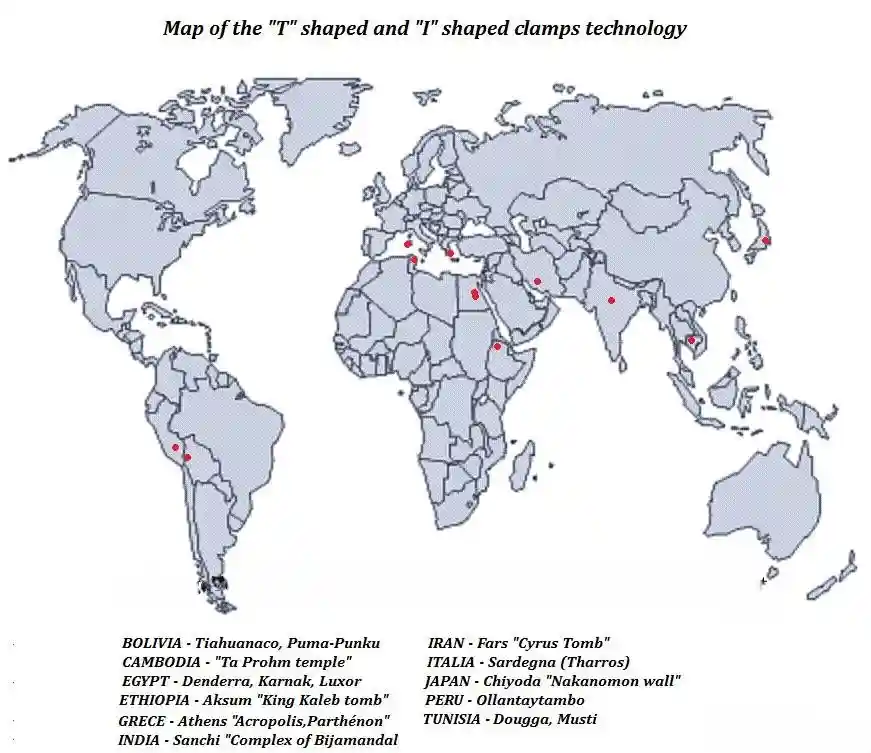
Archaeologists have discovered clamps in sites such as:
-
Tiahuanaco (Tiwanaku) and Puma Punku, Bolivia
-
Ollantaytambo and Coricancha, Peru
-
The Parthenon, Greece
-
Egyptian temples along the Nile
-
Mesopotamian ruins
-
Angkor Wat, Cambodia
The sheer spread of this technique suggests a global transfer of knowledge, or parallel development of a technology far ahead of its time.
Why Did Ancient Builders Use Clamps?
Scholars debate the purpose of these clamps:
-
Practical theory: They were used to hold massive stone blocks in place as construction hardened and settled.
-
Ceremonial theory: Some believe they served symbolic or decorative roles, possibly adorned with silver or gold.
-
Structural reinforcement: By binding blocks together, clamps increased resistance to earthquakes—especially relevant in seismic zones like Peru.
What makes the mystery deeper is that modern engineering rarely requires clamps for megalithic stonework, as precise carving and weight distribution are usually sufficient.
The Mystery of Their Metallurgy
One of the most astonishing aspects of these clamps is the composition of the alloys.
In Pre-Columbian South America, examined clamps revealed:
-
95.15% copper
-
2.05% arsenic
-
1.70% nickel
-
0.84% silicon
-
0.26% iron
This is unusual because nickel deposits do not exist in Bolivia, raising the question: where did this alloy come from?
Even more puzzling, evidence suggests the clamps were cast directly into grooves using molten metal. This would require portable smelters and the ability to melt metals at extraordinarily high temperatures.
At Puma Punku, metallurgical analysis found traces of:
-
Platinum (melts at 1,753°C)
-
Aluminum (not industrially produced until the 19th century)
Such results suggest an advanced lost technology far beyond what archaeologists attribute to ancient cultures.
How Did This Technology Spread Across the Globe?
The use of clamps spans continents:
-
Egypt: Metal clamps found in temples indicate that even the world’s oldest monumental builders relied on this method.
-
Greece: The Parthenon employed clamps for structural support.
-
Mesopotamia: Buildings feature similar grooves and metal joiners.
-
Peru & Bolivia: Some of the most precise examples exist at Ollantaytambo, Coricancha, and Puma Punku.
-
Cambodia: At Angkor Wat, clamps secured massive sandstone blocks.
How could such specific engineering techniques appear in cultures that supposedly had no contact?
Three main theories emerge:
-
Independent invention: Civilizations solved the same engineering problems in the same way.
-
Diffusionism: Ancient seafarers or travelers spread this knowledge globally.
-
Lost advanced civilization: Some researchers argue clamps are remnants of an advanced culture that predates known history.
Looting and Loss of Clamps
Sadly, very few clamps have survived. During the Spanish conquest of South America, many clamps were removed under the assumption they were gold or silver. Colonial armies often destroyed walls just to extract these mysterious fasteners.
This destruction robbed history of invaluable clues. Today, only indentations and rare surviving alloys remain as evidence.
Theories About Ancient High-Temperature Metallurgy
Mainstream archaeology struggles to explain how these clamps were produced. Ancient furnaces, as far as records show, could not reach the temperatures required to melt platinum or complex alloys.
Possible explanations include:
-
Advanced lost technology: Civilizations possessed furnaces or chemical knowledge long forgotten.
-
Geological anomalies: Natural processes created alloys later mistaken for advanced metallurgy.
-
Alternative history: Some theorists suggest outside influence—perhaps travelers from advanced societies or even extraterrestrial origins.
Regardless of theory, the metallurgy remains inconsistent with what we know about ancient societies.
Ancient Metal Clamps and Earthquake Resistance
One practical explanation is that clamps were designed to withstand seismic activity. Peru and the Mediterranean both lie in earthquake-prone regions. By locking stones together, clamps would:
-
Prevent displacement during tremors
-
Add tensile strength to masonry
-
Increase the longevity of the structures
This would explain why so many ancient megaliths still stand strong after thousands of years.
What Ancient Clamps Tell Us About Lost Knowledge
The mystery of the clamps reveals a bigger truth: our ancestors may have known more than we think. Whether through forgotten technologies, experimentation, or lost civilizations, the clamps show:
-
Mastery of metallurgy and engineering
-
Possible global knowledge exchange long before known trade routes
-
A deep concern for durability and permanence in construction
These discoveries challenge the linear narrative of history, hinting at civilizations or knowledge that disappeared but left behind traces of their genius.
Visiting Sites with Ancient Metal Clamps
Travelers fascinated by this mystery can visit:
-
Puma Punku, Bolivia – The most puzzling examples with traces of exotic metals.
-
Ollantaytambo & Coricancha, Peru – Stunning Inca stonework with clamp grooves.
-
Parthenon, Greece – Classical architecture using similar techniques.
-
Egyptian temples – Ancient constructions with evidence of clamps.
-
Angkor Wat, Cambodia – A masterpiece of Khmer architecture with clamped stones.
Conclusion
The discovery of ancient metal clamps remains one of archaeology’s greatest enigmas. Found across continents, made of exotic alloys, and requiring advanced metallurgy, these clamps suggest that ancient civilizations possessed knowledge and technologies now lost to history.
Were they simply practical reinforcements, ceremonial decorations, or evidence of a global prehistoric culture? Until more evidence is uncovered, the clamps remain a silent testimony to the brilliance—and mystery—of our ancestors.