Ancient Cylinder Seals: The First Signatures of Civilization
Long before ink and paper, long before contracts and signatures, human beings found ingenious ways to prove identity and authenticate documents. Among the most fascinating innovations were the ancient cylinder seals, small yet powerful objects that shaped the very foundations of communication, trade, and governance.
Dating back as far as 7600 BC, cylinder seals were most prevalent in Mesopotamia, Susa (modern-day Iran), and surrounding regions. Typically measuring just 2 to 3 centimeters wide, these artifacts may seem insignificant at first glance. Yet they were much more than ornaments: they were personal signatures, storytelling devices, and precursors to writing systems.
What Were Ancient Cylinder Seals?
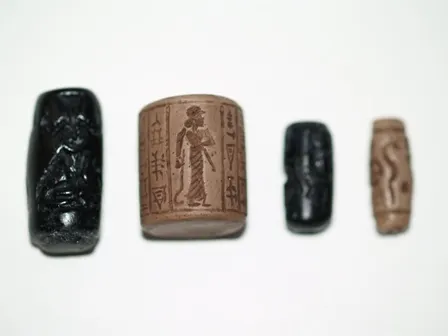
Cylinder seals were tiny, cylindrical objects, usually made of stone, glass, or ceramic, intricately carved with images, symbols, and inscriptions. When rolled over wet clay tablets or jars, they left behind a continuous impression.
Materials Used in Cylinder Seals
-
Steatite, serpentine, and hematite were common stones.
-
Semi-precious stones like lapis lazuli and carnelian were used for elites.
-
Later seals included glass or metal, reflecting technological progress.
How They Worked
-
The cylinder was rolled across soft clay.
-
Its carved surface imprinted images, names, or scenes.
-
The impression served as proof of ownership, identity, or authority.
In essence, a cylinder seal was the world’s first signature—a mark unique to its owner.
Cultural and Practical Significance
Identity and Authentication
Just as we sign contracts or use passwords today, the ancient Mesopotamians used cylinder seals to authenticate documents and goods. For example:
-
Merchants sealed storage jars to prove ownership.
-
Officials stamped administrative records.
-
Individuals used seals as personal identifiers.
Storytelling and Art
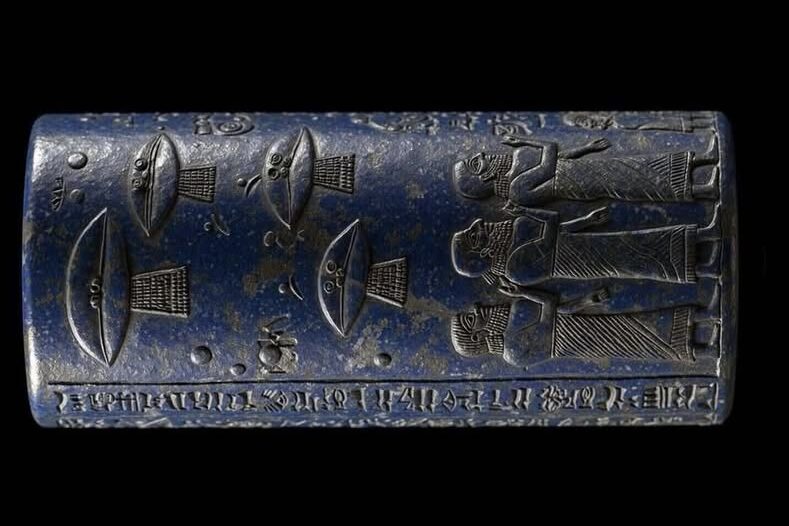
Many seals contained complex narratives depicting gods, rituals, battles, and myths. Rolling a seal across clay could create a miniature artwork, telling stories in visual form. These impressions often inspired later cuneiform writing systems.
Religious Symbolism
Cylinder seals also carried spiritual significance:
-
They depicted deities like Enki, Inanna, and Shamash.
-
Some functioned as amulets, offering protection to the owner.
-
Seals linked the physical world to the divine, reinforcing the sacred authority of kings and priests.
The Evolution of Cylinder Seals
Early Neolithic Seals (c. 7600–5000 BC)
The earliest seals were simple stamp seals—flat objects pressed into clay. These evolved into cylinders as societies became more complex.
Sumerian Seals (c. 3500–3000 BC)
In ancient Sumer, cylinder seals reached peak importance:
-
They appeared alongside the earliest cuneiform tablets.
-
Used in temples and palaces, they became indispensable in administration.
-
Carvings depicted gods bestowing legitimacy on rulers.
Akkadian and Babylonian Seals (c. 2300–1600 BC)
-
Seals from this era featured intricate artistry with detailed figures.
-
Akkadian rulers used them as symbols of political authority.
-
Mythological themes emphasized cosmic order and divine kingship.
Assyrian and Persian Seals (c. 900–500 BC)
Later seals reflected cultural blending:
-
Assyrians highlighted military power.
-
Persians incorporated Zoroastrian and imperial motifs.
By the time of the Persian Empire, cylinder seals were widely used across administrative and trade networks stretching from Mesopotamia to the Mediterranean.
Cylinder Seals and the Birth of Writing
Some scholars argue that cylinder seals directly influenced the invention of cuneiform:
-
Both used clay tablets as a medium.
-
Both conveyed information, identity, and authority.
-
Over time, pictorial symbols evolved into written signs.
In this sense, cylinder seals can be seen as bridges between art and literacy, providing the conceptual framework for humanity’s first true writing system.
Notable Discoveries of Cylinder Seals
The Royal Tombs of Ur
Excavations at Ur, one of Sumer’s greatest cities, unearthed seals buried with rulers and nobles. These seals often depicted banquet scenes and mythological figures, emphasizing wealth and divine protection.
Susa (Iran)
At Susa, archaeologists found seals dating back to 4000 BC. Many showed geometric patterns and animal motifs, possibly linked to tribal identity or trade.
Nineveh (Assyria)
Assyrian seals discovered at Nineveh reveal detailed battle scenes, highlighting the empire’s military might.
The Louvre and British Museum Collections
Today, thousands of cylinder seals reside in major museums worldwide, where their tiny but detailed engravings continue to astonish visitors.
The Artistic Beauty of Cylinder Seals
Despite their size, cylinder seals represent astonishing craftsmanship:
-
Artisans carved intricate figures with remarkable precision.
-
Seals often featured registers (horizontal bands) organizing the scenes.
-
Techniques included intaglio engraving, where images were incised into the surface.
Themes ranged from daily life (banquets, farming, trade) to mythology (gods, monsters, and cosmic battles). Each seal was both a personal item and a miniature masterpiece.
Cylinder Seals in Daily Life
Cylinder seals were not exclusive to kings and priests. Archaeological evidence shows they were used by:
-
Merchants, to secure trade goods.
-
Craftsmen, to mark products.
-
Farmers, to record harvest storage.
In this sense, cylinder seals democratized the act of “signing one’s name,” giving individuals across society a tangible way to assert identity and ownership.
Legacy of Cylinder Seals
Though eventually replaced by other tools of writing and authentication, cylinder seals left a lasting legacy:
-
Influence on Writing Systems: Their symbolic impressions may have inspired cuneiform.
-
Foundation of Bureaucracy: They helped create structured systems of record-keeping.
-
Artistic Heritage: Their beauty continues to inspire modern jewelry and decorative arts.
Today, cylinder seals stand as a brilliant testament to human creativity, organization, and innovation at the dawn of civilization.
Conclusion
Small enough to fit in the palm of a hand, yet powerful enough to change history, ancient cylinder seals were among the earliest tools of communication and identity. Dating back to 7600 BC, they served as personal signatures, authenticators of trade, spiritual protectors, and precursors to writing itself.
From Sumer to Persia, these tiny cylinders rolled out the stories of gods, kings, and everyday people, leaving behind impressions that continue to speak across thousands of years. As we study them today in museums and archaeological sites, they remind us of a profound truth: even the smallest objects can carry the weight of civilization’s greatest achievements.
ALSO READ: Thuya: The Powerful Matriarch Behind Egypt’s Greatest Dynasty