Plague Doctor Masks: The Haunting Beaked Disguise of 16th and 17th Century Europe
The Strange Symbol of a Deadly Age
Few images are as eerie or recognizable in the history of medicine as the plague doctor mask. With its long, curved beak and glass-eyed gaze, the costume evokes fear, mystery, and fascination. Emerging during Europe’s devastating outbreaks of plague in the 16th and 17th centuries, the mask formed part of a full protective outfit designed to shield physicians from the terrifying disease.
Crafted from leather and filled with aromatic herbs or vinegar-soaked sponges, the beaked mask represented the best medical theories of its time. To modern eyes, it may seem macabre or theatrical, but in its day, it was a serious attempt at survival.
Origins of the Plague Doctor Costume
The Black Death’s Lasting Shadow
The Black Death of the mid-14th century devastated Europe, killing nearly one-third of its population. While the worst wave subsided, plague outbreaks continued for centuries. Towns and cities lived in constant dread, and governments sought ways to manage the medical crisis.
Birth of the Costume
By the late 1500s and early 1600s, plague doctors in Germany, Italy, and France began to adopt a uniform designed to keep them safe. This included:
-
A long leather gown coated with wax or suet to repel bodily fluids.
-
Leather gloves, boots, and a wide-brimmed hat signaling the doctor’s profession.
-
A wooden cane used to examine patients without direct contact.
-
Most famously, the beaked mask, which became the defining feature of the plague doctor.
The Beak: A Filter for Poisoned Air
Why a Beak?
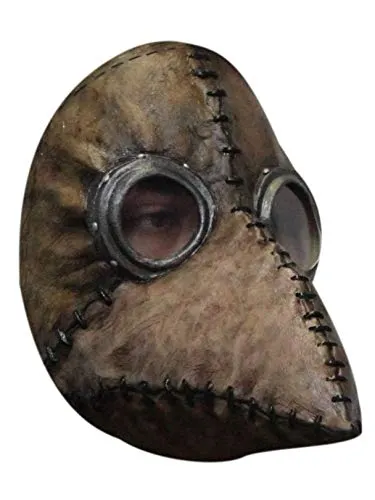
The curved beak of the mask was not a whimsical design. Physicians believed in the miasma theory of disease—the idea that plague spread through “bad air” or poisonous vapors.
The beak served as a primitive filter. Doctors stuffed it with:
-
Dried herbs like mint, lavender, and cloves.
-
Sponges soaked in vinegar to purify the air.
-
Aromatic substances like camphor or myrrh.
Functionality
As the doctor inhaled, air passed through the herbal mixture, theoretically cleansing harmful vapors before they reached the lungs. Though ineffective against the true cause—fleas carrying Yersinia pestis bacteria—the mask offered psychological reassurance and may have helped reduce exposure to foul smells.
The Full Plague Doctor Outfit
The mask was just one part of the elaborate protective costume.
-
Leather Gown: A heavy, ankle-length coat prevented contact with infected fluids.
-
Wrap or Cloak: An extra layer added protection.
-
Hat: A broad hat made of leather or felt indicated medical authority.
-
Gloves and Boots: Sealed the body from contact with patients.
-
Cane: Allowed doctors to lift clothing, examine buboes, or point directions without touching the sick.
This uniform, first standardized in Germany and Italy, spread widely and became one of the most haunting images of early modern medicine.
Plague Doctors: Who Were They?
Not Always Trained Physicians
Despite the grand appearance, plague doctors were often not skilled medical experts. Many were young practitioners or men with little training, hired by cities under contract. Their duties included:
-
Treating patients with rudimentary methods.
-
Recording deaths and maintaining registers.
-
Witnessing wills and last testaments.
Risky Role
Though the costume offered some protection, plague doctors remained highly vulnerable. Many died from exposure, leaving behind chilling reminders of the dangers of their profession.
Symbolism and Fear
The sight of a plague doctor in beaked mask and leather gown struck terror into the hearts of citizens. The outfit was synonymous with death, disease, and the hopelessness of outbreaks.
Yet, paradoxically, it also symbolized authority and civic order—a visible sign that the government was attempting to fight the plague, however limited the tools.
The German Contribution to the Plague Mask
While the costume spread across Europe, Germany in the 16th and 17th centuries played a key role in standardizing its form. German cities, frequently struck by plague, employed doctors under strict municipal contracts and ensured they wore protective gear.
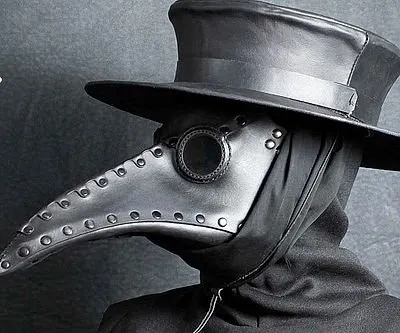
Artifacts, drawings, and descriptions from Germany give us some of the clearest evidence of how the beaked mask and gown looked and functioned. These records solidified the image that still lingers in popular imagination today.
Medical Beliefs Behind the Costume
The plague doctor’s attire reveals much about early modern medicine:
-
Miasma Theory: Illness spread through bad air, not microscopic organisms.
-
Protective Aromas: Strong scents could counteract infection.
-
Physical Barriers: Leather and waxed fabric might shield against “contagious effluvia.”
Although modern science shows these ideas were flawed, they reflect the genuine struggle to understand and combat disease with limited knowledge.
Legacy of the Plague Doctor Mask
From History to Pop Culture
Today, the plague doctor mask is an iconic image, appearing in:
-
Festivals such as Venice Carnival, where it transformed into a theatrical costume.
-
Literature and art, symbolizing death, fear, and the unknown.
-
Pop culture, from gothic fashion to video games and films.
A Reminder of Medical Progress
The eerie design reminds us how far medicine has advanced—from filtering air with herbs to developing antibiotics and vaccines. It also underscores the human desire for protection and control in the face of overwhelming epidemics.
Visiting Plague Doctor Exhibits
Many museums across Europe display plague doctor masks and outfits, particularly in:

-
Germany (medical history museums in Berlin and Ingolstadt).
-
Italy (Venice’s medical exhibits and archives).
-
France (Parisian museums covering early modern medicine).
These collections allow modern visitors to connect with a past where fear, ingenuity, and superstition blended into haunting artifacts.
Conclusion: The Beaked Mask as a Symbol of Resilience
The plague doctor mask of the 16th and 17th centuries remains one of history’s most unsettling and fascinating medical artifacts. In its grotesque beak and leather form, it carried the weight of an entire society’s fear—and its determination to resist disease with the tools at hand.
Though ineffective against plague, the costume represented the beginnings of public health measures, protective clothing, and a communal fight against epidemics. Today, it serves as both a symbol of medicine’s struggles in the past and a haunting reminder of humanity’s resilience in the face of devastation.
ALSO READ: The Tricycle of Shin: A Child’s Bicycle from Hiroshima’s Atomic Tragedy