La Motilla del Azuer: Ancient Ingenuity in the Face of Drought
A Fortress Born from Scarcity
In the heart of Spain’s La Mancha plain, near the town of Daimiel, rises a structure that testifies to the resilience and brilliance of ancient societies—La Motilla del Azuer. Dating back to the Bronze Age (2200–1500 BCE), this fortified settlement is not only remarkable for its defensive architecture but also for housing the oldest known well on the Iberian Peninsula.
This extraordinary achievement allowed its builders to access groundwater during a time of severe droughts that plagued the region. More than a fortress, La Motilla del Azuer functioned as a communal hub, storage site, and survival machine, demonstrating the ingenuity of a society that turned scarcity into innovation.
Over 4,000 years later, this archaeological site continues to inspire us, reminding the modern world of the timeless importance of water management and community resilience.
The Bronze Age in Iberia: A Time of Challenge and Change
The Bronze Age in the Iberian Peninsula was marked by dramatic shifts in climate and society.
-
Environmental Stress: Around 2200 BCE, the region experienced prolonged periods of drought and ecological instability.
-
Technological Advances: Communities began experimenting with metallurgy, agriculture, and new architectural forms.
-
Social Organization: Scarcity of resources pushed societies toward collective solutions, leading to fortified settlements and shared storage facilities.
It was within this context that La Motilla del Azuer emerged, a pioneering response to environmental crisis through hydraulic engineering and cooperative living.
The Architecture of La Motilla del Azuer
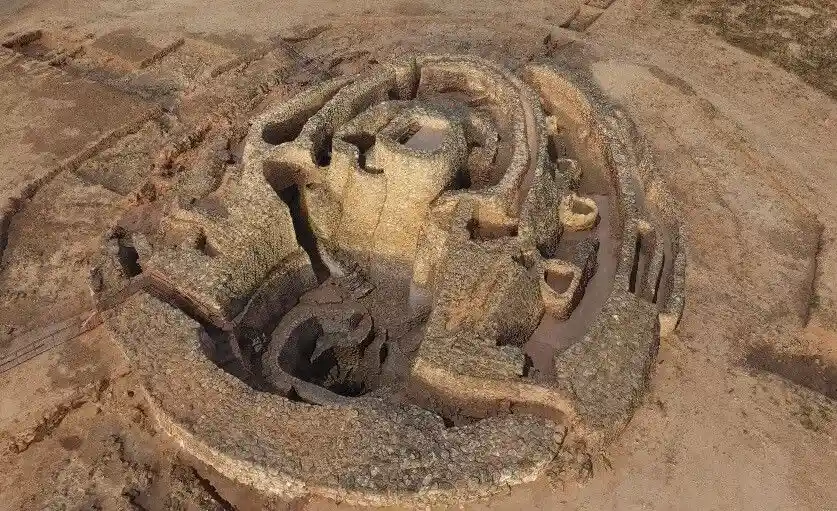
La Motilla del Azuer is classified as a “motilla”, a type of fortified settlement unique to the plains of La Mancha. About 30 motillas are known, but Azuer is the most extensively excavated and studied.
Key Features
-
Central Tower
-
A stone-built tower rising about 10 meters high.
-
Served as the defensive heart of the settlement.
-
-
Concentric Walls
-
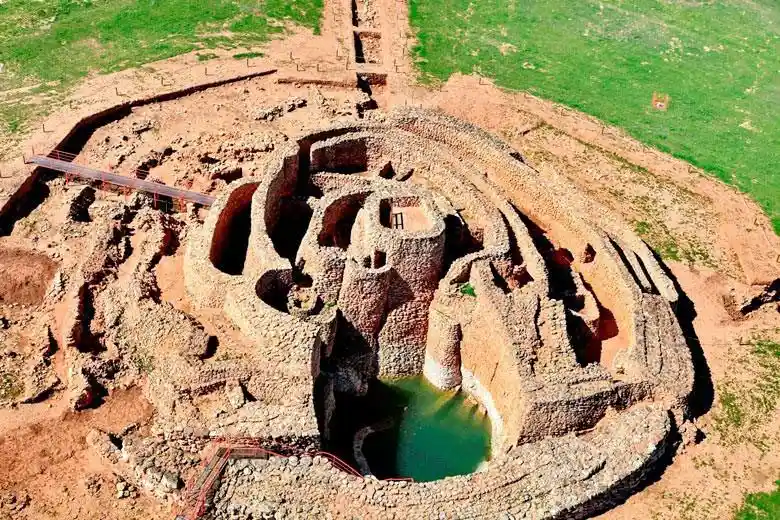
Three defensive walls encircle the site in a spiral-like layout.
-
Provided both security and structural support.
-
-
The Well
-
Located within the central enclosure, the well descends over 16 meters deep.
-
Taps directly into the underground aquifer of the Guadiana River basin.
-
-
Storage and Workshops
-
Surrounding areas contained silos for storing grain and rooms for pottery and textile production.
-
-
Residential Spaces
-
Houses and communal areas lay outside the fortified core, forming part of a broader settlement system.
-
This combination of defensive and hydraulic features makes La Motilla del Azuer a hybrid fortress-farmstead, uniquely adapted to the environment.
The Oldest Well on the Iberian Peninsula
At the heart of La Motilla del Azuer lies its most astonishing feature: the well, the oldest ever documented in Iberia.
-
Depth: More than 16 meters.
-
Construction: Stone-lined to ensure stability and durability.
-
Purpose: Provided reliable access to groundwater during periods of prolonged drought.
-
Significance: Represented a technological leap in hydraulic engineering, centuries ahead of its time.
The presence of this well demonstrates that the inhabitants of La Motilla del Azuer had a profound understanding of geology and water systems, enabling them to secure survival in an arid climate.
Life in the Motilla: Community and Survival
Archaeological excavations reveal that La Motilla del Azuer was more than a fortress—it was a multifunctional hub that sustained a community.
-
Agriculture: Surrounding fields were cultivated with cereals such as barley and wheat.
-
Animal Husbandry: Remains of sheep, goats, and cattle indicate pastoral practices.
-
Craft Production: Workshops produced pottery, textiles, and tools for daily use.
-
Food Storage: Large silos within the motilla stored surplus grain, ensuring food security.
-
Defense and Refuge: In times of conflict or external threat, the motilla’s walls and tower provided a refuge for the community.
This system reflects early collective organization, where survival depended on shared resources and cooperative planning.
Ancient Ingenuity in Hydraulic Engineering
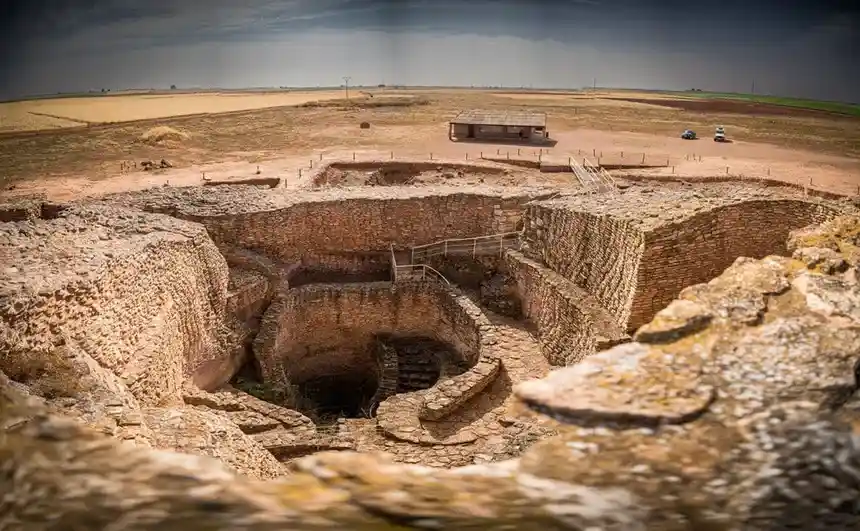
The well of La Motilla del Azuer was not an isolated achievement. It was part of a broader hydraulic strategy:
-
Water Distribution: Channels and storage areas helped manage water use efficiently.
-
Crisis Adaptation: By centralizing water access within a fortress, the community could control and protect its most precious resource.
-
Long-Term Planning: The construction demonstrates foresight, as the well remained functional for centuries.
This mastery of water management highlights the innovative spirit of Bronze Age Iberians, who recognized that controlling water meant controlling survival.
Lessons from La Motilla del Azuer for Today
Though 4,000 years old, La Motilla del Azuer carries messages that resonate deeply in our modern world:
-
Water Security Is Civilization’s Foundation
Just as ancient societies invested in wells, aqueducts, and reservoirs, today’s world must prioritize sustainable water management in the face of climate change and drought. -
Community and Cooperation Are Key
The motilla reflects a society where collective action ensured survival. In times of crisis, shared responsibility remains humanity’s strongest tool. -
Innovation in Scarcity
The well exemplifies how scarcity can drive innovation. Modern societies facing resource shortages may look to history for inspiration in adaptive technologies.
Preservation and Archaeological Research
La Motilla del Azuer is a protected archaeological site, extensively studied by Spanish archaeologists since the 1970s.
-
Excavations: Conducted by teams from the University of Granada and other institutions.
-
Findings: Thousands of artifacts, from pottery to tools, illuminate daily life in the Bronze Age.
-
Heritage Status: Declared a Cultural Heritage Site, it remains open to visitors and scholars.
Ongoing research continues to shed light on the social structures, trade networks, and survival strategies of Bronze Age communities.
Visiting La Motilla del Azuer
For those intrigued by history, La Motilla del Azuer is open to the public:
-
Location: Just outside Daimiel, in Spain’s Castilla-La Mancha region.
-
Experience: Visitors can explore the tower, walls, and ancient well, guided by detailed archaeological interpretations.
-
Educational Value: The site serves as an outdoor classroom, illustrating the genius of ancient societies in adapting to climate stress.
Walking through its concentric walls, one can almost feel the resilience of a community that transformed hardship into architectural brilliance.
Conclusion: A Fortress of Ingenuity and Endurance
La Motilla del Azuer is not merely an archaeological site—it is a monument to human ingenuity in the face of adversity. Built between 2200 and 1500 BCE, it represents the oldest well in the Iberian Peninsula, a technological marvel that sustained life in a drought-stricken landscape.
More than a water source, the motilla was a fortress, warehouse, and communal hub, embodying the resilience and vision of its builders. Over 4,000 years later, it continues to remind us that the challenges of water scarcity and climate are not new—and that solutions often lie in innovation, cooperation, and respect for resources.
As modern societies confront drought and ecological change, the lessons of La Motilla del Azuer remain as relevant as ever, urging us to draw on both past wisdom and present ingenuity.
ALSO READ: Echoes of Divinity: The Marble Thrones of the Amphiareion of Oropos