The Mystery of Masuda-no-Iwafune in Asuka, Japan: The Rock Ship of Legends
Masuda-no-Iwafune in Asuka
Japan is a land filled with temples, shrines, and historical wonders. Yet among its many cultural treasures lies one of its most mysterious and least understood artifacts: the Masuda-no-Iwafune in Asuka Village. Known as the Rock Ship of Masuda, this massive carved stone has baffled historians, archaeologists, and travelers alike.
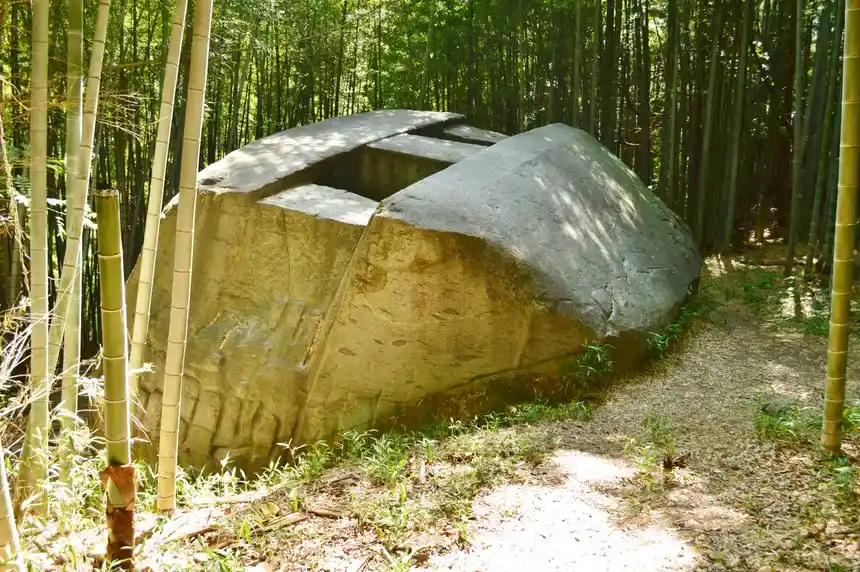
Standing atop a hill in Nara Prefecture’s Asuka region, the granite monolith is a testament to both ancient craftsmanship and enduring mystery. Measuring 11 meters long, 8 meters wide, and 4.7 meters tall, and weighing nearly 800 tonnes, the Masuda-no-Iwafune is unlike anything else in Japan.
But why was it made? Who carved it? And what purpose did it serve?
The Village of Asuka: A Historical Background
Before diving into the rock itself, it’s important to understand the setting. Asuka Village, located in Nara Prefecture, is one of Japan’s most historically rich areas.
-
It served as the political and cultural center of Japan during the Asuka Period (538–710 AD).
-
The region is dotted with ancient burial mounds (kofun), Buddhist temples, and stone monuments.
-
Many of these artifacts reflect the influence of Korean and Chinese culture, which heavily shaped early Japanese civilization.
Yet, among these treasures, the granite stone carvings of Asuka stand apart. Scattered across the village are mysterious, precisely shaped stones whose purpose remains uncertain. Of these, the Masuda-no-Iwafune is the most extraordinary.
What Is Masuda-no-Iwafune?
The Masuda-no-Iwafune translates roughly to “Rock Ship of Masuda.” It is the largest of Asuka’s carved stones and sits prominently near the top of a hill.
Key Features:
-
Size: 11m (length) × 8m (width) × 4.7m (height)
-
Weight: Approx. 800 tonnes
-
Material: Solid granite
-
Carvings: Flat surface with two square holes and an unusual raised ridge running across its top
Unlike natural boulders, this stone has been deliberately shaped. Its flat, smooth top and symmetrical square indentations suggest intentional human modification. The name “Rock Ship” comes from its resemblance to the hull of a ship.
The Mystery Behind Its Purpose
Despite its prominence, no historical texts clearly explain why the Masuda-no-Iwafune was carved. This has led to numerous theories ranging from the practical to the spiritual, and even the extraterrestrial.
1. Astronomical Observatory Theory
Some scholars suggest that the square holes and ridge may have been part of an ancient astronomical observatory. The shape and orientation might have been used to track celestial bodies or seasonal cycles.
2. Burial or Ritual Site
Others believe it was part of a kofun burial mound or a sacred site connected to ancient religious practices. Its elevated location and monumental size could have made it a symbolic or ritualistic structure.
3. Quarry Experiment
Another theory is that the rock was an unfinished quarry project. The square holes might have been used to insert wooden posts or tools for splitting stone. Yet, if it was simply a failed quarry attempt, the precision and effort invested seem excessive.
4. Symbolic “Rock Ship”
Local legends suggest it could represent a ship to the afterlife, symbolizing the journey of the soul. This aligns with Japanese and East Asian traditions of associating ships with spiritual voyages.
5. Extraterrestrial or Lost Civilization Theories
Outside of mainstream archaeology, some enthusiasts speculate that the rock was carved by an advanced lost civilization—or even extraterrestrials—due to its massive size and unexplained purpose. While not scientifically supported, these theories add to its mystique.
The Unique Features of the Rock Ship
What makes Masuda-no-Iwafune so unique compared to other Asuka stones?
-
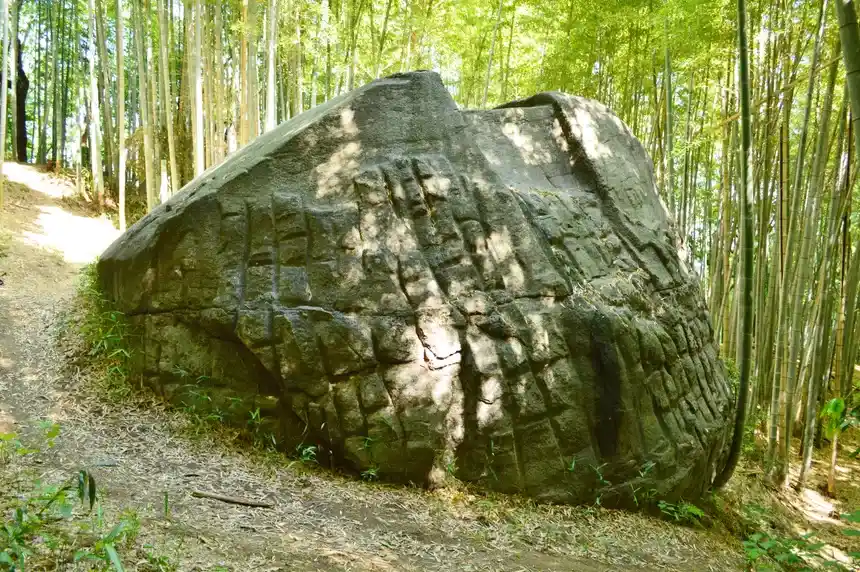
Precision Carving: The flatness of the surface is remarkable, given the primitive tools available in ancient Japan.
-
Square Holes: The two square depressions, each about a meter deep, are unlike any other stone monument in the region.
-
Ridge Line: The raised ridge across the top divides the surface in two, suggesting intentional design rather than unfinished work.
-
Scale: At 800 tonnes, it dwarfs most other ancient stone carvings in Japan.
Asuka’s Other Mysterious Stones
The Masuda-no-Iwafune is not alone. Scattered throughout Asuka are several other unusual granite stones:
-
Sakafune-ishi – A carved stone basin with channels, possibly used for rituals or sake production.
-
Ishibutai Kofun – A massive stone tomb believed to be the burial site of Soga no Umako, a powerful 6th-century statesman.
-
Tortoise Stones and Monkey Stones – Carved in animal-like shapes, their meanings remain unclear.
These artifacts suggest that stone carving was a significant practice in Asuka, though their functions are still debated.
Cultural and Historical Significance
Even without a clear explanation, the Masuda-no-Iwafune holds immense cultural value:
-
Archaeological Enigma: It challenges our understanding of early Japanese engineering.
-
Spiritual Symbol: Local legends and folklore connect it to the spiritual life of ancient Asuka.
-
Tourist Attraction: Today, it draws travelers interested in history, archaeology, and Japan’s mysteries.
For many, the Rock Ship symbolizes the enduring mysteries of human history—reminders of what we still do not know about our ancestors.
Visiting Masuda-no-Iwafune
For those intrigued by the mystery, the stone can be visited easily from Asuka Village.
-
Location: Near Okadera Temple, Asuka Village, Nara Prefecture
-
Accessibility: About a 1-hour train ride from Nara City; a short hike from Asuka Station
-
Best Time to Visit: Spring (cherry blossoms) or autumn (fall foliage) for beautiful surroundings
The stone sits quietly on a hilltop, surrounded by greenery, offering not just a glimpse into ancient mystery but also a peaceful, scenic spot.
Modern Interest and Popular Culture
Masuda-no-Iwafune has captured the imagination of:
-
Historians seeking clues about Japan’s early statehood.
-
Archaeologists studying the development of stone-carving techniques.
-
Mystery enthusiasts who draw parallels with global megaliths like Stonehenge or the Pyramids.
-
Travel bloggers and photographers, who are fascinated by its dramatic presence.

Its enigmatic nature ensures it remains a subject of fascination worldwide.
Conclusion
The Masuda-no-Iwafune in Asuka is one of Japan’s most mysterious and awe-inspiring ancient monuments. This massive 800-ton stone, carved with precision and perched atop a hill, continues to puzzle experts. Whether it was an observatory, a ritual site, a quarry experiment, or something entirely different, its true purpose remains hidden in the mists of history.
What is certain, however, is that the Rock Ship of Masuda embodies the intersection of history, culture, and imagination. It is a reminder that even in our modern world, there are still mysteries waiting to be explored.
For travelers seeking something beyond temples and bustling cities, a trip to Asuka offers a journey into Japan’s enigmatic past—where stones whisper stories we have yet to understand.
ALSO READ: White House Ruins in Canyon de Chelly: Ancient Puebloan Legacy in Navajo Lands