Aragonese Castle of Ischia: Italy’s Timeless Fortress on the Sea
A Fortress Above the Waves
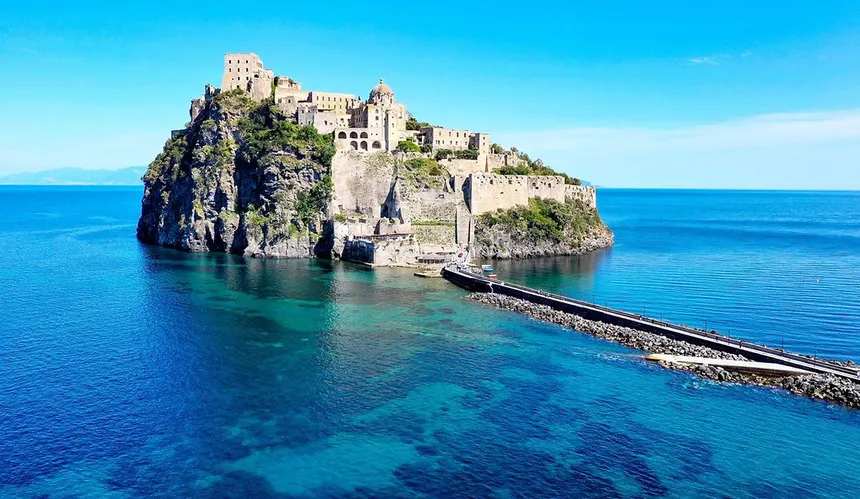
Rising dramatically from a rocky islet off the coast of Ischia in southern Italy, the Aragonese Castle is one of the Mediterranean’s most remarkable fortresses. With origins dating back to 474 BCE, the castle embodies over two millennia of history, serving as a bastion of defense, a royal residence, and a cultural hub. Its imposing walls, towers, and labyrinth of underground passages reflect centuries of military strategy and architectural evolution.
Today, the Aragonese Castle is not only a historic landmark but also a living museum, attracting travelers from around the world who come to admire its stunning architecture, panoramic views, and rich legacy.
The Origins of Aragonese Castle
A Foundation in Ancient Greece
The story of the castle begins in 474 BCE, when the Greek ruler Hierón I of Syracuse constructed the first fortress on the rocky islet. Positioned strategically in the Gulf of Naples, it provided a vantage point against naval attacks and served as a symbol of power.
Roman and Byzantine Influence
As centuries passed, the Romans and later the Byzantines expanded the fortifications. The site’s position made it an essential military outpost for controlling maritime routes and defending the island of Ischia.
The Aragonese Transformation
Alfonso of Aragon’s Vision
The castle gained its current name and much of its grandeur during the 15th century under Alfonso V of Aragon. After conquering Ischia in 1441, Alfonso ordered the construction of a stone bridge connecting the islet to the main island and reinforced the fortress with walls, towers, and military bastions.
A City Within Walls
At its peak, the Aragonese Castle functioned as a miniature city, housing churches, monasteries, noble residences, military barracks, and even vineyards. More than 2,000 families once lived within its protective walls, making it both a fortress and a thriving community.
Architectural Marvels of the Castle
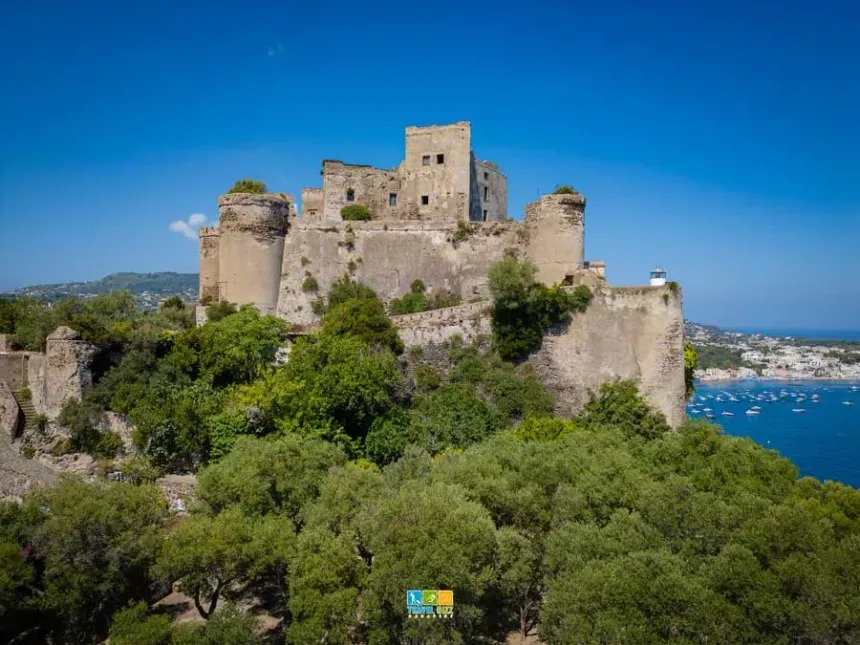
Towers and Walls
The castle’s fortifications include tall stone towers, curtain walls, and hidden passageways that reveal the ingenuity of medieval military engineering.
Underground Tunnels
A labyrinth of subterranean corridors allowed defenders to move quickly and secretly between different sections of the fortress. Some of these tunnels also connected to escape routes, providing safety during sieges.
Religious Structures
The castle houses numerous chapels and churches, including the Cathedral of the Assumption, which once held frescoes and treasures from the island’s nobility. The Convent of the Poor Clares remains one of the site’s most haunting features, where nuns practiced ascetic rituals and lived in seclusion.
Legends and Stories of the Castle
A Refuge During Invasions
Throughout history, the Aragonese Castle served as a refuge for Ischia’s population. During pirate raids and enemy invasions, entire communities would flee to the castle for protection, turning it into a fortified sanctuary.
The Monastic Mystique
The convent has long been associated with legends of nuns who practiced strict rituals of silence and self-denial. Stories tell of the austere lives they led within the stone walls, adding a spiritual and mysterious aura to the site.
Love and Tragedy
Like many medieval castles, the Aragonese is steeped in tales of romance, betrayal, and tragedy. Some say its tunnels still echo with the footsteps of long-lost souls who never left its walls.
The Decline and Restoration
From Power to Ruins
By the 18th and 19th centuries, the castle began to decline. Shifts in warfare, particularly the use of artillery, reduced its military importance. Gradually, its population dwindled, and the fortress fell into partial ruin.
Revival in the 20th Century
In the early 20th century, restoration efforts revived the Aragonese Castle as a cultural and historical site. Today, the fortress stands as a carefully preserved monument, offering visitors a journey through centuries of Italian history.
Visiting the Aragonese Castle Today
Location and Access
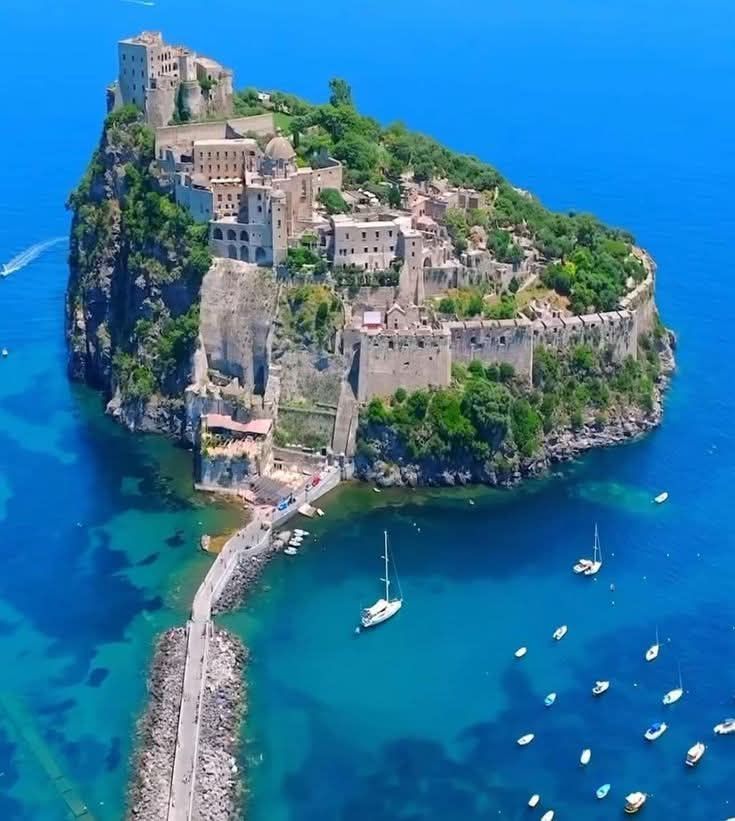
The castle is located on a volcanic islet connected to Ischia by a stone causeway. Visitors can reach the fortress on foot, crossing the scenic bridge with breathtaking views of the sea.
What to See Inside
-
The Cathedral of the Assumption – Once the spiritual center of the fortress.
-
The Convent of the Poor Clares – A hauntingly beautiful monastery with stories of devotion and sacrifice.
-
The Armory and Barracks – Reminders of the site’s military heritage.
-
Gardens and Terraces – Offering panoramic views of the Gulf of Naples, Capri, and Mount Vesuvius.
-
The Museum – Exhibits showcasing weapons, art, and artifacts from different eras.
Events and Cultural Life
The Aragonese Castle hosts cultural festivals, art exhibitions, and historical reenactments. Its blend of history and art makes it a vibrant hub of Ischia’s cultural identity.
Aragonese Castle and Ischia’s Tourism
A Jewel of the Island
The fortress is one of Ischia’s most visited landmarks, drawing both history enthusiasts and casual tourists. Its striking silhouette rising from the sea is an enduring symbol of the island.
Pairing With Local Attractions
Visitors often combine a trip to the Aragonese Castle with Ischia’s other attractions, such as its thermal spas, beaches, and hiking trails. This makes the castle a centerpiece of the island’s rich tourism offering.
Fun Facts About Aragonese Castle Ischia
-
The castle’s origins date back to 474 BCE.
-
At its peak, over 2,000 families lived within its walls.
-
The fortress once housed 13 churches and chapels.
-
Alfonso V of Aragon built the stone bridge that still connects the islet to Ischia.
-
Today, the castle is privately owned but open to the public as a museum and cultural site.
Why the Aragonese Castle Still Matters
The Aragonese Castle of Ischia is more than just a fortress—it is a chronicle of human resilience, faith, and creativity. It tells the story of an island’s defense against invaders, the blending of cultures, and the survival of traditions across centuries.
For travelers, it offers not just history but an immersive experience, where stone walls, sea breezes, and timeless legends come together to create one of Italy’s most unforgettable destinations.
Conclusion: A Fortress of Time and Memory
Standing proud for over 2,400 years, the Aragonese Castle remains a timeless symbol of Ischia’s history and spirit. From its Greek origins to its Aragonese transformation, from decline to revival, it embodies the endurance of heritage and the artistry of human ingenuity.
To walk its passageways today is to step into a living museum of the Mediterranean, where every stone whispers stories of power, devotion, and survival. The Aragonese Castle is not just a relic of the past—it is a guardian of memory and a beacon of culture, still watching over the waves of the Tyrrhenian Sea.
ALSO READ: Moray Agricultural Terraces: The Inca’s Ancient Laboratory in the Andes