The 2000-Year-Old Green Serpentine Mask of Teotihuacán: Mystery Beneath the Pyramid of the Sun
A Hidden Treasure of Teotihuacán
In the heart of Mexico’s Valley of Mexico lies Teotihuacán, the legendary “City of the Gods.” Known for its massive pyramids and mysterious origins, this ancient metropolis continues to reveal secrets buried for centuries. Among its most fascinating discoveries is a 2000-year-old green serpentine stone mask, unearthed at the base of the Pyramid of the Sun, Teotihuacán’s most iconic structure.
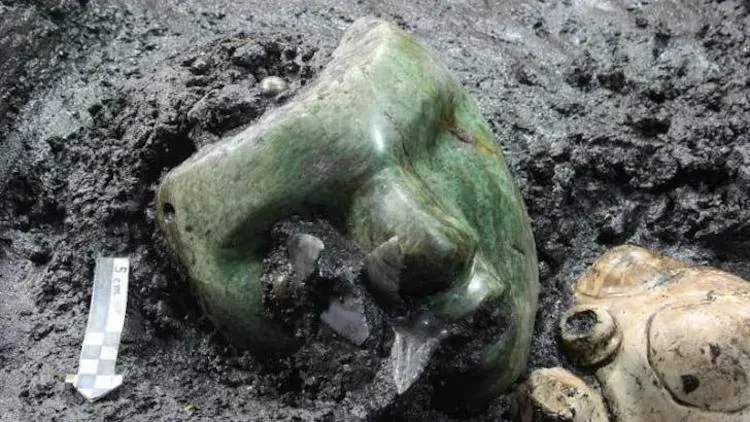
Unlike other masks designed to be worn, this serpentine masterpiece appears to have been a ritual offering, buried during the pyramid’s construction. Its craftsmanship, material, and symbolism provide valuable insights into the beliefs and artistry of Teotihuacán’s ancient builders.
Teotihuacán: City of the Gods
Origins and Importance
Founded around 100 BCE, Teotihuacán grew into one of the largest cities in the ancient world, with a population exceeding 100,000 people at its peak. Its carefully planned avenues, pyramids, and temples reflect a highly organized society with deep religious and cosmological traditions.
The Pyramid of the Sun
The Pyramid of the Sun, standing at 65 meters (213 feet) tall, is one of the largest pyramids in the Americas. Built around 200 CE, it served as a ceremonial and cosmic center. Archaeologists believe offerings were buried at its base to consecrate the structure and honor the gods.
It was here, during excavations, that the remarkable green serpentine mask was discovered.
The Discovery of the Serpentine Mask
Archaeological Excavations
Archaeologists working near the pyramid’s base uncovered ritual deposits containing obsidian blades, pottery, shells, and figurines, along with the enigmatic serpentine mask. These offerings were carefully arranged, suggesting a formalized ritual of dedication.
A Mask Unlike Others
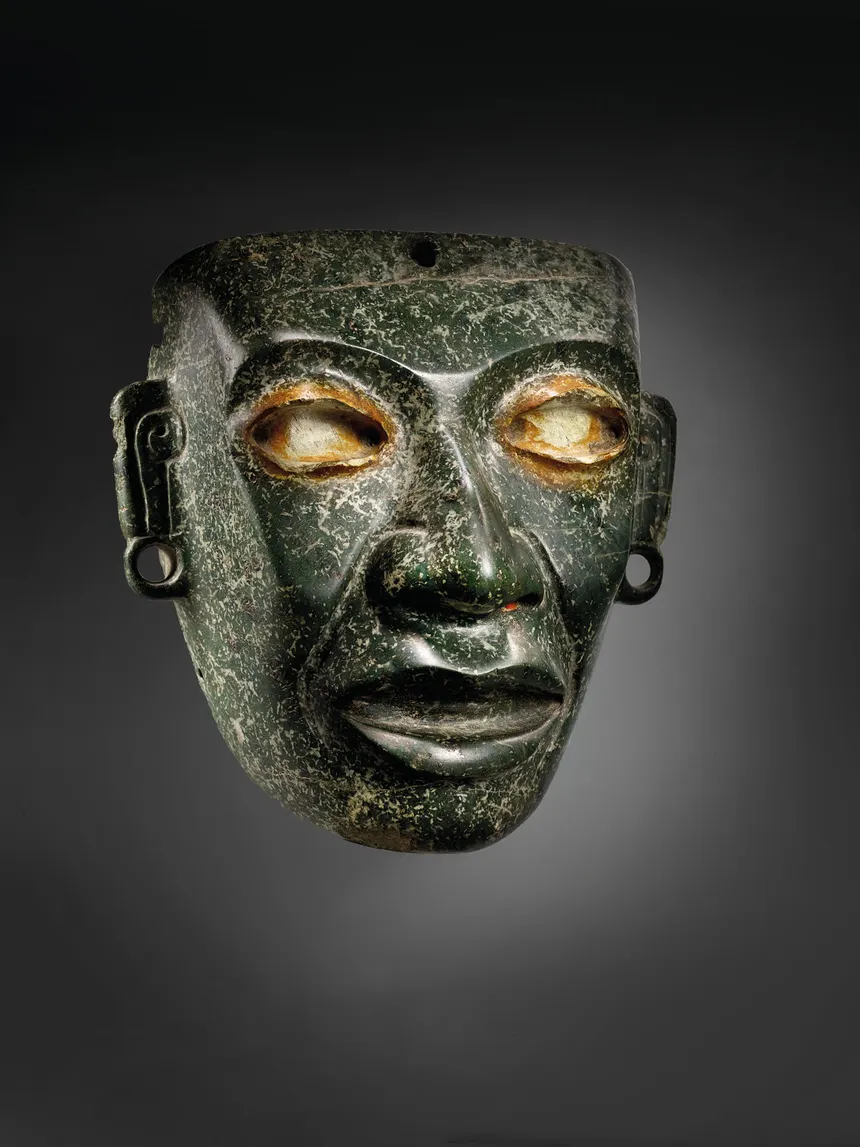
Most Mesoamerican masks were funerary or ceremonial and intended to be worn. The Teotihuacán serpentine mask, however, has no eyeholes or straps. Instead, it was likely created solely as an offering to the gods or as a symbolic representation of divine presence.
Material and Craftsmanship
Serpentine Stone
The mask was carved from serpentine, a greenish stone prized in Mesoamerica for its durability and symbolic meaning. Green was associated with fertility, renewal, and life, reflecting the agricultural cycles central to Teotihuacán’s survival.
Skilled Artistry
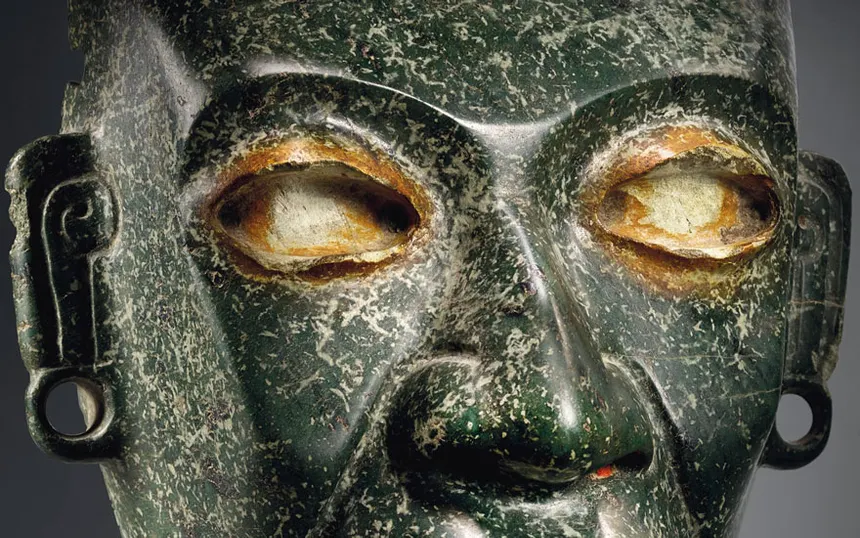
The mask’s smooth surfaces, symmetrical features, and polished finish demonstrate exceptional craftsmanship. The artisans who created it were masters of stone carving, capable of transforming hard serpentine into lifelike human features.
Symbolism of the Mask
The Color Green
In Mesoamerican cosmology, green symbolized maize, vegetation, and life energy. By offering a green serpentine mask, Teotihuacán’s people may have been invoking fertility, agricultural abundance, and divine blessings for their city.
Human and Divine Connection
The mask’s human features may have symbolized the connection between mortals and gods. By placing it beneath the Pyramid of the Sun, builders may have intended to imbue the structure with spiritual vitality and protection.
A Timeless Guardian
Some scholars suggest the mask represents an eternal witness or guardian, buried to oversee the pyramid for all eternity. This idea aligns with Mesoamerican traditions of embedding sacred objects into monumental constructions.
Ritual Offerings at Teotihuacán
Dedication Deposits
Teotihuacán’s pyramids and temples often contained ritual caches of offerings. These deposits included masks, figurines, animal remains, and jade ornaments, all meant to consecrate the sacred space.
Continuity of Practice
The serpentine mask fits within this broader tradition of foundational offerings. Its discovery underscores the religious importance of Teotihuacán’s architecture, where monumental construction was inseparable from ritual devotion.
Comparisons with Other Mesoamerican Masks
Funerary Masks of the Maya
The Maya civilization created elaborate jade funerary masks, such as those of King Pakal in Palenque. Unlike the Teotihuacán mask, these were placed on the deceased to guide them into the afterlife.
Aztec Stone Masks
Centuries later, the Aztecs also produced stone masks for ritual purposes. However, Teotihuacán’s serpentine mask predates these traditions, showing that the practice of crafting symbolic masks had deep roots in Mesoamerican culture.
Unique Identity of the Serpentine Mask
What sets the Teotihuacán mask apart is its ritual placement in architecture rather than funerary use. It was not made for a king or noble but for the gods of the city itself.
Preservation and Display
Archaeological Care
Since its discovery, the mask has been preserved under controlled conditions to prevent deterioration. Serpentine, though durable, is vulnerable to weathering if left exposed.
Museum Exhibits
The mask is now displayed in Mexico, where it is one of the highlights of exhibitions on Teotihuacán artifacts. Visitors can view the mask up close, appreciating both its artistry and its spiritual resonance.
Visiting Teotihuacán Today
A UNESCO World Heritage Site
Teotihuacán was designated a UNESCO World Heritage Site in 1987, recognizing its significance as one of the most important archaeological complexes in the world.
Exploring the Pyramids
Visitors to Teotihuacán can climb the Pyramid of the Sun and the Pyramid of the Moon, walk along the Avenue of the Dead, and visit the Temple of the Feathered Serpent (Quetzalcoatl).
Museums and Artifacts
The Teotihuacán Museum houses many of the artifacts discovered on-site, including masks, figurines, and ceremonial objects. The serpentine mask remains a centerpiece, bridging past and present.
Fun Facts About the Serpentine Mask
-
Archaeologists estimate that the artisans created the mask over 2,000 years ago, during the early construction phases of the Pyramid of the Sun.
-
Its polished green surface reflects the Mesoamerican reverence for jade-like stones, which symbolized life and fertility.
-
The artisans crafted the mask life-sized to represent a real human face rather than an abstract deity.
-
Archaeologists believe that Teotihuacán’s builders deliberately buried the mask as part of a consecration ritual, never intending anyone to see it again—until its rediscovery.
-
Archaeologists consider it one of the finest examples of Teotihuacán stone carving.
Why the Serpentine Mask Matters
The Teotihuacán serpentine mask is more than an artifact—it is a window into the spiritual world of one of the most enigmatic civilizations of the ancient Americas. Its symbolism, craftsmanship, and placement beneath the Pyramid of the Sun reveal how Teotihuacán’s people viewed their relationship with the cosmos, agriculture, and divine power.
For archaeologists, the mask helps unravel the mysteries of Teotihuacán’s religious life. For modern visitors, it represents a tangible connection to a 2000-year-old civilization whose influence spread far beyond the Valley of Mexico.
Conclusion: A Face of Eternity
The 2000-year-old green serpentine mask of Teotihuacán remains one of the most evocative discoveries in Mesoamerican archaeology. Buried beneath the Pyramid of the Sun, it served as a sacred offering, symbolizing fertility, life, and the bond between humans and gods.
Today, the mask stands as a silent witness to the grandeur and mystery of Teotihuacán, reminding us that beneath its towering pyramids lie treasures that speak of a people’s enduring faith, artistry, and cosmic vision.
ALSO READ: Debre Damo Monastery: Ethiopia’s Ancient Cliffside Sanctuary