Volubilis: The Ancient Roman City in Morocco
The Legacy of Volubilis
Tucked into the fertile plains of northern Morocco, near the modern town of Moulay Idriss Zerhoun, lies Volubilis, one of the best-preserved Roman archaeological sites in North Africa. Spread across 42 hectares, the ruins showcase a fascinating blend of Roman, Berber, and North African influences.
Once a thriving city that supplied wheat and olive oil to the Roman Empire, Volubilis tells the story of imperial expansion, cultural integration, and eventual decline. In 1997, it was recognized as a UNESCO World Heritage Site, highlighting its universal historical importance.
The Early History of Volubilis
From Carthaginian to Roman Influence
Volubilis predates Roman rule by centuries. Archaeological evidence suggests that Berber communities inhabited the region as early as the third century BCE. The area later came under the influence of Carthage, the powerful North African city-state.
When Rome defeated Carthage in 146 BCE, the region of Mauretania gradually fell into the Roman orbit. By 44 CE, Emperor Claudius officially annexed the province, bringing Volubilis fully into the Roman world.
Strategic Location
Volubilis was situated on a fertile plain at the foot of the Zerhoun mountain range. Its location made it ideal for agriculture, trade, and military security. The surrounding lands produced abundant wheat, olives, and fruits, making the city a vital supplier of food for Rome.
Volubilis Under Roman Rule
Administrative Importance
As one of the most important cities in Mauretania Tingitana, Volubilis became a hub of Roman administration. It was not only an agricultural center but also a place of governance, law, and culture. The city embodied Roman ideals of urban planning while adapting to local traditions.
Urban Layout
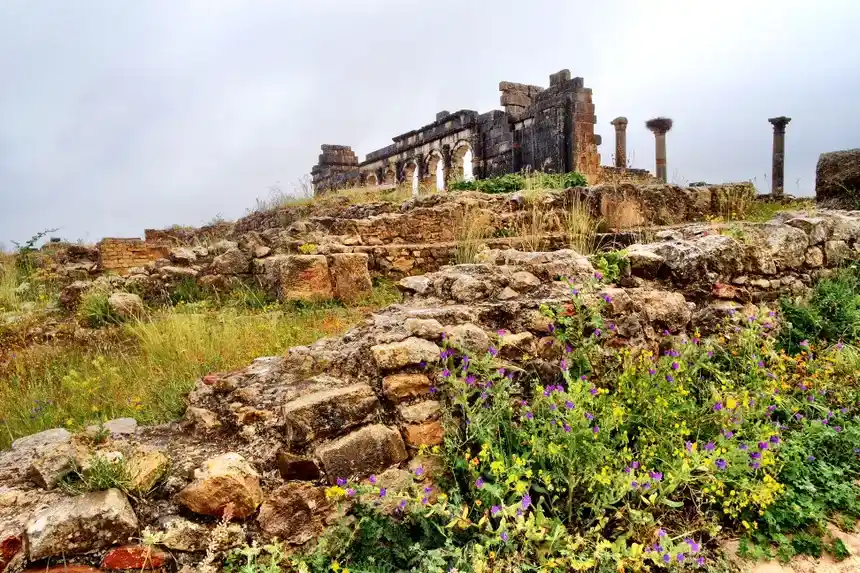
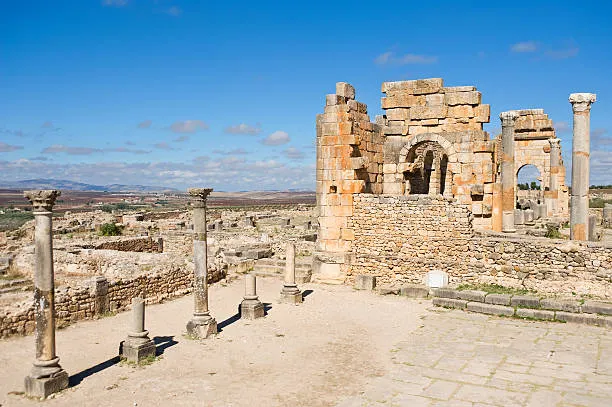
Like many Roman cities, Volubilis followed a grid system with main streets, monumental gates, and public squares. Its triumphal arch, basilica, and forum remain iconic remnants of its Roman past.
Economy and Agriculture
Volubilis was especially known for its olive oil production, and archaeological remains of presses can still be seen today. Large estates surrounding the city ensured steady agricultural output. This economic prosperity allowed Volubilis to develop lavish townhouses adorned with mosaics, many of which survive in remarkable condition.
Architectural Highlights of Volubilis
The Triumphal Arch of Caracalla
One of the most striking features of Volubilis is the Arch of Caracalla, built in 217 CE. Constructed in honor of Emperor Caracalla and his mother Julia Domna, the arch symbolized loyalty to Rome while celebrating the city’s prosperity.
The Basilica and Forum
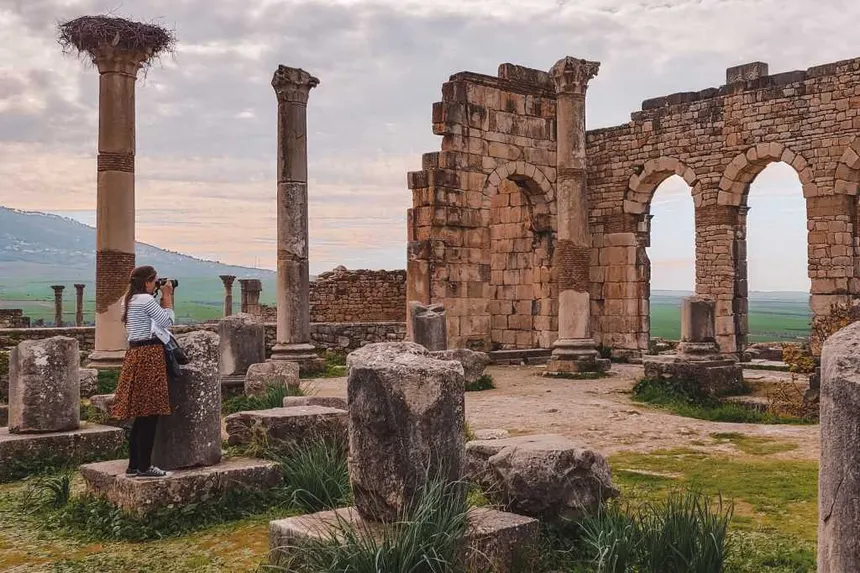
The basilica, where justice was administered, and the adjacent forum were central to civic life. Standing columns and partial walls still convey the grandeur of these public buildings.
The Houses and Mosaics
Wealthy residents of Volubilis decorated their homes with intricate mosaics depicting mythological scenes, animals, and geometric patterns. Notable examples include:
-
The House of Orpheus, featuring a mosaic of Orpheus charming animals with his music.
-
The House of the Athlete, decorated with imagery of athletic contests.
-
The House of Venus, known for mosaics of gods and marine creatures.
These mosaics provide a glimpse into the cultural sophistication and artistic tastes of the Roman elite in Africa.
The Decline of Volubilis
The Crisis of the Third Century
By the mid-third century CE, the Roman Empire faced widespread instability known as the Crisis of the Third Century. External invasions, internal strife, and economic collapse weakened imperial control.
Volubilis, located on the far western edge of the empire, became increasingly difficult to defend. Roman troops eventually withdrew, and the city was left vulnerable to local Berber tribes.
Continued Occupation
Although abandoned by Rome, Volubilis remained inhabited. The city continued to function under local rulers and later under Islamic dynasties, though its Roman character gradually faded.
Rediscovery and Archaeological Exploration
European Rediscovery
European explorers rediscovered Volubilis in the 19th century, and systematic excavations began under French colonial rule in the early 20th century. Archaeologists uncovered many of the city’s mosaics, public buildings, and monumental structures.
Preservation Efforts
Today, Morocco and international organizations work together to preserve Volubilis. Despite exposure to the elements, much of the site remains remarkably intact, offering a vivid window into Roman urban life in North Africa.
Volubilis as a UNESCO World Heritage Site
In 1997, UNESCO inscribed Volubilis as a World Heritage Site, citing its outstanding universal value as an example of Roman colonization and cultural fusion in Africa.
The site not only reflects Roman architectural brilliance but also the blending of Berber, Punic, and Islamic traditions over time. Volubilis stands as a reminder of Morocco’s deep historical ties to the Mediterranean world.
Visiting Volubilis Today
Location and Accessibility
Volubilis is located about 33 kilometers north of Meknes, making it a convenient day trip for travelers exploring central Morocco. The site is easily accessible by car or guided tours.
What to See
Visitors can explore the triumphal arch, the forum, the basilica, and a variety of homes with preserved mosaics. Walking among the ruins, one gains a sense of the city’s scale and significance.
Tips for Visitors
-
Visit early in the morning to avoid the midday heat.
-
Bring water and comfortable shoes, as the site covers a large area.
-
Hire a local guide to fully appreciate the historical and cultural context.
Fun Facts About Volubilis
-
At its peak, Volubilis may have housed 20,000 residents, making it one of the largest cities in Roman North Africa.
-
Olive presses uncovered at the site indicate the scale of oil production that supported both the local economy and Rome’s needs.
-
Many of the mosaics remain in situ, giving visitors a chance to see them in their original locations.
-
Volubilis appears in several travel accounts and works of art from the 19th century, reflecting its fascination for explorers and artists alike.
-
The nearby town of Moulay Idriss Zerhoun was founded by Idris I, who established Morocco’s first Islamic dynasty, showing the continuity of settlement in the region.
Why Volubilis Matters
Volubilis is more than just a Roman ruin; it is a symbol of cultural resilience and transformation. From its Berber origins to its Roman prosperity and later Islamic influences, the site reflects the layered history of Morocco.
For historians, Volubilis offers crucial insights into the economic networks and cultural exchanges of the ancient Mediterranean world. For visitors, it provides a powerful, tangible connection to the grandeur and fragility of past civilizations.
Conclusion: Walking Through History
The Volubilis Roman city remains one of the most evocative archaeological sites in Morocco. Its mosaics, arches, and ruined walls whisper stories of imperial ambition, local resilience, and cultural blending.
As a UNESCO World Heritage Site, it stands not only as a monument to Roman expansion but also as a reminder of Morocco’s rich and diverse heritage. Walking among its ruins today, travelers step back nearly two millennia, experiencing firsthand the echoes of history etched in stone.
ALSO READ: Sukuh Temple: Java’s Mysterious Pyramid of the Majapahit Era