Sukuh Temple: Java’s Mysterious Pyramid of the Majapahit Era
A Pyramid in the Heart of Java
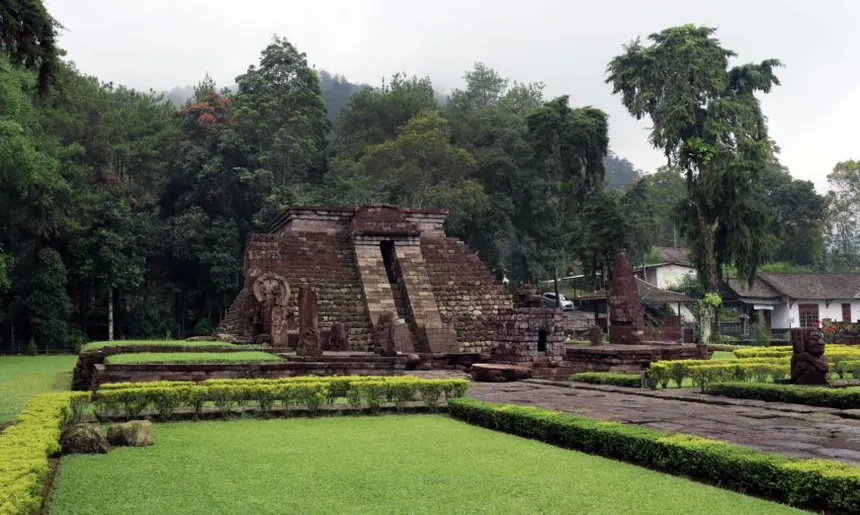
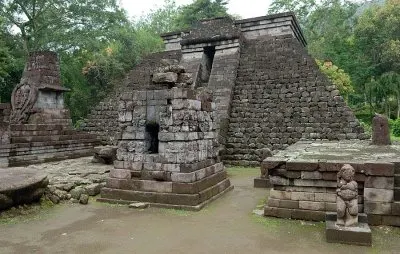
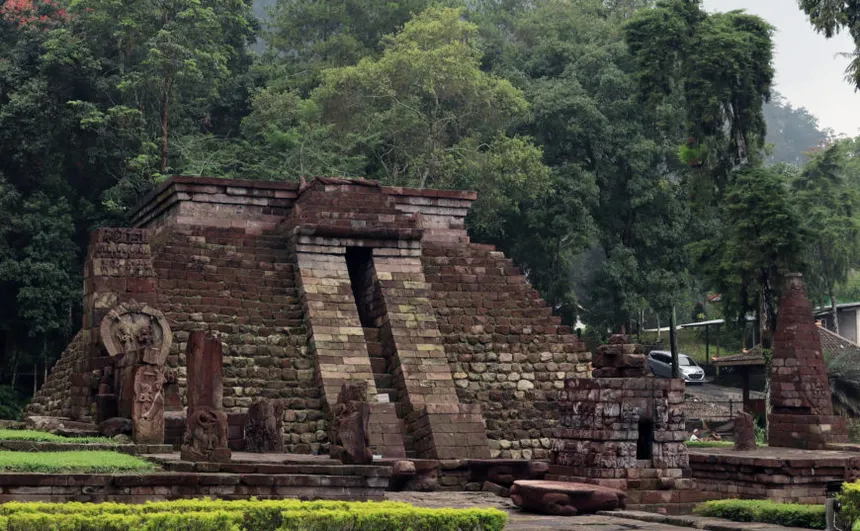
High on the western slopes of Mount Lawu, Central Java, stands Sukuh Temple, one of Indonesia’s most unusual and mysterious sacred sites. Built in the 15th century, near the end of the Majapahit Empire, Sukuh breaks with traditional Javanese temple architecture. Instead of tall spires or elaborate mandapas, it takes the form of a stepped pyramid, a design more reminiscent of Mesoamerican temples than Southeast Asian ones.
Its strange carvings—fertility symbols, spiritual motifs, and enigmatic figures—have puzzled scholars and visitors alike. What was its true purpose? Was it a temple of initiation, a fertility shrine, or a final outpost of the fading Majapahit’s spiritual experimentation?
History of Sukuh Temple
Built in the Twilight of the Majapahit Empire
The Majapahit Empire (1293–1527 CE) was one of Southeast Asia’s greatest maritime powers. By the 15th century, however, its influence was waning under internal strife and the rise of Islamic sultanates. It was during this turbulent period, likely around 1437 CE, that Sukuh Temple was constructed.
Rediscovery in the Colonial Era
The temple lay forgotten until 1815, when it was rediscovered by Sir Thomas Stamford Raffles, then British Governor of Java. His documentation sparked curiosity about its unusual form and meaning, setting the stage for later archaeological studies.
Unique Architecture of Sukuh Temple
A Stepped Pyramid Design
Unlike other Javanese temples such as Borobudur or Prambanan, which feature large terraces or soaring spires, Sukuh takes the form of a three-tiered pyramid with a truncated top. Visitors ascend from the base through gates and terraces, echoing a symbolic journey of spiritual ascent.
Mesoamerican Resemblance
The resemblance between Sukuh and Mayan or Aztec temples in Mexico has led to much speculation. While there is no evidence of direct contact, the similarity may stem from a shared symbolic tradition of using pyramids as sacred mountains or cosmic centers.
Simplicity of Structure
Sukuh’s rough stone blocks and simple construction contrast sharply with the refined carvings of earlier Javanese temples. This suggests a deliberate stylistic choice, perhaps reflecting spiritual urgency during a time of political decline.
Carvings and Symbolism
Fertility Symbols
Sukuh is perhaps most famous (and sometimes controversial) for its fertility carvings. One relief depicts a giant lingga (phallic symbol) being embraced by a yoni (vulva), representing the union of male and female energies. These symbols suggest rituals connected to fertility, creation, and renewal.
Spiritual and Cosmic Imagery
Other reliefs depict figures from Hindu mythology, including Bhima and Garuda. Yet, unlike earlier Javanese temples, the style is raw and symbolic rather than polished and narrative-driven. This could reflect a shift in focus from storytelling to ritual function.
Initiation Rituals
Some scholars argue that Sukuh served as a site for initiation ceremonies, where young men or spiritual aspirants underwent symbolic rebirth. The fertility imagery, combined with the temple’s ascending structure, may have been part of a transformative journey toward adulthood or enlightenment.
Religious Context
Hinduism and Indigenous Beliefs
By the 15th century, Hinduism and Buddhism had long shaped Javanese culture. However, indigenous animist traditions also persisted, especially in rural areas. Sukuh seems to merge these influences, combining Hindu deities with fertility cult practices rooted in local spirituality.
Transition to Islam
The construction of Sukuh occurred just before Java’s Islamization, making it one of the last major Hindu temples on the island. Its unusual design may reflect the blending of traditions during this transitional era.
Location and Environment
Sacred Mount Lawu
Sukuh sits at about 910 meters above sea level on the slopes of Mount Lawu, a volcano long regarded as sacred. The mountain was believed to be a dwelling place of spirits, making it an appropriate site for rituals of transformation and fertility.
Alignment and Layout
The temple is oriented toward the west, unlike many Javanese temples aligned to the east. Some believe this orientation symbolized death, endings, and transformation, aligning with the temple’s themes of initiation and renewal.
Mysteries and Theories
Why the Pyramid Form?
The pyramid design remains one of Sukuh’s greatest mysteries. Was it a symbolic mountain, echoing Javanese cosmology, or an attempt to return to simpler, more primordial forms of sacred architecture?
Connections With Other Cultures
While there is no evidence linking Java and Mesoamerica, the resemblance between Sukuh and Mexican pyramids continues to intrigue researchers. Some suggest it may be a case of parallel development, where different societies independently created similar structures to represent universal ideas of sacred ascent.
Ritual Purposes
The fertility imagery and truncated pyramid have led many to believe that Sukuh was not just a temple but a ritual center, possibly for agricultural fertility rites, initiation ceremonies, or esoteric practices.
Preservation and Tourism
Restoration Efforts
Since its rediscovery, Sukuh has undergone restoration to stabilize its structure. However, many carvings remain eroded, and some were removed during the colonial period to museums abroad.
A UNESCO Candidate
Along with Cetho Temple (another enigmatic site on Mount Lawu), Sukuh has been proposed for UNESCO World Heritage status due to its unique design and historical significance.
Visiting Sukuh Today
Sukuh is accessible from Solo (Surakarta) and remains a popular destination for history enthusiasts, spiritual seekers, and those fascinated by its unusual design. The temple’s serene mountain setting adds to its mystical aura, making it a memorable experience for visitors.
Fun Facts About Sukuh Temple
-
Sukuh is sometimes called “the most erotic temple in Java” due to its fertility carvings.
-
Reliefs depict not only Hindu themes but also smithing scenes, suggesting a connection to metallurgy and creation.
-
Its unfinished appearance raises questions about whether the temple was ever completed before the Majapahit collapse.
-
Sukuh and nearby Cetho Temple are often visited together as part of a spiritual pilgrimage.
-
The temple’s pyramid-like shape is unique in Indonesia, setting it apart from other heritage sites.
Why Sukuh Temple Matters
Sukuh Temple is more than just an archaeological curiosity. It represents a cultural crossroads, where Hinduism, indigenous Javanese beliefs, and esoteric traditions merged in the twilight of the Majapahit Empire.
Its pyramid shape and fertility imagery challenge our assumptions about Javanese temple design, offering a rare glimpse into the diversity of Indonesia’s spiritual heritage. For modern visitors, Sukuh is a reminder that history is not a single narrative but a tapestry of overlapping beliefs, rituals, and artistic experiments.
Conclusion: The Enigma of Sukuh
The Sukuh Temple in Java remains one of Southeast Asia’s most mysterious monuments. Built in the 15th century, it defies convention with its pyramid design, bold fertility imagery, and symbolic carvings. While much about its purpose remains uncertain, it continues to captivate scholars and travelers alike.
Standing at Sukuh, amid the misty slopes of Mount Lawu, visitors encounter a temple that feels at once ancient, exotic, and strangely universal—a place where human imagination sought to connect earth, fertility, and the divine in a time of cultural transition.
ALSO READ: The Colossal Statue of Ramesses II in Memphis: Egypt’s Towering Legacy