The Colossal Statue of Ramesses II in Memphis: Egypt’s Towering Legacy
A Monument to Power
Few rulers in history left as indelible a mark as Ramesses II, also known as Ramesses the Great. His reign (1279–1213 BCE) during Egypt’s New Kingdom is remembered for monumental architecture, military triumphs, and a legacy of grandeur. Among the many relics that honor his name, one of the most striking is the Colossal Statue of Ramesses II in Memphis, Egypt.
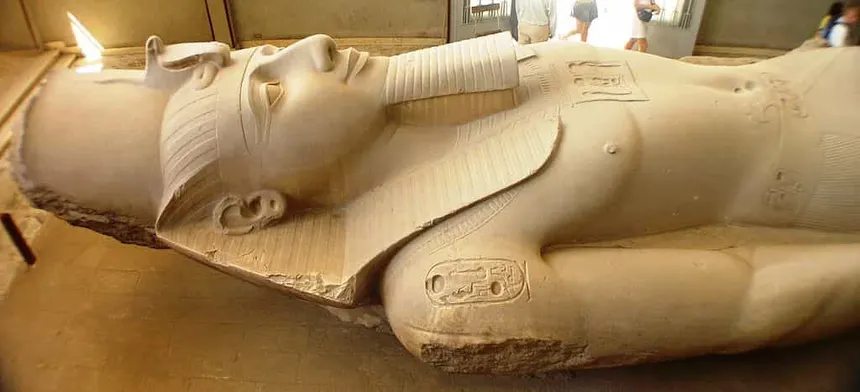
Carved from limestone, this massive figure originally stood over 10 meters tall, depicting the pharaoh in an imposing stance. Unearthed in 1820 near the ruins of Memphis, Egypt’s ancient capital, the statue continues to symbolize both the artistic mastery and political might of Ramesses II.
The Discovery of the Statue
Unearthing a Giant in 1820
The statue was discovered by Giovanni Battista Caviglia, an Italian explorer, in 1820. It lay partly buried in the ruins of Memphis, the once-great capital city that had long since crumbled under the sands of time.
When unearthed, archaeologists and travelers alike were astonished at the sheer size and detail of the sculpture, despite its missing feet. Its craftsmanship reflected not only artistic brilliance but also the resources and ambition of a king determined to project his greatness.
Initial Plans for Transport
During the 19th century, there were even discussions about transporting the colossal statue to Britain as a gift for the British Museum. However, due to its immense size and weight, the plan proved impractical. Instead, the statue remained in Egypt, preserving its connection to its original cultural and historical context.
Description of the Statue
Material and Scale
The statue was carved from a single block of fine limestone, a material that was locally available but required exceptional skill to shape on such a massive scale. When complete, it stood over 10 meters (33 feet) high, making it one of the tallest free-standing statues of Ramesses II.
Features and Iconography
The statue portrays Ramesses II with traditional pharaonic features:
-
A nemes headdress crowned with the cobra (uraeus), symbolizing royal power.
-
A calm yet commanding facial expression, reflecting divine kingship.
-
A straight, rigid posture that emphasized strength and endurance.
Despite the passage of over three millennia, the details of the carving remain remarkably visible, a testament to the skill of ancient Egyptian artisans.
Memphis: The City of the Pharaohs
Historical Significance of Memphis
Founded around 3000 BCE, Memphis was one of the most important cities in ancient Egypt, serving as the capital during the Old Kingdom and remaining influential throughout Egyptian history. Its location at the mouth of the Nile Delta made it a strategic and cultural hub.
By the time of Ramesses II, Memphis was still a vital city, and erecting a colossal statue there reinforced the pharaoh’s presence in Egypt’s religious and political heart.
The Role of Statues in Egyptian Culture
Colossal statues were not merely decorative—they were political statements. They emphasized the divine power of the pharaoh, making his presence felt in key locations. In Memphis, a city filled with temples and monuments, the statue of Ramesses II stood as a reminder of his enduring authority.
Ramesses II: Pharaoh of Monuments
Builder of an Empire of Stone
Ramesses II is often referred to as the “Builder Pharaoh” for his extensive building projects. From the temples of Abu Simbel to additions at Karnak and Luxor, he left monuments across Egypt and Nubia. The colossal statue in Memphis was part of this larger program of architectural propaganda.
Military and Political Power
In addition to his building legacy, Ramesses II secured his reputation through military campaigns, including the famous Battle of Kadesh against the Hittites. His reign marked one of the most stable and prosperous periods in Egyptian history.
The Memphis statue symbolized this dual identity: warrior and builder, man and god.
Symbolism of the Colossal Statue
Divine Kingship
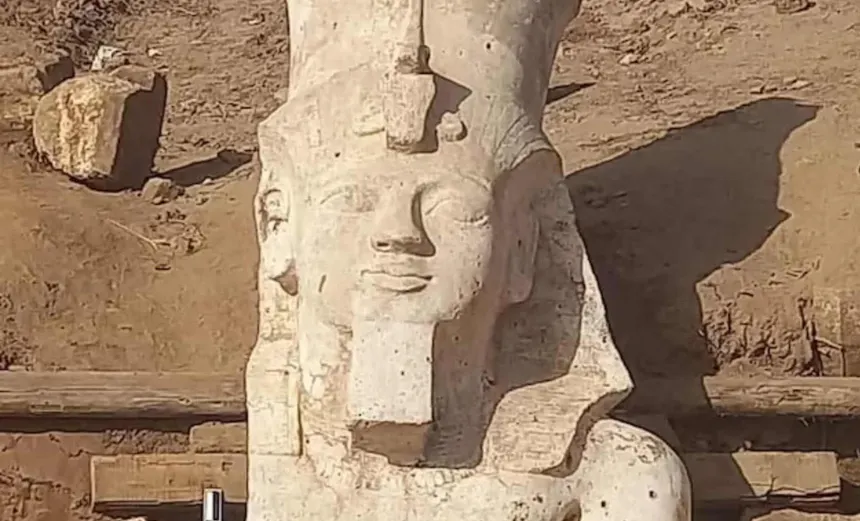
The colossal scale of the statue emphasized Ramesses II’s semi-divine status. In Egyptian ideology, the pharaoh was not just a political ruler but also the earthly embodiment of gods, particularly Horus and later Osiris.
Eternal Legacy
By commissioning massive monuments, Ramesses II ensured his memory would endure for eternity. The statue was a visible declaration that his reign was both powerful and everlasting, echoing the Egyptian belief in immortality.
Modern Preservation and Display
Relocation to Mit Rahina Museum
Today, the colossal statue of Ramesses II is displayed in the Mit Rahina Open-Air Museum, near the ruins of Memphis. Because the statue lacks its feet, it is exhibited lying on its back, allowing visitors to fully appreciate its scale and intricate details.
Restoration Efforts
Over time, conservationists have worked to preserve the statue from erosion and environmental damage. Its limestone material, while durable, is vulnerable to weathering, making protection essential for its continued survival.
The Statue in the Context of Egyptian Art
Comparison With Other Colossal Statues
Ramesses II commissioned many colossal statues, most famously the seated figures at Abu Simbel. While the Memphis statue portrays him standing, both forms highlight the tradition of monumental royal portraiture in Egypt.
Artistic Mastery
The Memphis statue reflects the balance of realism and idealism typical of Egyptian art. While its features are stylized to reflect divine perfection, the craftsmanship reveals an acute attention to proportion and detail.
Tourism and Cultural Impact
A Popular Attraction
The Colossal Statue of Ramesses II is a major draw for tourists visiting the Mit Rahina Museum. Its sheer scale and historical significance make it one of the highlights of any visit to Memphis.
Symbol of National Pride
For Egyptians, the statue is more than an ancient relic—it is a source of national pride, symbolizing the achievements of one of Egypt’s greatest rulers. Its survival despite centuries of neglect speaks to the enduring legacy of Egyptian civilization.
Fun Facts About the Statue
-
The statue was too large to move abroad in the 19th century, which inadvertently preserved it in Egypt.
-
Its missing feet have led some scholars to believe it originally stood in a temple courtyard.
-
The statue weighs several tons, carved from a single limestone block.
-
Visitors can walk around it and view its details closely, an experience not possible with many upright colossal statues.
Why the Colossal Statue of Ramesses II Matters
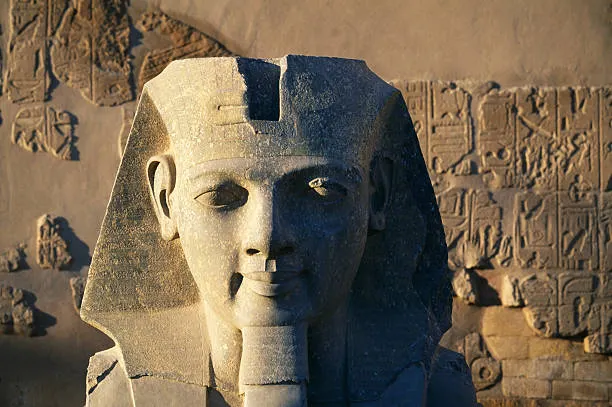
The Colossal Statue of Ramesses II in Memphis is more than just a stone figure—it is a testament to power, faith, and artistry. It embodies the ambition of a pharaoh determined to leave an eternal mark, the skill of artisans who turned limestone into enduring art, and the continuity of Egyptian identity through millennia.
In standing (or lying) before this giant, visitors connect not just with the memory of Ramesses II but with the grandeur of an entire civilization that believed monuments could outlast time itself.
Conclusion: Egypt’s Eternal Giant
The Colossal Statue of Ramesses II in Memphis remains one of the most awe-inspiring relics of the ancient world. From its discovery in 1820 to its preservation today, it continues to captivate historians, archaeologists, and travelers alike.
Ramesses II was a king who sought immortality through stone, and in many ways, he succeeded. His colossal statue endures as a silent sentinel of Egypt’s glorious past, a towering reminder of a civilization that carved eternity from rock.
ALSO READ: The 9,000-Year-Old Nahal Hemar Mask: The Oldest Mask in the World