Goblin Valley State Park: The Timeless Hoodoos of Utah’s Desert Garden 🏜️🪨
Nature’s Sculpture Garden
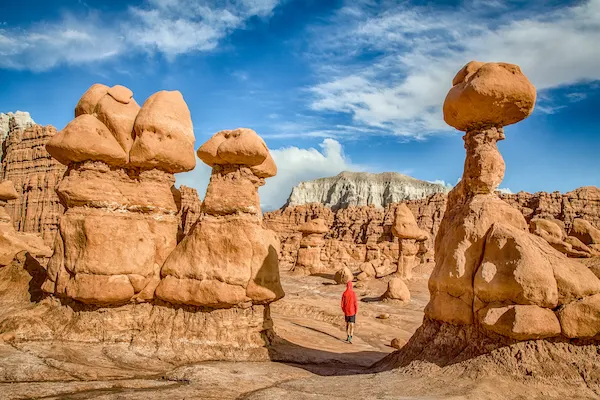
In the heart of Utah’s San Rafael Desert lies one of the most otherworldly landscapes in the American Southwest—Goblin Valley State Park. Known for its surreal hoodoos, locally called “goblins,” this park transports visitors into a natural sculpture garden where stone seems alive.
Formed nearly 170 million years ago during the Jurassic period, these unique sandstone pillars stand as both fragile and enduring monuments to the artistry of time. To walk among them is to step into a story millions of years in the making—one of seas, sand dunes, storms, and the endless patience of erosion.
What Are Hoodoos?
Defining the Strange Pillars of Stone
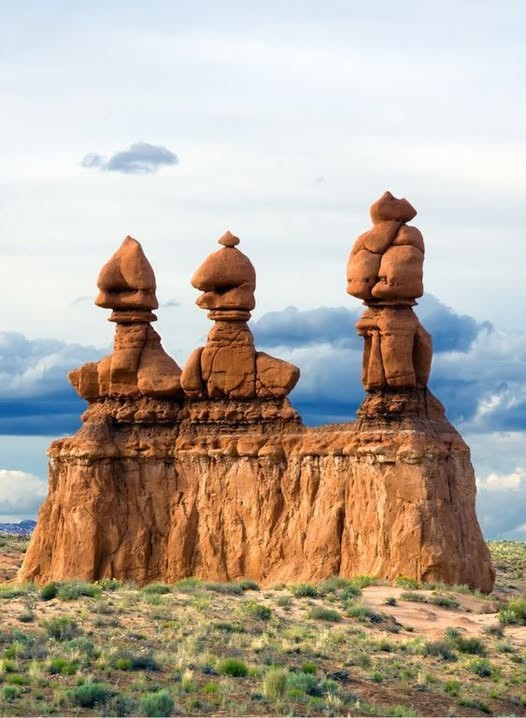
Hoodoos are tall, thin spires of rock that rise from the desert floor, usually capped by a harder layer of stone that protects the softer rock beneath. Unlike cliffs or mesas, hoodoos form as isolated towers, often with bizarre, human-like or animal-like shapes.
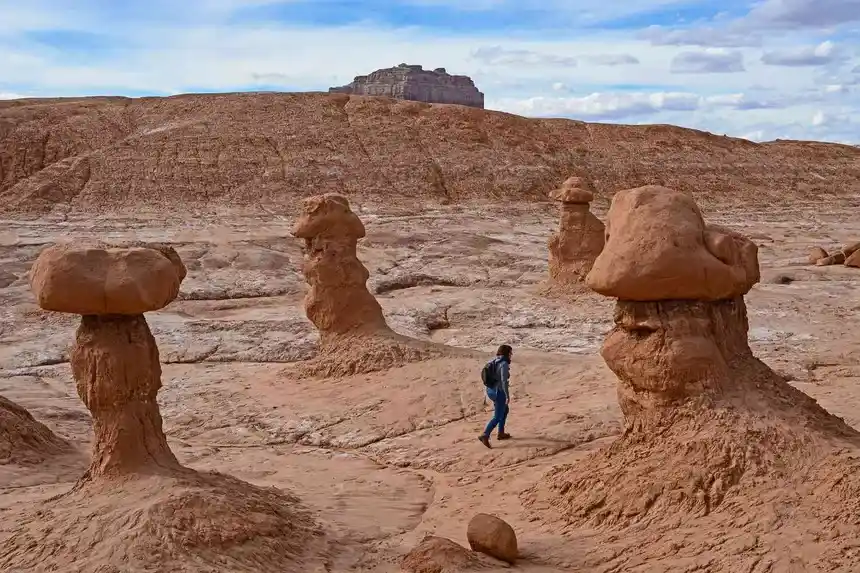
In Goblin Valley, these hoodoos resemble squat figures with rounded “heads” and narrow “necks,” earning them the nickname “goblins.” Their whimsical forms have inspired both awe and playfulness, making the valley a favorite spot for families, hikers, and photographers.
The Geological Origins of Goblin Valley
From Ancient Seas to Shifting Sands
The story of Goblin Valley’s hoodoos begins 170 million years ago, when the region was covered by shallow seas and coastal dunes. Layers of sandstone—particularly the Entrada Sandstone formation—were deposited during this time.
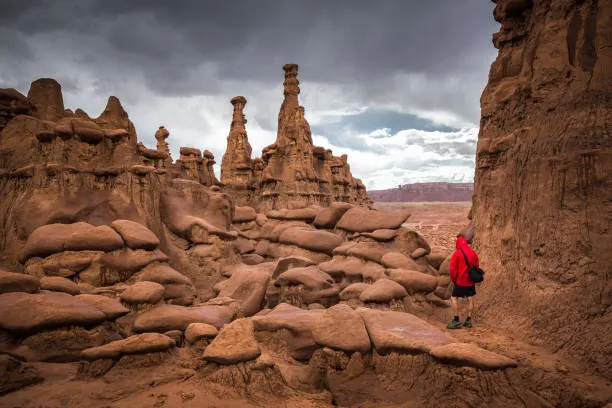
Over millions of years, tectonic uplift exposed these sandstone layers to the elements. Wind, rain, and frost slowly eroded the softer rock, while harder, more resistant caps remained intact. This process left behind the surreal pillars that today dot the valley.
The Role of Erosion
The hoodoos are constantly being reshaped.
-
Wind carries grains of sand that sandblast surfaces.
-
Rain exploits cracks, washing away sediments.
-
Frost wedges into fractures, prying stone apart during freeze-thaw cycles.
This combination of forces carved thousands of goblins, each with its own unique size, shape, and personality.
The Goblins: Nature’s Desert Guardians
Almost Human in Stature
Walking through Goblin Valley, visitors often remark how the hoodoos seem alive—like frozen figures caught in mid-motion. Some appear like monks in hoods, others like animals crouching on the desert floor. Their rounded shapes give them a playful, almost whimsical character, setting them apart from the sharper spires of places like Bryce Canyon.
Fragility and Resilience
Though they have stood for millions of years, the goblins are also fragile. One careless climb can damage their delicate forms. At the same time, their continued survival in such a harsh climate testifies to their resilience. They embody the paradox of nature’s creations—temporary yet timeless.
Goblin Valley State Park: A Modern Discovery
From Hidden Valley to Protected Landmark
Goblin Valley remained relatively unknown until the 1920s, when cowboys searching for cattle stumbled upon the strange stone figures. Word spread of this “valley of goblins,” and by 1964 it was officially designated as Goblin Valley State Park to protect its fragile formations.
A Playground of Stone
Unlike many protected parks where climbing on formations is restricted, Goblin Valley has long been a place where visitors can wander freely among the hoodoos. This creates a unique, immersive experience—like stepping into a fantasy landscape sculpted by giants.
Things to Do in Goblin Valley
1. Hoodoo Hiking
Exploring the valley floor on foot allows visitors to weave between goblins, discovering hidden corners and formations that change with every step. Short trails and open areas make it accessible to all skill levels.
2. Photography
Sunrise and sunset bring dramatic shadows and glowing hues to the goblins. Their shapes transform with the light, offering endless photographic opportunities.
3. Stargazing
Far from city lights, Goblin Valley is a certified International Dark Sky Park. At night, the hoodoos stand silhouetted against a vast dome of stars, creating one of the most magical nightscapes in Utah.
4. Camping and Exploration
The park offers campgrounds and yurts, giving visitors the chance to sleep among the goblins and wake up surrounded by Jurassic sandstone.
The Hoodoos in Culture and Imagination
The whimsical forms of Goblin Valley have inspired comparisons to everything from fairy-tale characters to alien landscapes. Children see them as stone guardians, while artists see them as natural sculptures frozen in time.
Their nickname, “goblins,” reflects the blend of awe and playfulness they evoke—creatures of myth carved by the desert itself.
Why Goblin Valley Matters
Geological Significance
Goblin Valley provides a living classroom for studying erosion, sedimentary rock, and desert geology. It demonstrates how natural forces shape landscapes over immense spans of time.
Cultural and Recreational Value
As one of Utah’s most unique parks, it offers recreation, inspiration, and cultural significance. The hoodoos are both natural heritage and an artistic masterpiece, showing how landscapes themselves can spark imagination.
Conservation Challenges
With its growing popularity, Goblin Valley faces challenges of preservation versus tourism. Visitors are urged to treat the hoodoos with respect, ensuring they endure for future generations.
Lessons from the Goblins
The goblins of Goblin Valley teach us timeless lessons:
-
Patience of Time – Beauty is carved not in days, but in millions of years.
-
Balance of Forces – Fragility and resilience coexist in every stone.
-
Imagination of Nature – No human sculptor could match the creativity of erosion.
-
Value of Preservation – Once damaged, these formations cannot be replaced.
Conclusion: Walking Among Giants of Stone
To stand in Goblin Valley is to step into a dreamscape where stone becomes story. These hoodoos—born of seas, shaped by storms, and sculpted by silence—are more than rocks; they are guardians of the desert, storytellers of deep time, and living art forms crafted by nature’s patient hand.
As the goblins watch over Utah’s desert, the gentlest forces—wind, rain, and time itself—shape even the hardest stone. In their strange and whimsical forms, we see not only the past of the Earth, but also its enduring creativity.
ALSO READ: The Beresovka Mammoth: A Frozen Giant Preserved for 44,000 Years