El Tajín: The Lost Jewel of Ancient Mesoamerica
The Forgotten City of Veracruz
Hidden in the verdant landscapes of southern Mexico, El Tajín stands as one of the most extraordinary archaeological treasures of ancient Mesoamerica. Flourishing between 600 and 1200 AD, this once-mighty city was the cultural and political heart of the Veracruz region.
With its monumental pyramids, ornate temples, palaces, and sacred ballcourts, El Tajín reflected the brilliance of a people whose artistry and innovation left an indelible mark on history. Yet, by 1230 AD, the city fell into decline, swallowed by the jungle and forgotten for centuries—until its dramatic rediscovery in 1785 reignited global fascination.
The Rise of El Tajín
A Flourishing Metropolis
At its zenith, El Tajín was one of the most influential urban centers in Mesoamerica, rivaling great cities like Teotihuacán and Chichén Itzá. It served as a hub of governance, trade, and religious ritual for the Veracruz culture.
Economic and Cultural Power
El Tajín’s location allowed it to control key trade routes connecting the Gulf Coast with the central highlands of Mexico. Goods such as cacao, cotton, and obsidian flowed through its markets, enriching its elite and financing its monumental architecture.
The Pyramid of the Niches: El Tajín’s Iconic Monument
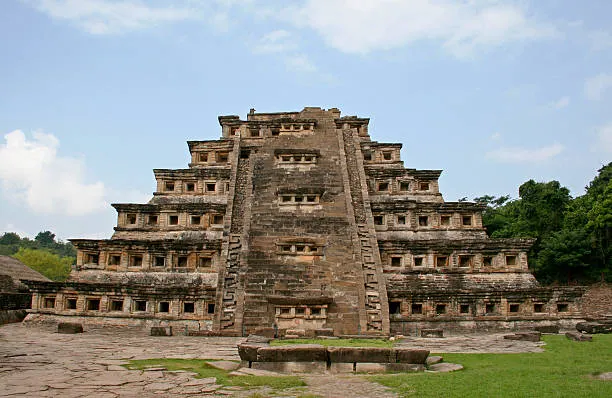
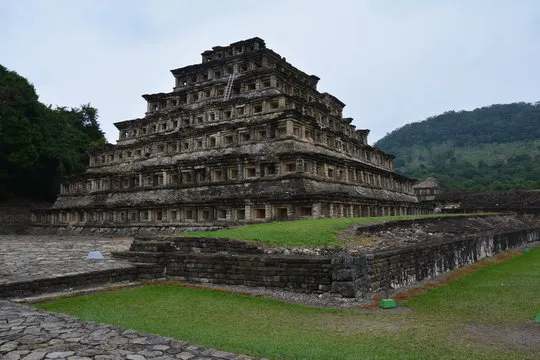
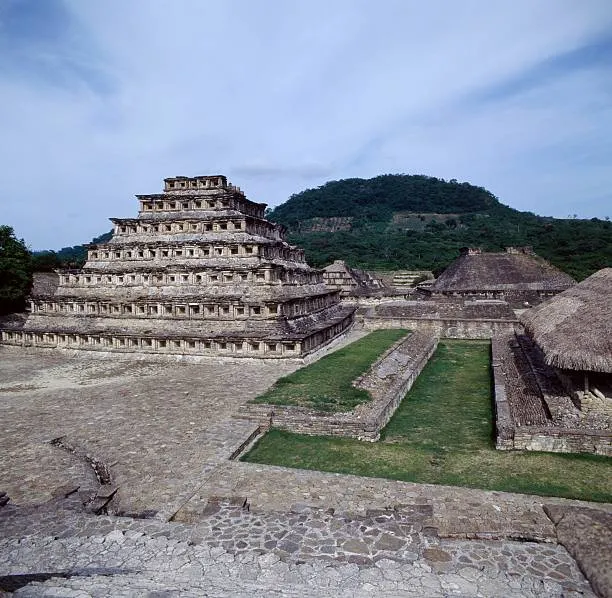
Among El Tajín’s many wonders, none is more famous than the Pyramid of the Niches.
Architectural Mastery
This six-tiered pyramid stands approximately 20 meters high and is decorated with 365 niches, believed to symbolize the solar calendar. Each niche creates a play of light and shadow that shifts with the sun’s movement, reflecting the deep astronomical knowledge of El Tajín’s builders.
Symbolism and Ritual
The pyramid likely held ritual significance, serving as a sacred calendar that connected the city’s religious practices with celestial cycles. Even today, it remains one of the most iconic examples of Mesoamerican architecture.
The Ballcourts of El Tajín
Center of Ritual and Sport
El Tajín boasts more than 17 ballcourts, more than any other known Mesoamerican city. The Mesoamerican ballgame, a blend of sport and sacred ritual, played a central role in the city’s culture.
The Ballcourt Reliefs
Many of El Tajín’s ballcourts are decorated with stone reliefs depicting elaborate scenes of players, ceremonies, and even human sacrifice. These carvings reveal that the ballgame was not mere entertainment—it was deeply tied to religious beliefs about life, death, and cosmic order.
Temples, Palaces, and Urban Design
The Temple of the Columns
This temple showcases the city’s intricate stone carvings, with depictions of deities, rituals, and everyday life. It highlights the artistic sophistication of El Tajín’s craftsmen.
Palatial Complexes
The city included grand palaces for the ruling elite, reflecting their wealth and power. These structures, combined with temples and administrative buildings, demonstrate the urban planning that sustained a thriving metropolis.
Integration with Nature
El Tajín’s layout also reveals harmony with its natural environment. Buildings were aligned with celestial events and natural landscapes, creating a city that blended spirituality with function.
Religion and Mythology at El Tajín
Religion permeated every aspect of life in El Tajín. The people worshiped gods associated with rain, fertility, and the sun.
-
Tlāloc, the rain god, was especially significant in this region of heavy rainfall.
-
The abundance of ballcourts suggests the presence of deities connected with life, death, and rebirth cycles.
-
Rituals, including offerings and sacrifices, reinforced the city’s role as a spiritual center.
The architecture and reliefs of El Tajín provide scholars with insights into these beliefs, though much remains shrouded in mystery.
The Decline and Abandonment of El Tajín
Around 1230 AD, El Tajín entered a period of decline. Scholars debate the causes, but several factors may have contributed:
-
Invasion or warfare from rival groups.
-
Shifting trade routes that weakened its economy.
-
Environmental changes, such as deforestation or climate fluctuations.
Eventually, the once-great city was abandoned and overtaken by dense vegetation. For centuries, it remained hidden, known only to local communities.
Rediscovery in 1785
El Tajín’s long silence ended in 1785, when a Spanish government inspector named Diego Ruiz stumbled upon the Pyramid of the Niches while surveying for tobacco smugglers.
His discovery marked the beginning of renewed interest in El Tajín, and subsequent explorations revealed the scale of the city’s remains. Today, archaeologists continue to uncover structures and artifacts, piecing together the story of this lost jewel of Mesoamerica.
UNESCO World Heritage Recognition
In 1992, El Tajín was designated a UNESCO World Heritage Site for its outstanding cultural value. The site is recognized for:
-
Its unique architecture and urban design.
-
The largest collection of Mesoamerican ballcourts.
-
Its rich artistry and cultural influence in the Classic era.
UNESCO’s recognition ensures preservation efforts, allowing future generations to learn from and admire this extraordinary site.
Visiting El Tajín Today
Location and Access
El Tajín is located near Papantla, in the state of Veracruz, Mexico. Visitors can reach it by road from major cities like Veracruz City and Mexico City.
What to See
-
Pyramid of the Niches: The crown jewel of El Tajín.
-
Ballcourts: Each with unique relief carvings and symbolic meaning.
-
Temples and Palaces: Intricate stonework that brings the past to life.
-
On-site Museum: Exhibits artifacts and provides historical context.
The Festival of Cumbre Tajín
Held annually in March, Cumbre Tajín celebrates the Totonac culture with music, dance, crafts, and workshops. It connects the ancient heritage of El Tajín with living traditions.
The Legacy of El Tajín
El Tajín’s significance goes far beyond its ruins. It represents:
-
The ingenuity of pre-Columbian architecture.
-
The spiritual depth of Mesoamerican cultures.
-
A bridge between past and present, as modern Totonac communities keep traditions alive.
For historians, archaeologists, and travelers, El Tajín is not just a site—it is a story of human creativity, resilience, and rediscovery.
Conclusion: El Tajín, A Timeless Wonder
The story of El Tajín is one of rise, brilliance, decline, and rediscovery. Once a thriving metropolis of the Veracruz culture, it was lost to time until chance brought it back to light.
Today, its Pyramid of the Niches, ballcourts, and temples stand as testaments to a civilization’s artistry and vision. As one of Mexico’s most treasured archaeological sites, El Tajín continues to inspire awe, inviting us to reflect on the mysteries and marvels of ancient Mesoamerica.