Pharaoh Menkaure Statues: Unearthing Egypt’s Timeless Masterpieces
Hidden Treasure Beneath the Sands of Giza
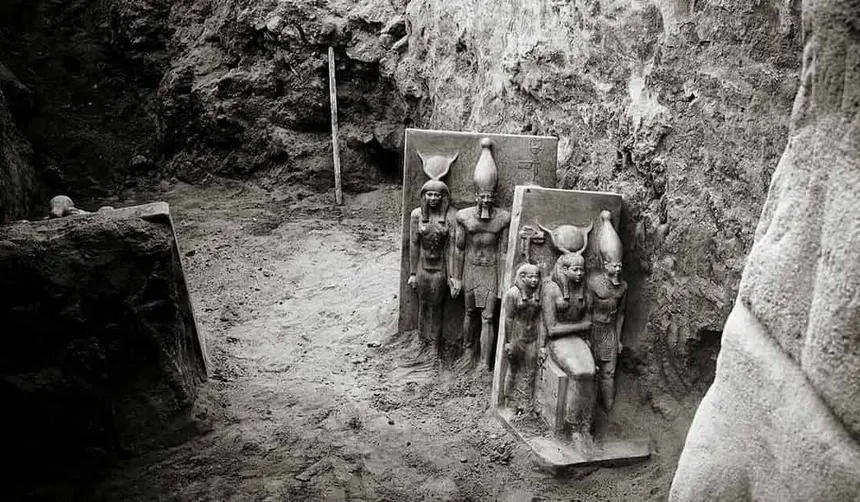
In 1908, the Egyptian desert revealed a breathtaking secret. A team of archaeologists uncovered an astonishing collection of statues of Pharaoh Menkaure, one of Egypt’s most significant rulers. Hidden beneath the sands of Giza for nearly 4,500 years, these sculptures remained almost untouched by time, offering the world a glimpse into the artistry, symbolism, and religious devotion of ancient Egypt.
This discovery is more than an archaeological milestone—it is a story of power, divinity, and timeless craftsmanship that continues to intrigue historians and enthusiasts alike.
Who Was Pharaoh Menkaure?
Before examining the statues, it’s essential to understand the man they represent. Pharaoh Menkaure, also known as Mykerinos in Greek sources, was the fifth ruler of Egypt’s 4th Dynasty (circa 2490–2472 BC).
The Builder of the Third Great Pyramid
Menkaure is best known as the builder of the third and smallest pyramid at Giza, standing alongside the colossal pyramids of Khufu (Cheops) and Khafre (Chephren). Despite its smaller size, Menkaure’s pyramid reflects architectural precision and symbolic grandeur, reinforcing his legacy as a visionary leader.
A Pharaoh of Balance
Historical accounts suggest Menkaure was perceived as a fair and just ruler. Ancient sources often contrast his reign with that of his predecessors, portraying him as a king who valued both power and compassion.
The 1908 Discovery: Statues Buried for Millennia
The unearthing of Menkaure’s statues in 1908 was a watershed moment in archaeology. Excavators working near the Valley Temple of Menkaure stumbled upon a series of breathtaking sculptures, crafted with remarkable detail and preserved in exceptional condition.
An Almost Pristine Condition
Despite being buried for thousands of years, the statues were found largely intact, their features retaining the sharpness and elegance envisioned by their creators. For archaeologists, it was as though time had stood still, preserving Egypt’s artistry for modern eyes.
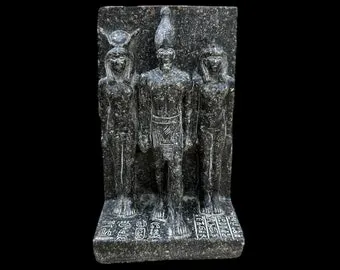
A Triad of Power and Divinity
Among the most famous of these discoveries is the Menkaure Triad, which depicts the pharaoh standing beside two deities:
-
Hathor, the goddess of love, motherhood, and joy, often considered the divine mother of kings.
-
A regional goddess, representing one of the provinces of Egypt, symbolizing the unification of divine and earthly authority.
Together, these figures embody the cosmic and political balance that Pharaoh Menkaure was believed to uphold.
Symbolism in the Menkaure Statues
The statues are more than artistic expressions—they are symbols of religious belief, political legitimacy, and cultural values.
Divine Protection
By placing Menkaure alongside Hathor and a regional goddess, the sculptors emphasized that the pharaoh’s rule was under divine guardianship. This reinforced the idea that the king was not just a mortal ruler but also a representative of the gods on earth.
The Eternal Pharaoh
The rigid stance, idealized proportions, and serene expressions reflect the Egyptian artistic tradition of eternal perfection. Pharaohs were depicted not as ordinary humans but as timeless beings, destined to live forever in the afterlife.
Political Unity
The inclusion of a provincial goddess underscores the importance of regional unity under the central authority of the king. It was a symbolic way of declaring Egypt’s strength through divine and earthly order.
The Craftsmanship of Ancient Egyptian Artisans
The statues of Menkaure exemplify the mastery of ancient Egyptian sculpture. Carved from dark schist, a hard and durable stone, these works required incredible precision and patience.
Artistic Features
-
Rigid posture: The forward-facing stance reflects authority and stability.
-
Detail in musculature and features: The statues portray Menkaure as youthful and strong, a symbol of eternal kingship.
-
Symmetry and proportion: True to Egyptian ideals, the figures maintain harmony and balance in every line and curve.
Tools and Techniques
Egyptian artisans used copper and stone tools, combined with abrasive sand, to shape the statues. The fact that such intricate details were achieved with primitive tools remains a testament to their skill and dedication.
Hathor and the Regional Goddess: The Divine Companions
Hathor’s Role
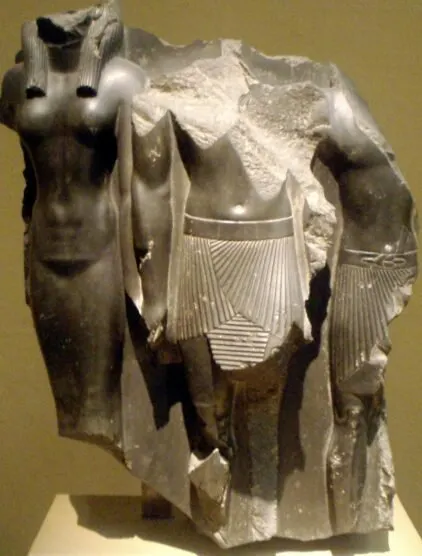
As one of the most revered deities in the Egyptian pantheon, Hathor symbolized love, fertility, and maternal care. Her presence beside Menkaure highlights the nurturing aspect of kingship, reinforcing the idea that a ruler must protect his people as a mother protects her child.
The Regional Goddess
The identity of the second goddess varies in interpretations, often seen as a deity representing a specific nome (province) of Egypt. This reflects Menkaure’s role as a unifier and protector of the land, ensuring prosperity across the regions of the kingdom.
Why the Discovery Matters
The Menkaure statues are not just archaeological treasures—they are windows into a world where religion, politics, and art were seamlessly intertwined.
Cultural Significance
They reveal the Egyptian worldview: that kingship was both divine and human, a role sustained by gods and ancestors.
Historical Insight
The statues provide direct evidence of 4th Dynasty beliefs and practices, helping historians understand the cultural and religious values of the Old Kingdom period.
Artistic Legacy
These works continue to inspire admiration for the skill and vision of ancient craftsmen, proving that art was as central to Egyptian life as religion and governance.
Mysteries Still Buried in the Sands
The discovery of the Menkaure statues raises an intriguing question: What else remains hidden beneath the sands of Giza? Egypt continues to yield extraordinary finds, from newly uncovered tombs to long-lost temples. Each discovery deepens our understanding while also reminding us of the countless secrets that remain.
The Menkaure statues stand as proof that time and nature may conceal treasures, but they cannot erase the legacy of a civilization as enduring as Egypt’s.
Conclusion: The Eternal Legacy of Menkaure
The Pharaoh Menkaure statues uncovered in 1908 are more than ancient relics; they are a testament to Egypt’s ability to merge art, spirituality, and power into timeless masterpieces. Representing divine protection, political unity, and eternal kingship, these sculptures continue to captivate the modern imagination.
As archaeologists continue their work across Giza and beyond, one thing remains certain: the sands of Egypt still hold mysteries waiting to be revealed, and each discovery brings us closer to understanding the grandeur of one of history’s greatest civilizations.
ALSO READ: Jabal al-Arkubah: Yemen’s Dormant Volcanic Wonder