Latidan Bridge: A Safavid Marvel of War and Commerce
A Dual Legacy of War and Trade
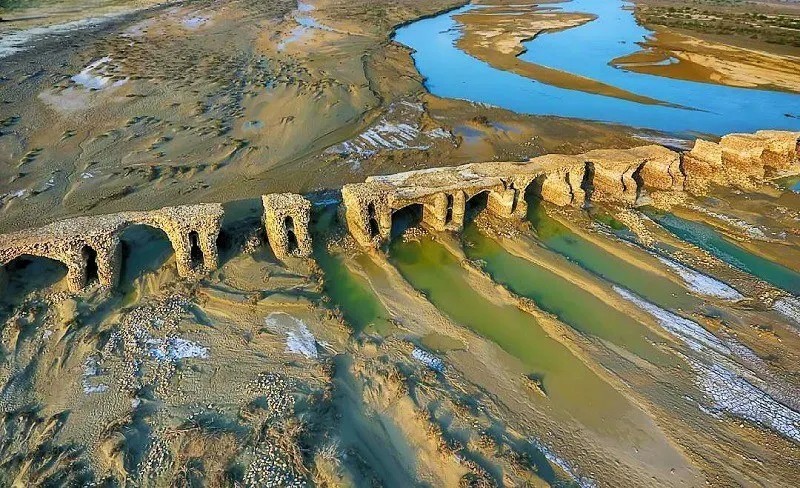
In the rugged landscape of Hormozgan Province, Iran, stands one of the most significant yet lesser-known architectural marvels of the Safavid dynasty: the Latidan Bridge. Built in 1627 under Shah Abbas I, this monumental structure was not merely a passage across water but a lifeline for both military campaigns and commercial trade.
Commissioned during a turbulent period marked by conflict with the Portuguese, the bridge’s design reflects the strategic genius and engineering skill of the Safavid era. Over time, Latidan Bridge transitioned from a symbol of war to a vibrant artery of commerce, carrying goods, people, and culture across its span. Even centuries later, much of its structure endures, echoing the brilliance of the civilization that built it.
The Historical Context: Safavids vs. Portuguese
During the early 17th century, the Persian Gulf was a contested zone of power. The Portuguese had occupied Hormuz, a crucial island controlling maritime trade, and threatened Persian dominance in the region. Shah Abbas, determined to reclaim sovereignty and expand Safavid influence, launched military campaigns that required rapid troop movements and reliable supply routes.
To meet these needs, the Latidan Bridge was commissioned. It enabled armies to cross difficult terrain, move provisions swiftly, and secure communications across Hormozgan. Thus, the bridge was not only an architectural achievement but also a strategic tool in the war against the Portuguese.
Construction and Architecture of Latidan Bridge
The Latidan Bridge stands as a masterpiece of Safavid engineering. While less renowned than Isfahan’s Si-o-se-pol or Khaju Bridge, it rivals them in historical importance.
Materials and Design
-
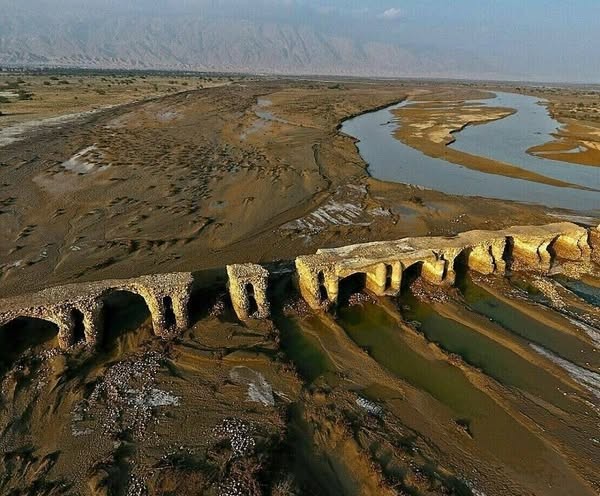
Constructed primarily from local stone, brick, and mortar, the bridge was designed to withstand harsh climates and seasonal flooding.
-
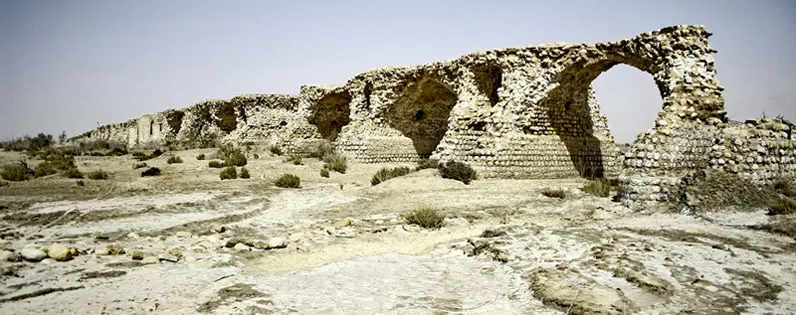
Its arched design distributed weight evenly and allowed for resilience against strong water currents.
-
The bridge extended over a kilometer, making it one of the longest Safavid bridges ever built.
Functionality
-
Wide enough to accommodate both military caravans and merchants, it reflected the dual priorities of war and commerce.
-
Elevated sections allowed for natural water flow, reducing the risk of collapse during floods.
-
Resting stations and fortified checkpoints along the structure suggest its importance in logistical planning.
Latidan Bridge as a Military Stronghold
The bridge’s earliest role was firmly military. It provided the Safavid army with:
-
Rapid Deployment Routes: Troops could move quickly across rivers and rugged terrain.
-
Supply Chains: Food, weapons, and reinforcements traveled securely to the frontlines.
-
Strategic Advantage: Control over river crossings gave Shah Abbas’s forces a tactical edge against Portuguese strongholds.
The construction of Latidan Bridge exemplifies how the Safavids integrated infrastructure into military strategy, ensuring that engineering served not only civic but also defensive needs.
Transition to Commerce and Trade
With the decline of Portuguese influence and the strengthening of Safavid control, the role of Latidan Bridge evolved. No longer just a military passage, it became a bustling trade artery.
Trade Expansion
-
The bridge facilitated caravan routes connecting Hormozgan to the Persian heartlands.
-
Merchants carried spices, textiles, pearls, and dates, fueling both local and international commerce.
-
As part of the Silk Road network, it contributed to Iran’s role as a global trading hub.
Economic Significance
By enabling trade and movement, Latidan Bridge contributed directly to the economic prosperity of southern Iran. It became a vital link between Persian Gulf ports and inland cities, strengthening Hormozgan’s importance in Safavid commerce.
Symbolism and Cultural Significance
Like many Safavid structures, Latidan Bridge embodied more than practicality—it reflected the dynasty’s values and aspirations.
-
Resilience: Built to endure floods, wars, and centuries of use, the bridge symbolized Safavid durability.
-
Innovation: Its construction highlighted the dynasty’s engineering mastery, merging function with design.
-
Unity: Serving soldiers and merchants alike, the bridge represented the interconnectedness of war and peace in shaping society.
The Decline of Latidan Bridge
Despite its grandeur, Latidan Bridge eventually succumbed to the passage of time. Natural disasters, shifts in trade routes, and political changes led to its partial ruin. Floods in particular damaged sections of the structure, while neglect in later centuries contributed to further deterioration.
Yet, much of the bridge remains intact, standing as a living ruin. Its remnants offer a glimpse into the Safavid world—a civilization that valued both strength and connectivity.
Latidan Bridge Today
Located in Hormozgan Province, the bridge is recognized as one of Iran’s most important historical landmarks. Though less frequented by tourists than Isfahan’s bridges, it holds equal weight in the story of Persian architecture.
Modern Relevance
-
Cultural Heritage: The bridge has been identified as part of Iran’s national heritage sites, warranting preservation.
-
Tourism Potential: With growing interest in off-the-beaten-path sites, Latidan Bridge offers unique insights into Safavid history.
-
Educational Value: Historians and archaeologists continue to study its structure to understand Safavid engineering methods.
Preservation Challenges
Preserving Latidan Bridge is not without challenges:
-
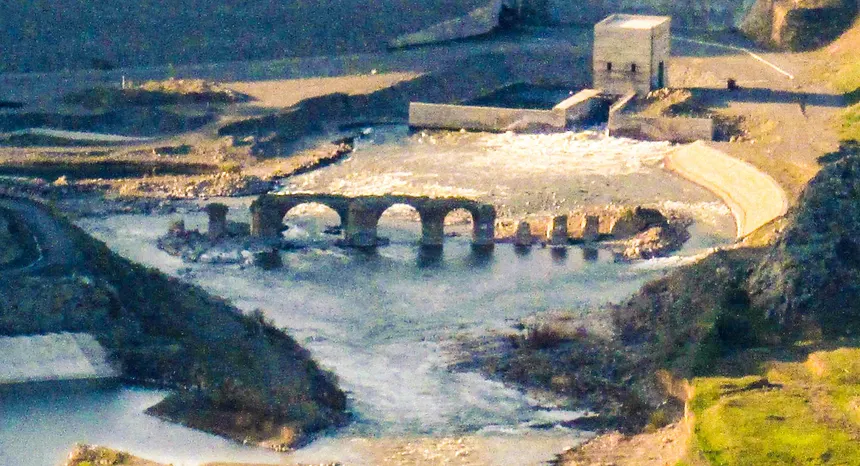
Erosion and Flooding: Its riverside location makes it vulnerable to natural forces.
-
Neglect: Compared to more famous landmarks, it has received limited conservation attention.
-
Modern Development: Expanding infrastructure sometimes threatens historical remains.
Efforts by Iran’s cultural authorities have aimed to protect the site, but further restoration is needed to safeguard this Safavid marvel for future generations.
Comparing Latidan Bridge with Other Safavid Bridges
The Safavid dynasty is celebrated for its remarkable bridges, many of which still adorn Iran’s landscape. Comparing Latidan with others highlights its uniqueness:
-
Si-o-se-pol (Isfahan): A masterpiece of elegance and symmetry, designed primarily for civic beauty.
-
Khaju Bridge (Isfahan): Both functional and ornamental, doubling as a social space.
-
Latidan Bridge (Hormozgan): Primarily strategic, emphasizing strength, longevity, and dual use for war and commerce.
This contrast underscores the diversity of Safavid architectural achievements across Iran.
The Legacy of Latidan Bridge
Latidan Bridge remains a symbol of Safavid adaptability—a structure born from the necessity of war but later flourishing as a channel of peace and trade. Its story mirrors the broader history of Iran during the Safavid era: a blend of conflict, resilience, prosperity, and innovation.
Even in partial ruin, the bridge stands as a testament to human ingenuity. It reminds us how infrastructure can shape the destiny of nations, bridging not only rivers but also the divide between war and commerce.
Conclusion: Bridging the Past and Future
The Latidan Bridge of Hormozgan is far more than stone and mortar. It is a narrative in architecture, a witness to wars fought, goods exchanged, and cultures intertwined. From its strategic beginnings in 1627 under Shah Abbas to its role in shaping regional trade, the bridge encapsulates the dual spirit of the Safavid dynasty.
Today, as historians and travelers gaze upon its arches, they see not just a relic of the past but a living reminder of resilience and ingenuity. Latidan Bridge remains what it always was—a bridge between conflict and commerce, past and present, earth and ambition.
ALSO READ: Angkor Thom: The Last Great Capital of the Khmer Empire