Angkor Thom: The Last Great Capital of the Khmer Empire
The Eternal City of the Khmer Empire
Nestled in the heart of modern-day Cambodia, Angkor Thom stands as one of the most magnificent archaeological sites of Southeast Asia. Built in the late 12th century by the powerful King Jayavarman VII, Angkor Thom was the last and most enduring capital of the Khmer Empire. Known for its monumental scale, elaborate temples, and intricately carved stone faces, Angkor Thom is more than just an ancient city—it is a living testimony to the grandeur of Khmer civilization.
While many visitors know of Angkor Wat, Angkor Thom often captivates travelers with its mystery, history, and enduring beauty. Together, these sites form part of the Angkor Archaeological Park, a UNESCO World Heritage Site that continues to draw millions of visitors from around the world.
The History of Angkor Thom
Angkor Thom, meaning “Great City” in Khmer, was established in the late 12th century, during the reign of King Jayavarman VII (1181–1218 AD). After defeating the Cham invaders who had sacked the earlier Khmer capital, Jayavarman VII sought to rebuild and fortify his empire.
Unlike previous kings, Jayavarman VII was a devout Buddhist, and his religious beliefs greatly influenced the design and symbolism of Angkor Thom. The city became not only a political and administrative hub but also a sacred space reflecting his devotion to Mahayana Buddhism.
At its height, Angkor Thom is believed to have housed nearly a million residents, making it one of the largest cities of the medieval world.
The Layout of Angkor Thom
The grandeur of Angkor Thom is best appreciated through its impressive urban planning and architectural design.
1. The City Walls and Moats
Angkor Thom is a perfectly square city, measuring about 9 square kilometers. It is surrounded by an 8-meter-high laterite wall, each side approximately 3 kilometers long, and encircled by a 100-meter-wide moat. The walls and moats symbolized Mount Meru and the cosmic ocean, echoing Hindu and Buddhist cosmology.
2. The Five Gateways
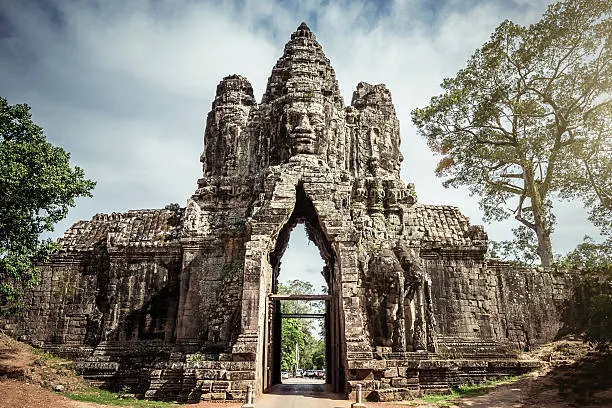
There are five monumental gates, each topped with massive stone faces resembling the compassionate Bodhisattva Avalokiteshvara, reflecting Jayavarman VII’s Buddhist influence.
-
North Gate – well-preserved and less visited.
-
South Gate – the most popular, often photographed with rows of devas (gods) and asuras (demons) holding naga serpents.
-
East Gate – sometimes called the Gate of the Dead.
-
West Gate – less restored but historically significant.
-
Victory Gate – used for ceremonial processions.
3. The Central Temples and Monuments
At the very heart of Angkor Thom stands Bayon Temple, surrounded by other significant structures like Baphuon, Terrace of the Elephants, and Terrace of the Leper King. These monuments symbolize both the grandeur of the empire and Jayavarman VII’s spiritual devotion.
The Iconic Bayon Temple
Perhaps the most famous structure within Angkor Thom is the Bayon Temple, built directly in the city’s center. Unlike Angkor Wat, which symbolizes Hindu cosmology, Bayon reflects Jayavarman VII’s Buddhist vision.
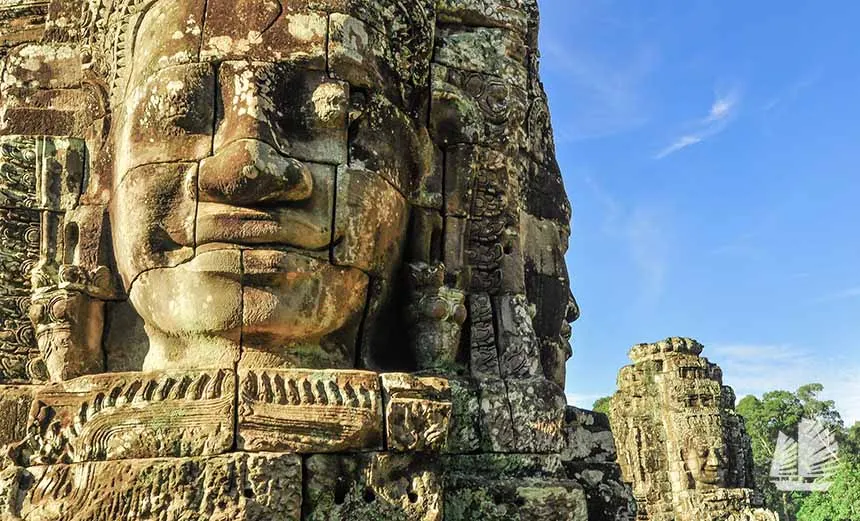
Features of Bayon Temple:
-
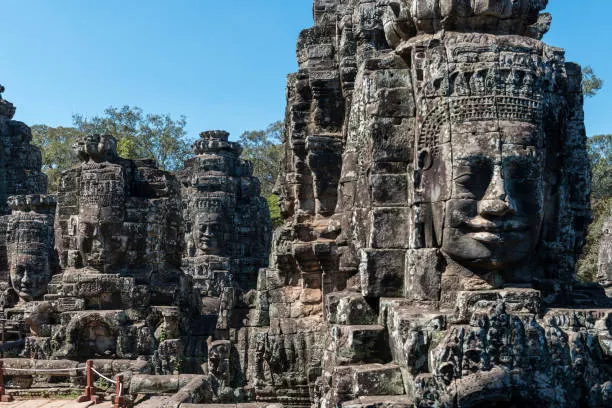
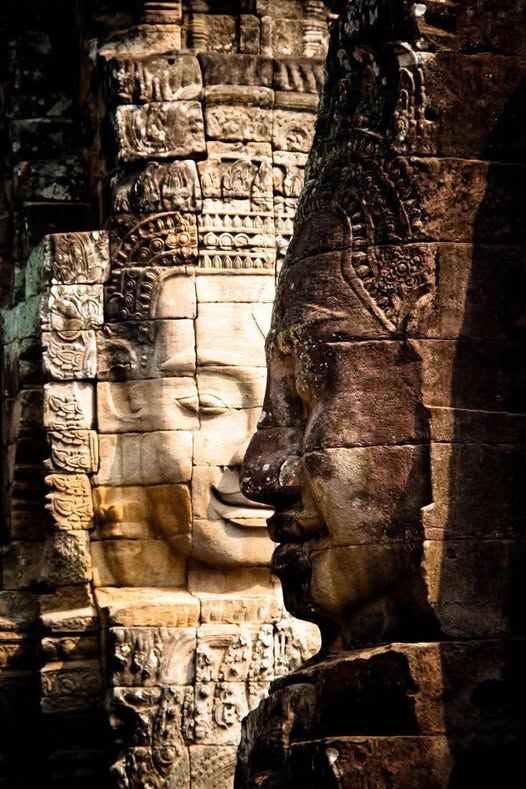
Stone Faces: The temple is renowned for its 216 giant smiling faces carved into its towers, believed to represent either Avalokiteshvara or Jayavarman VII himself.
-
Bas-reliefs: The walls of Bayon are covered with intricate carvings depicting everyday Khmer life, battles, festivals, and even market scenes.
-
Architectural Symbolism: Bayon’s three levels symbolize the transition from the earthly realm to the spiritual plane.
The enigmatic faces of Bayon remain one of the most photographed and discussed features of Angkor Thom, earning it the nickname “The Temple of Smiles.”
Other Major Monuments of Angkor Thom
1. Baphuon Temple
Originally a Hindu temple dedicated to Shiva, Baphuon was later converted into a Buddhist monument. Known as the “world’s largest jigsaw puzzle,” it underwent extensive restoration after collapsing centuries ago.
2. Terrace of the Elephants
Stretching over 300 meters, this terrace was used by kings for royal ceremonies and public audiences. Its carvings of elephants and garudas reflect Khmer artistry at its finest.
3. Terrace of the Leper King
Named after a mysterious statue once found at the site, this terrace features elaborate carvings of mythological beings, nagas, and celestial dancers.
4. Phimeanakas
A pyramid-shaped temple within the Royal Palace compound, Phimeanakas was believed to be the site where Khmer kings performed nightly rituals with a divine serpent spirit.
Symbolism and Religion in Angkor Thom
Angkor Thom is more than an urban settlement—it is a cosmic city. Every aspect of its layout is deeply rooted in Buddhist and Hindu symbolism.
-
The square layout symbolizes the universe.
-
The Bayon temple at the center represents Mount Meru, the axis of the universe.
-
The moats and walls symbolize the cosmic ocean and mountain ranges.
This cosmic design reflects the fusion of politics and religion, where the king was not only a ruler but also a divine representative ensuring harmony between heaven and earth.
Decline of Angkor Thom
Despite its magnificence, Angkor Thom, like the rest of the Angkor region, gradually declined. Factors such as climate change, shifting trade routes, and repeated invasions by the Siamese (Thai) weakened the city.
By the 16th century, Angkor Thom was largely abandoned, swallowed by the Cambodian jungle. However, its temples and monuments endured, awaiting rediscovery by explorers centuries later.
Angkor Thom Today: A UNESCO World Heritage Site
Today, Angkor Thom forms a central part of the Angkor Archaeological Park, which was declared a UNESCO World Heritage Site in 1992. Tourists from around the globe come to marvel at its architectural wonders, stone carvings, and spiritual aura.
The South Gate of Angkor Thom and Bayon Temple remain two of the most iconic spots for photography, while the terraces and lesser-known gates provide quieter spaces for exploration.
Visiting Angkor Thom: What to Expect
-
Best Time to Visit: November to February offers cooler weather.
-
Getting There: Angkor Thom is easily accessible from Siem Reap, just a few kilometers from Angkor Wat.
-
Tickets: Visitors need an Angkor Pass, which covers multiple sites in the Angkor complex.
-
Tips: Arrive early to avoid crowds, wear comfortable shoes, and take time to admire the intricate carvings that tell stories of Khmer life.
The Legacy of Angkor Thom
Angkor Thom remains a symbol of the Khmer Empire’s resilience, innovation, and devotion. It represents:
-
Architectural genius with massive stonework and engineering skills.
-
Cultural blending of Hindu and Buddhist traditions.
-
Historical memory of one of Asia’s greatest civilizations.
Even after centuries of abandonment, Angkor Thom’s temples and monuments stand as eternal guardians of Cambodia’s glorious past.
Conclusion: The Timeless Beauty of Angkor Thom
Angkor Thom is not just an archaeological site—it is a window into the soul of the Khmer Empire. From the smiling faces of Bayon to the grandeur of the city’s gates, every stone tells a story of devotion, power, and artistry.
For historians, travelers, and spiritual seekers alike, Angkor Thom offers a profound journey into the past while standing as a reminder of humanity’s enduring creativity.
ALSO READ: The Mystery of the Phaistos Disc: An Undeciphered Ancient Enigma