The Roman Rock Crystal Jar from the Galloway Hoard: A Jewel of Viking Age Scotland
A Viking Age Treasure Unearthed
In 2014, archaeologists made one of the most significant discoveries in Scotland’s history: the Galloway Hoard. Buried in a plowed field in western Scotland, this astonishing collection of Viking Age treasure shed light on the wealth, artistry, and global connections of the period.
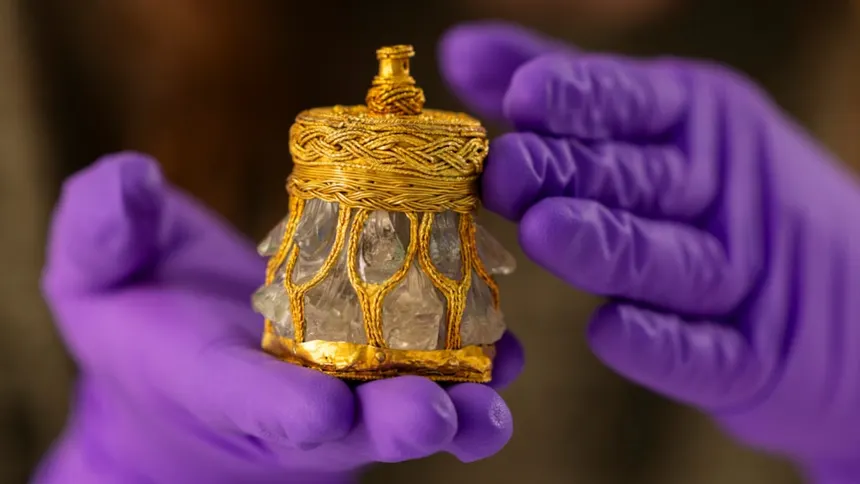
Among its most remarkable objects lies a Roman rock crystal jar, exquisitely restored and adorned with gold thread. Though it measures just 5 cm (2 inches) in height, its craftsmanship and preservation reveal an extraordinary story of cultural exchange and sacred value.
Discovery of the Galloway Hoard
The Galloway Hoard was unearthed by metal detectorists in Dumfries and Galloway, southwest Scotland. Comprising over 100 artifacts, including silver arm rings, brooches, beads, and religious relics, it dates to the Viking Age (late 8th to early 9th century CE).
The hoard’s richness sets it apart from typical Viking treasure caches. Unlike simple bullion hoards, it contained objects of incredible artistic and symbolic significance—many far older than the Viking period itself. The Roman rock crystal jar stands as one of its most enigmatic and precious finds.
The Roman Rock Crystal Jar: Description and Craftsmanship
Materials and Structure
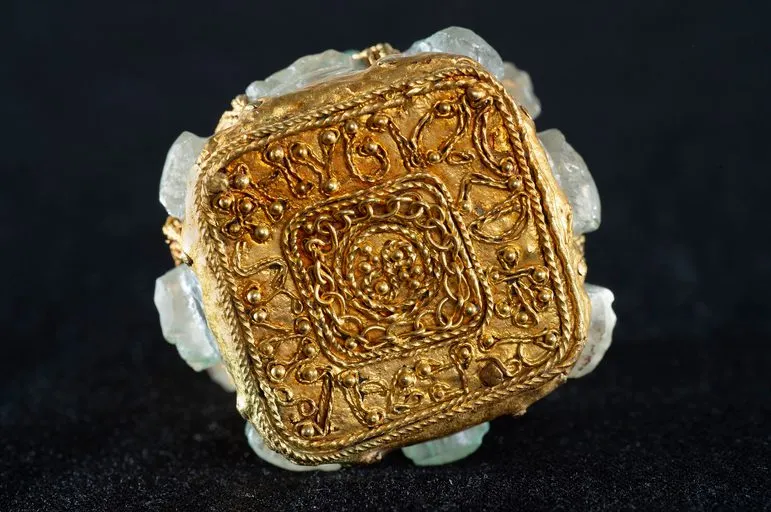
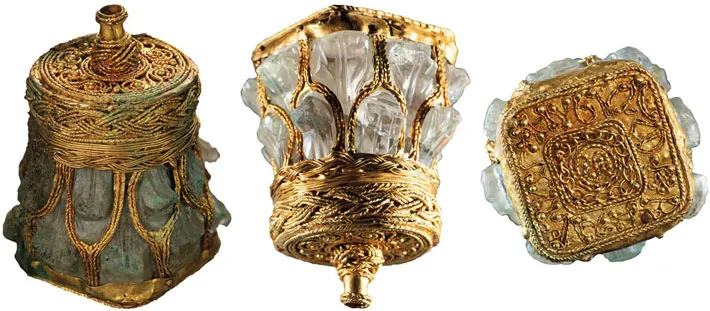
The jar is crafted from rock crystal, a transparent and luminous material prized in the Roman world for its purity and rarity. It is encased in delicate fittings of intricate gold thread, a sign of elite craftsmanship.
Size and Features
-
Height: ~5 cm (2 inches)
-
Material: Rock crystal, gold thread fittings
-
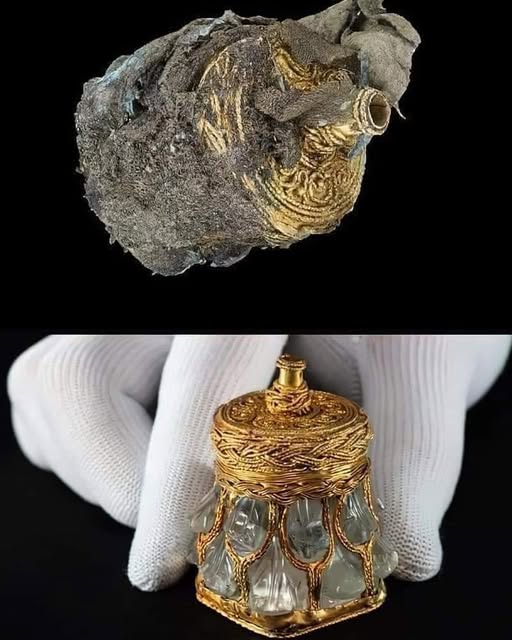
Condition: Preserved in extraordinary detail, protected inside a silk-lined leather pouch
Its small size suggests it once held a valuable substance, possibly perfume, oil, or a sacred elixir. The lavish casing emphasizes both the rarity of its contents and the prestige of its owner.
Roman Origins and Viking Reuse
A Roman Artifact in a Viking Hoard
The jar’s origins trace back to the Roman world, where such crystal vessels were prized luxury goods, often linked to ritual or elite use. Its survival into the Viking Age highlights how objects circulated long after their creation, treasured as heirlooms and recontextualized in new cultural settings.
Symbolism in the Viking Age
For Viking societies, possessing such an artifact carried immense symbolic weight. It was more than a container—it was a link to the divine, the exotic, and the ancient. The fact that it was carefully wrapped in silk and leather indicates its role as a sacred or ceremonial object, not merely a luxury trinket.
Perfume, Elixirs, and Sacred Substances
Historians suggest the jar likely once contained perfume, incense oil, or a valuable elixir, substances commonly associated with ritual purity or royal ceremonies. In both Roman and later medieval contexts, scent and oil played central roles in religious rites, coronations, and healing practices.
If it held perfume or oil, its presence in the Viking Age hoard suggests that local elites or even clergy used it for Christian or syncretic rituals before depositing it in the ground.
Preservation: A Testament to Value
The jar’s survival owes much to its careful protection. Enclosed in a silk-lined leather pouch, it was shielded from environmental damage for over a millennium. The use of silk itself is telling—an imported luxury from the East, emphasizing the jar’s elite status.
Such care suggests that whoever buried the Galloway Hoard considered this artifact among their most precious possessions, worthy of safeguarding in life and death.
Cultural Significance: What the Jar Tells Us
Trade and Connectivity
The presence of a Roman artifact in a Viking Age context underscores the interconnectedness of early medieval Europe. Viking trade networks extended from the Mediterranean to the Middle East and beyond, ensuring that exotic goods circulated widely.
Religious and Ritual Role
The jar’s gold-thread casing and protective pouch strongly suggest ritual significance. People may have linked it to Christian relic traditions or repurposed it in Viking ceremonial practices. Either way, it reflects a society that deeply valued symbolic and spiritual objects.
Elite Wealth and Power
The jar embodies elite status and cultural prestige. Owning such an object—Roman in origin, encased in gold, and preserved in silk—projected power, wealth, and divine connection.
The Galloway Hoard in the National Collection
The National Museums Scotland now preserves and studies the Galloway Hoard, including the rock crystal jar. Conservation efforts have restored the jar to its former brilliance, allowing the public to appreciate its artistry and significance.
Exhibitions highlight the jar as one of the hoard’s crown jewels, inviting visitors to imagine the hands it passed through—from Roman artisans to Viking chieftains.
Why the Jar Matters Today
The rock crystal jar stands as more than a museum piece. It is:
-
A bridge across time, connecting the Roman world to Viking Age Scotland.
-
A symbol of cultural exchange, showing how objects moved across empires and centuries.
-
A testament to craftsmanship, with its crystal purity and gold-thread artistry still dazzling today.
For historians and archaeologists, it challenges assumptions about what Vikings valued and how they interacted with older traditions. For modern audiences, it offers a tangible link to the mystical, ceremonial, and global dimensions of the past.
Conclusion: A Jewel of Viking Scotland
The Roman rock crystal jar from the Galloway Hoard is a masterpiece of ancient craftsmanship and Viking reverence. Though small in size, it carries a monumental story of ritual, trade, and cultural continuity.
Buried over a millennium ago in the Scottish soil, wrapped in silk and gold, it was clearly more than an object—it was a treasure of memory, belief, and power. Today, unveiled to the world, it reminds us how even the tiniest artifacts can hold the greatest histories.
ALSO READ: The Royal Hungarian Salt Mine of Désakna: A Legacy of Industry and Heritage