The Bronze Corinthian Helmet from Taranto: A Masterpiece of Ancient Greek Warfare
Helmet That Defined an Era
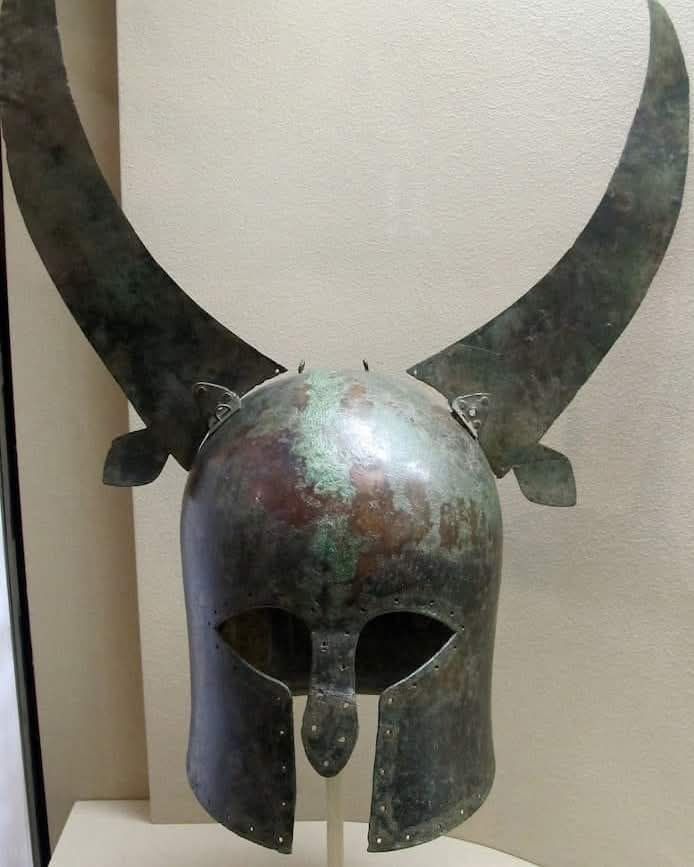
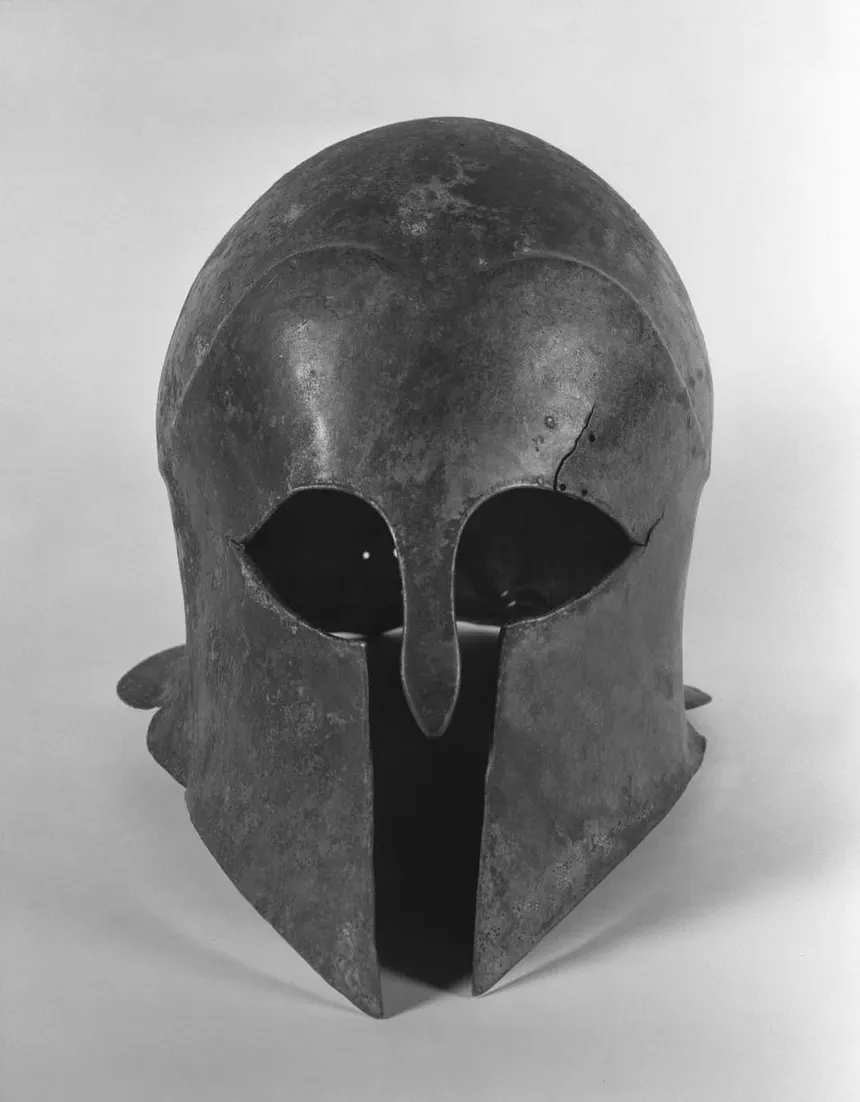
Few artifacts from ancient Greece capture the imagination quite like the Corinthian helmet, a piece of military equipment that became a cultural icon. Dating to around 650 BC and discovered in Taranto, southern Italy, this bronze helmet exemplifies the artistry, innovation, and martial spirit of early Greek civilization. Today, it resides in the Geneva Museum of Art and History in Switzerland, where it stands as a testament to the craftsmanship and power of ancient Greek warfare.
The Origin of the Corinthian Helmet
The Corinthian helmet originated in Corinth, a city-state in Greece, around the 7th century BC. Its name reflects its place of invention, but its popularity quickly spread across the Greek world.
By 650 BC, the Corinthian helmet had become the hallmark of the hoplite, the heavily armed infantry soldier who formed the backbone of the Greek phalanx formation. Its design emphasized full facial protection while projecting an aura of intimidation and authority on the battlefield.
Taranto: A Greek Colony in Italy
The helmet’s discovery in Taranto (ancient Taras) adds an additional layer of significance. Taranto was a Greek colony founded by the Spartans in southern Italy during the 8th century BC. This colony became a major hub of Greek culture, art, and military power in the western Mediterranean.
Finding a Corinthian helmet in Taranto reflects how Greek warfare and identity spread beyond mainland Greece, shaping the cultural and political landscape of Magna Graecia.
Design and Features of the Bronze Helmet
The Corinthian helmet from Taranto, crafted in bronze, exhibits the classic features that made this type of armor both practical and iconic.
Key Characteristics:
-
Material: Solid cast bronze, hammered into shape.
-
Coverage: Full protection for the head, neck, and face.
-
Eyeholes: Narrow slits that allowed vision but minimized vulnerability.
-
Nose guard: A prominent central ridge extending downward to protect the nose.
-
Cheek plates: Curved extensions that shielded the sides of the face.
-
Crest holder: Many helmets bore horsehair crests for added height and visual impact.
This helmet balanced functionality and artistry. While designed for protection, it also projected an image of strength, discipline, and fearlessness—qualities essential to the hoplite ethos.
The Symbolism of the Corinthian Helmet
Beyond protection, the Corinthian helmet carried deep symbolic weight.
-
Heroism: It became associated with Greek warriors and their code of honor.
-
Authority: Leaders and elites often wore elaborately decorated versions.
-
Artistic Motif: Over time, the helmet appeared on pottery, sculpture, and coinage, symbolizing Greek identity.
-
Mythology: Gods such as Athena, the goddess of wisdom and war, were often depicted wearing Corinthian helmets, linking mortal soldiers to divine protection.
The helmet thus transcended its role as armor to become an emblem of Greek culture and power.
Warfare in the 7th Century BC
The helmet’s creation around 650 BC corresponds with a transformative period in Greek military history.
Rise of the Hoplite and Phalanx
-
Hoplites: Citizen-soldiers who could afford their own armor and weapons.
-
Phalanx Formation: A tight infantry formation that relied on collective discipline and shield walls.
-
Role of Helmets: Protection of the head was crucial, as hoplites fought in close quarters where spears and swords targeted vulnerable areas.
The Corinthian helmet became the standard in this new style of warfare, symbolizing the unity and might of the Greek city-state armies.
Artistry and Craftsmanship
Bronze was the favored material for helmets in this period due to its durability and malleability.
Techniques:
-
Hammering: Artisans hammered a single sheet of bronze to create seamless helmets.
-
Casting and Engraving: Some helmets were decorated with engraved designs or additional adornments.
-
Polishing: Helmets were often polished to a shining finish, creating a dazzling effect in sunlight.
The Taranto helmet embodies this artistry, demonstrating how function and aesthetics blended in Greek martial culture.
Comfort and Limitations
While highly protective, Corinthian helmets had drawbacks.
-
Restricted Vision: The narrow eye slits limited peripheral vision.
-
Breathing Difficulties: The closed design made long wear uncomfortable, especially in hot climates.
-
Acoustic Isolation: Soldiers wearing them could hear poorly, complicating communication.
By the 5th century BC, these limitations led to modifications, including more open-faced designs. Nonetheless, the Corinthian type remained a cultural symbol of the “ideal” Greek warrior.
The Helmet’s Journey to Switzerland
The Taranto helmet’s eventual preservation in the Geneva Museum of Art and History reflects the modern movement of antiquities across Europe. While many Greek artifacts remain in Italy or Greece, this helmet found its way to Switzerland, where it is now displayed as part of a broader collection of ancient artifacts.
Its presence in Geneva underscores the importance of international museums in preserving global heritage, making ancient objects accessible to diverse audiences worldwide.
Legacy of the Corinthian Helmet
The Corinthian helmet’s design influenced not only subsequent Greek armor but also later European conceptions of classical warfare.
-
Roman Influence: Early Roman helmets borrowed heavily from Greek designs.
-
Art and Culture: Renaissance and neoclassical art revived the Corinthian helmet as a symbol of antiquity.
-
Modern Popularity: Today, it appears in films, literature, and popular culture as shorthand for the “Greek warrior.”
The helmet’s timeless design continues to inspire both historians and artists, connecting modern society to the world of ancient Greece.
Why the Taranto Helmet Matters
This particular helmet is significant for several reasons:
-
Date and Origin: At ca. 650 BC, it represents an early stage in the evolution of Greek armor.
-
Colonial Context: Found in Taranto, it illustrates how Greek culture extended beyond the Aegean.
-
Cultural Symbol: As part of a museum collection, it serves as an educational and cultural bridge, reminding us of ancient innovation and identity.
Conclusion: A Warrior’s Legacy in Bronze
The Bronze Corinthian helmet from Taranto is more than a piece of armor—it is a symbol of an era. Forged in bronze, worn by warriors, and imbued with cultural meaning, it reflects the values of discipline, protection, and identity that defined Greek civilization in the 7th century BC.
Now housed in Geneva, it continues to tell the story of how ancient Greece combined art, war, and symbolism to create enduring icons.
ALSO READ: The Brick Minaret of Kutlug Timur: A Towering Symbol of Kunya-Urgench