The Roman Fluted Washing-Bowl from the Caubiac Treasure: A Masterpiece of Silverwork
The Roman world has left us with a wealth of artistic treasures, from monumental architecture to delicate objects of daily use. Among the most exquisite are the silver vessels that reveal the luxury, artistry, and cultural values of the Roman elite. One such artifact is the Roman fluted washing-bowl, dating from the 3rd century AD, discovered as part of the Caubiac Treasure in southern France in 1785.
Now housed in the British Museum in London, this silver bowl combines practical function, divine imagery, and elite craftsmanship, making it a remarkable example of Roman domestic luxury and religious symbolism.
Discovery of the Caubiac Treasure
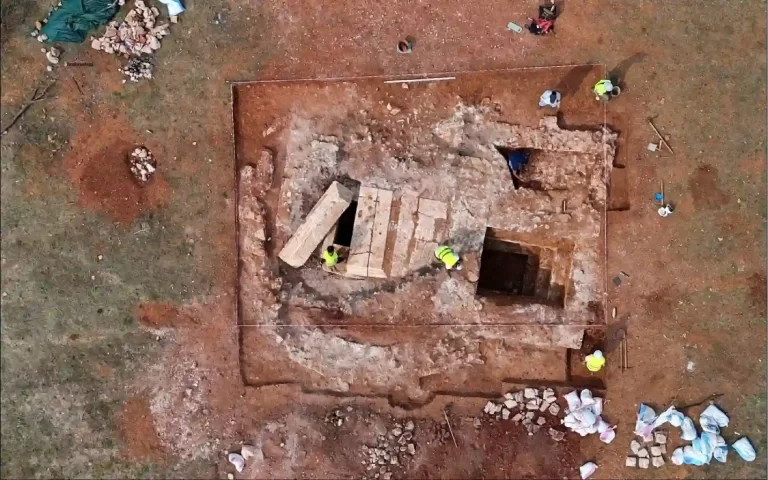
The Caubiac Treasure was unearthed in 1785 near Caubiac in southern France. This hoard of silverware provides rare insight into the wealth and tastes of Roman provincial elites during the late Imperial period.
The washing-bowl, with its refined craftsmanship and detailed decoration, was one of the most significant items in the collection. Its preservation and later acquisition by the British Museum ensured that it would remain accessible to both scholars and the public, standing as a testimony to Roman artistry.
Description of the Washing-Bowl
The washing-bowl stands out for its technical excellence and symbolic decoration.
Structure and Form
-
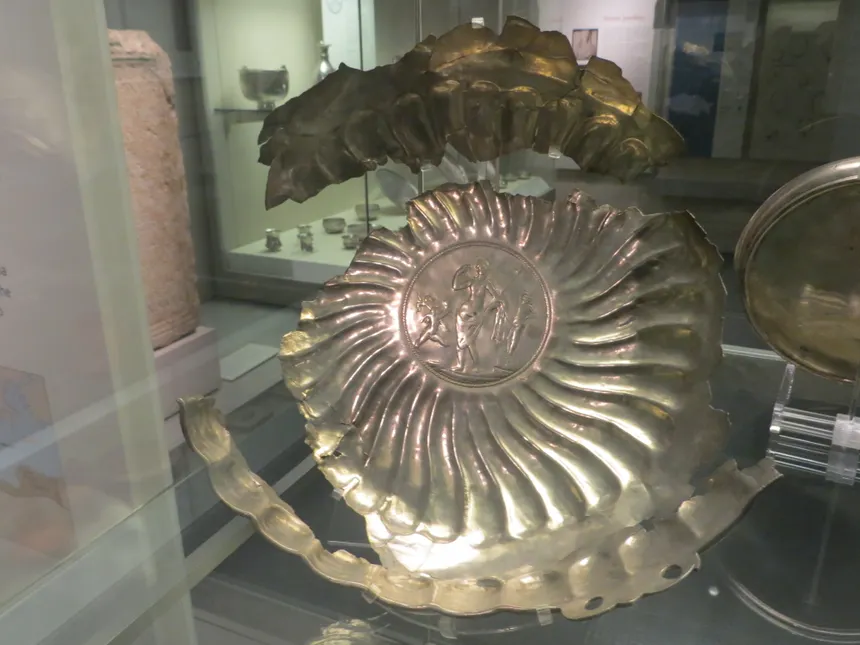
The bowl is fluted, featuring elegant ridges radiating from the center.
-
Its circular form is complemented by a central medallion, a design popular in Roman silverwork.
-
The base contains the graffito “Eugrafi”, possibly identifying the Greek craftsman Eugraphios.
Decorative Medallion
At the heart of the bowl is a medallion depicting Venus, Cupid, and Priapus:
-
Venus, goddess of love and beauty, embodies grace and fertility.
-
Cupid, her son, represents desire and affection.
-
Priapus, a rustic fertility god, symbolizes prosperity, protection, and abundance.
This trio links the bowl’s decoration to themes of love, fertility, and domestic well-being.
The Symbolism of Venus, Cupid, and Priapus
The imagery of Venus, Cupid, and Priapus carried powerful meanings in Roman culture.
Venus
As the goddess of love, beauty, and fertility, Venus symbolized the harmony of nature and human relationships. Her presence on the bowl reflected ideals of elegance, sensuality, and divine favor.
Cupid
Cupid, often portrayed as playful, symbolized the power of desire. His imagery on luxury objects reinforced the importance of love and passion in elite Roman culture.
Priapus
Priapus, though sometimes humorous or obscene in Roman art, carried serious roles as a protector of gardens, fertility, and prosperity. His depiction on the washing-bowl underscores the bowl’s domestic and symbolic significance, tying household rituals to themes of abundance.
Function and Use in Roman Daily Life
The washing-bowl, while a work of art, also had a practical function.
-
It was used for ablutions and handwashing, often before meals or rituals.
-
The fluted design and medallion transformed a utilitarian object into a luxury vessel for display.
-
Such bowls were often used in banquet settings, where silverware signified wealth, refinement, and social status.
The fusion of practicality with divine imagery illustrates the Roman tendency to elevate everyday objects into symbols of identity and prestige.
Craftsmanship and the Name Eugraphios
The graffito “Eugrafi” inscribed on the base is particularly fascinating.
-
Scholars suggest it may refer to a Greek craftsman named Eugraphios, highlighting the role of Greek artisans in Roman luxury production.
-
Greek names frequently appear in Roman art workshops, reflecting the fusion of Greek skill with Roman patronage.
-
If the attribution is correct, the bowl serves as evidence of cross-cultural artistic exchange in the Roman world.
The precision of the fluting, the detailed medallion, and the overall finish of the bowl confirm it as the product of a master craftsman working for elite clients.
The Caubiac Treasure and Roman Silver Hoards
The broader pattern of Roman silver hoards found across Europe includes the Caubiac Treasure.
Reasons for Hoarding
-
Security during crises: Silver was often buried during periods of instability, such as invasions or civil wars.
-
Ritual offerings: Some hoards may have had religious significance.
-
Wealth storage: Silver was a form of investment and safeguard for elite families.
Comparisons
-
Similar treasures, such as the Hoxne Hoard in Britain or the Sevso Treasure in Hungary, underline the widespread role of silver in Roman luxury culture.
-
The Caubiac Treasure, though smaller, highlights the provincial wealth of southern France and its integration into the Roman luxury economy.
The Washing-Bowl in the British Museum
Today, the British Museum displays the Roman fluted washing-bowl alongside other treasures of Roman silver in its collection.
Importance for Visitors
-
Offers a glimpse into elite Roman dining and bathing practices.
-
Illustrates mythological imagery in everyday objects.
-
Provides context for the interaction between art, luxury, and social identity in Roman culture.
The bowl remains a highlight of Roman silverwork, admired by scholars and the general public alike.
Why the Roman Fluted Washing-Bowl Matters
The washing-bowl is significant for several reasons:
-
Artistic Achievement – Its elegant fluting and central medallion reflect the technical skill and aesthetic sensibility of Roman silversmiths.
-
Cultural Symbolism – Depictions of Venus, Cupid, and Priapus link the vessel to themes of love, fertility, and abundance.
-
Historical Context – As part of the Caubiac Treasure, it illuminates the wealth and lifestyles of Roman provincial elites in 3rd-century Gaul.
-
Cross-Cultural Exchange – The name Eugraphios demonstrates the Greek contribution to Roman art.
-
Enduring Legacy – Preserved in the British Museum, it continues to enrich our understanding of Roman daily life, symbolism, and artistry.
Conclusion
The Roman fluted washing-bowl from the Caubiac Treasure is far more than a utilitarian object. With its mythological imagery, exquisite design, and historical associations, it embodies the intersection of art, luxury, and cultural identity in the Roman Empire.
Through the figures of Venus, Cupid, and Priapus, it conveys themes of love, fertility, and prosperity, while the inscription “Eugrafi” ties it to the skilled hands of a Greek craftsman. As part of the Caubiac Treasure, it reflects the wealth and sophistication of Roman Gaul, and as part of the British Museum collection, it continues to inspire wonder and scholarship.
The fluted washing-bowl is thus a timeless witness to Roman craftsmanship and cultural values, bridging the gap between the ancient world and our own.
ALSO READ: The Ankh Mirror Case of Tutankhamun: A Symbol of Life and Royal Splendor