The Ankh Mirror Case of Tutankhamun: A Symbol of Life and Royal Splendor
AAmong the treasures of Tutankhamun’s tomb (KV62), discovered in 1922 by Howard Carter in the Valley of the Kings, few objects so elegantly embody the essence of ancient Egyptian symbolism as the Ankh Mirror Case. Dating from the late 18th Dynasty (ca. 1332–1323 BC), this exquisite artifact combines cosmetic utility, symbolic power, and divine artistry.
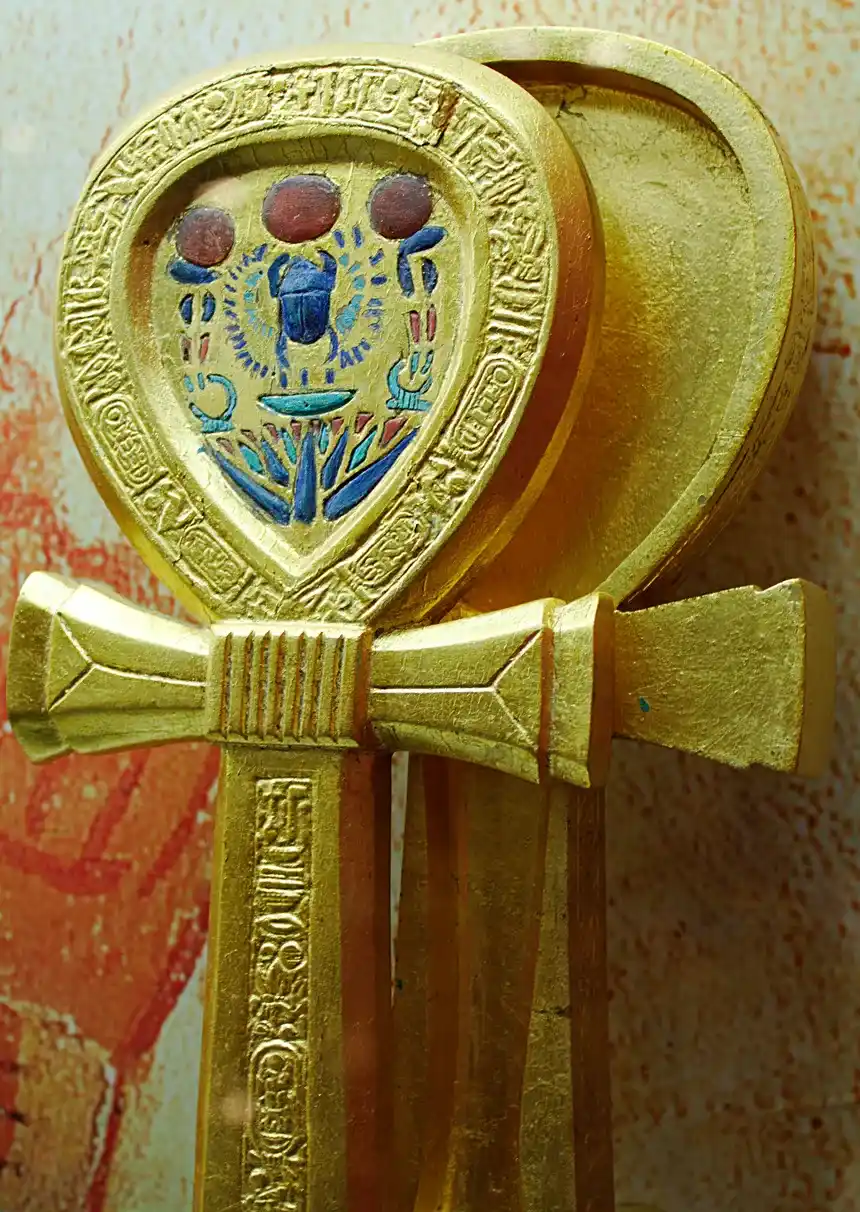
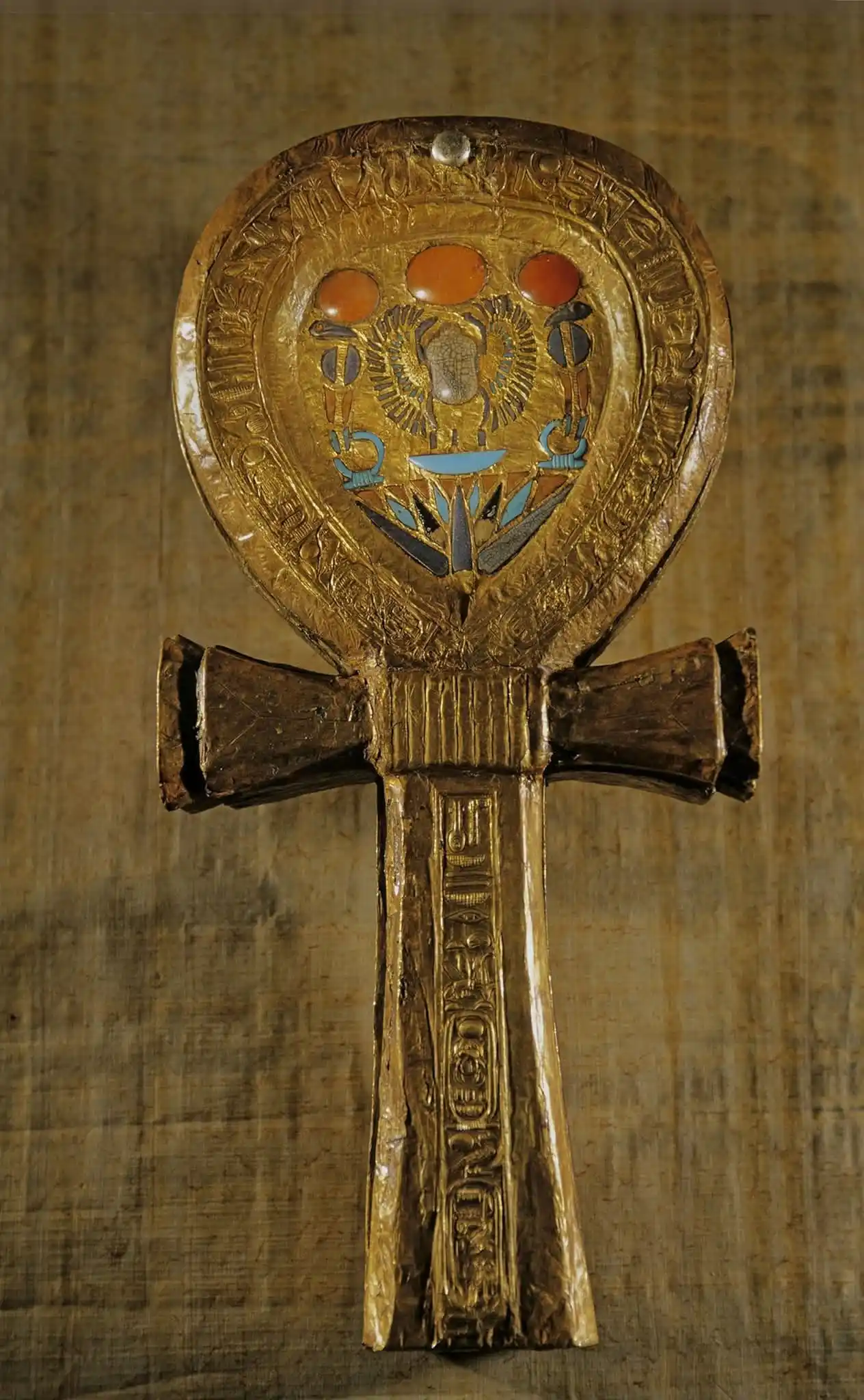
Crafted from gilded wood, inlaid with colored glass and semiprecious stones, and lined with silver, the case is shaped in the form of the ankh, the hieroglyph that represented life. Although the mirror it once contained has not survived, the case itself remains a masterpiece, offering insight into the royal lifestyle, funerary practices, and spiritual beliefs of ancient Egypt.
The Discovery in KV62
The tomb of Tutankhamun, located in the Valley of the Kings near Thebes, was a relatively modest burial compared to other pharaohs. Yet, the sheer wealth of objects inside—over 5,000 items—captured the world’s imagination.
The Ankh Mirror Case was one of these treasures, cataloged as JE 62349 and now housed in the Egyptian Museum in Cairo. Its placement among cosmetic items highlights the importance of mirrors and personal adornment in both life and death.
Design and Craftsmanship
The mirror case is a testament to the artistry of the late 18th Dynasty.
Materials
-
Gilded wood forms the main structure, giving the case a radiant golden finish.
-
Inlaid colored glass and semiprecious stones adorn the lid, spelling out the name of Tutankhamun.
-
The interior is lined with silver, symbolizing purity and reflecting the case’s precious function.
Shape and Symbolism
-
The entire case is designed in the form of an ankh, a hieroglyph resembling a cross with a loop at the top.
-
This form was not merely decorative but deeply symbolic of life and divine power.
The craftsmanship demonstrates the luxury and refinement of the royal court, as well as the symbolic layering of art, religion, and daily life.
Mirrors in Ancient Egypt
Mirrors held both practical and spiritual significance in ancient Egypt.
Daily Use
-
Mirrors were made of polished gold, silver, copper, or bronze.
-
Both men and women used them as part of their cosmetic routines.
-
Often paired with cases, they symbolized refinement and status.
Ritual Use
-
Mirrors reflected not only the physical image but also the soul or ka.
-
In religious contexts, they were linked with solar symbolism, as the sun god Ra illuminated life much like a mirror reflects light.
The Ankh Mirror Case therefore represents more than vanity—it bridges the practical world and the divine realm.
The Ankh: The Egyptian Symbol of Life
nkh is one of the most recognizable symbols in Egyptian culture.
Form
-
Shaped like a T with an oval loop at the top.
-
Some scholars suggest it may have originated from sandal straps, symbolizing mobility and life.
Meaning
-
Translates as “life,” “living,” or “alive.”
-
Represented both physical existence and eternal life.
-
Frequently seen in Egyptian art, often held by deities offering life to pharaohs.
Symbolic Placement
By designing the mirror case as an ankh, artisans emphasized the connection between beauty, vitality, and eternal life—fitting for an object buried with the king.
Tutankhamun and the 18th Dynasty
The Ankh Mirror Case reflects not only symbolism but also the historical context of Tutankhamun’s reign.
Tutankhamun’s Life
-
Ruled from ca. 1332–1323 BC, ascending the throne as a child.
-
Best known for restoring traditional religious practices after the Amarna period.
-
Though his reign was short, his tomb treasures immortalized him as one of the most famous pharaohs.
The Late 18th Dynasty
-
A time of religious and artistic revival.
-
Luxury objects like the mirror case illustrate the opulence of the royal court.
The mirror case is thus both a personal object of the young king and a cultural artifact of his era.
Symbolism in Funerary Context
The placement of the Ankh Mirror Case in Tutankhamun’s tomb highlights its role in funerary practice.
-
It symbolized the king’s continued vitality in the afterlife.
-
The ankh form reinforced his divine right to eternal life.
-
Mirrors in burials reflected the belief in rebirth and renewal, akin to the daily rising of the sun.
This fusion of cosmetic accessory and religious symbol demonstrates the Egyptian worldview, where everyday items were charged with spiritual meaning.
The Ankh Mirror Case in the Egyptian Museum
Today, the Ankh Mirror Case is preserved in the Egyptian Museum in Cairo, where it continues to inspire awe.
Significance for Visitors
-
Offers a tangible connection to Tutankhamun’s personal life.
-
Illustrates the intersection of artistry and symbolism in Egyptian craftsmanship.
-
Serves as an educational piece on the role of hieroglyphs in everyday objects.
It remains one of the most photographed and studied artifacts from KV62, second only to the iconic golden mask.
Why the Ankh Mirror Case Matters
The Ankh Mirror Case holds significance on multiple levels:
-
Artistic Mastery – Showcases the luxury materials and craftsmanship of the New Kingdom.
-
Symbolic Power – Encodes the meaning of life and eternity within a functional object.
-
Historical Insight – Offers a glimpse into Tutankhamun’s reign and the 18th Dynasty’s values.
-
Spiritual Meaning – Reflects Egyptian beliefs in cosmic order, rebirth, and divine protection.
It is more than a cosmetic case—it is a manifestation of Egyptian philosophy in material form.
Conclusion
The Ankh Mirror Case of Tutankhamun is a brilliant convergence of function, symbolism, and artistry. Carved in gilded wood, inlaid with colored glass and semiprecious stones, and lined with silver, it epitomizes the luxury of the royal court while embedding the eternal meaning of the ankh: life.
Though the mirror itself is lost, the case remains a living symbol of vitality, immortality, and divine connection. Preserved in the Egyptian Museum in Cairo, it continues to speak across millennia, reminding us of a culture that sought not only to celebrate life but also to eternalize it through art and ritual.
ALSO READ: The René Boivin Starfish Brooch: A Jewel of Movement and Elegance