The René Boivin Starfish Brooch: A Jewel of Movement and Elegance
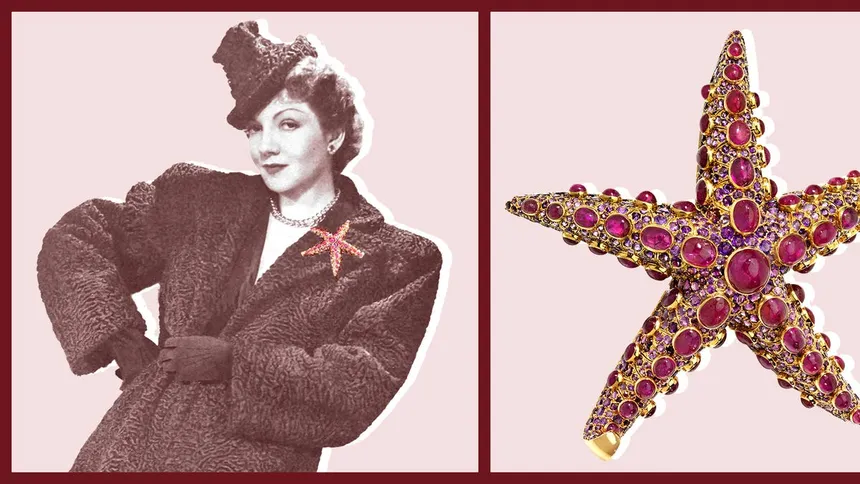
Jewelry has always been more than ornament—it is a statement of artistry, culture, and innovation. Among the remarkable creations of the 20th century, few pieces capture the imagination as vividly as the René Boivin Starfish Brooch, designed by Juliette Moutard in the 1930s.
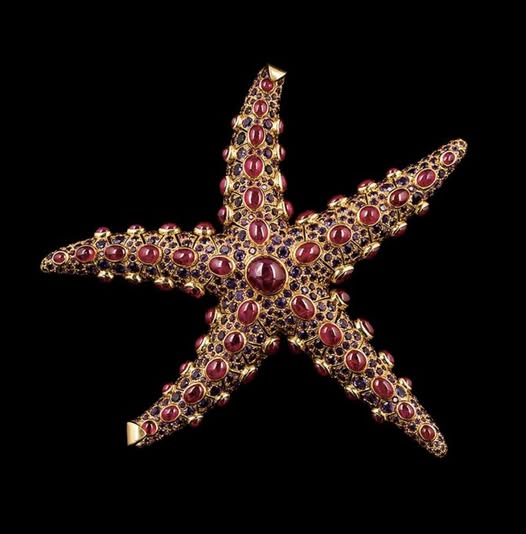
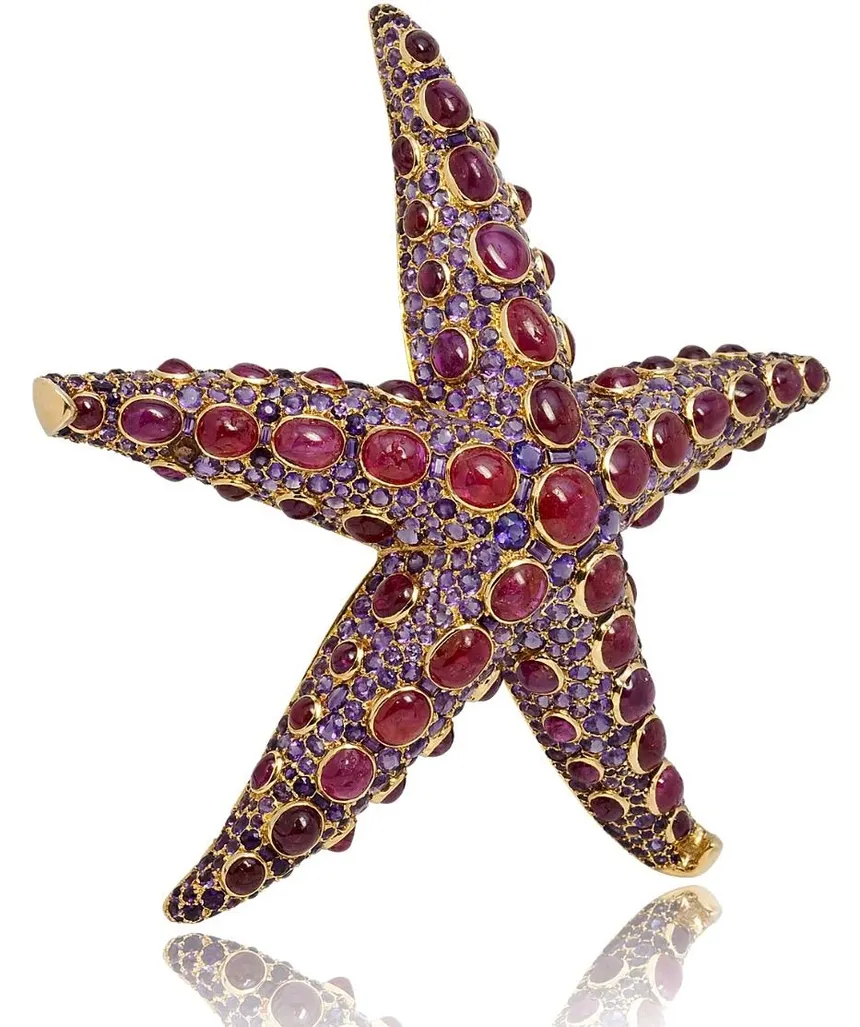
This extraordinary jewel reflects the fusion of natural inspiration and technical mastery. With its movable hinges, brilliant Burmese rubies, and vibrant amethysts, the brooch is a testament to the house of René Boivin’s daring creativity during the Art Deco era.
René Boivin: A Legacy of Avant-Garde Jewelry
The Maison René Boivin, founded in the late 19th century, was renowned for its innovative and sculptural jewelry. After René Boivin’s death in 1917, the atelier was guided by his widow, Jeanne Boivin, who collaborated with exceptional designers like Suzanne Belperron and Juliette Moutard.
Rather than following traditional luxury trends, Boivin’s jewelry embraced bold forms, naturalistic motifs, and colorful gemstones, making the house a leader in avant-garde design. The Starfish Brooch embodies this spirit perfectly.
Juliette Moutard: The Designer Behind the Masterpiece
Juliette Moutard was one of the unsung heroines of French jewelry design in the 20th century. Trained as a designer, she worked closely with Jeanne Boivin and was responsible for many of the maison’s iconic creations.
Her designs often drew upon organic and marine themes—corals, shells, and sea creatures—executed with elegance and innovation. The Starfish Brooch remains one of her most celebrated works, symbolizing her ability to merge imagination with technical brilliance.
The Starfish Brooch: Design and Structure
Materials and Gemstones
The starfish brooch dazzles with its use of luxurious gemstones:
-
71 Burmese rubies – prized for their deep, vivid red hue.
-
241 amethysts – offering a rich purple contrast.
The combination of rubies and amethysts evokes the colors of the sea at sunset, blending warmth and depth into a radiant design.
Structure and Artistry
-
The brooch takes the form of a five-armed starfish, a marine creature symbolizing resilience and regeneration.
-
Two of the five arms fold inward, creating a sense of motion and life-like naturalism.
-
The tentacles are linked by 28 movable hinges, giving the jewel flexibility and fluidity, unlike traditional rigid brooches.
The result is a jewel that does not merely depict a starfish but moves and feels like one, reflecting the essence of marine life.
Symbolism of the Starfish
The starfish is more than a decorative motif—it carries deep symbolic meaning.
-
Resilience and Renewal – Starfish can regenerate lost limbs, symbolizing endurance and rebirth.
-
Connection to the Sea – In many cultures, the starfish embodies the mystery and abundance of the ocean.
-
Balance and Guidance – With its radiating arms, the starfish has been likened to a compass rose, symbolizing navigation and protection.
For collectors and admirers, the René Boivin Starfish Brooch is not just a jewel but a talismanic piece connecting the wearer to the beauty and mystery of nature.
Art Deco Influence
The 1930s were the height of the Art Deco movement, a style characterized by bold geometry, vibrant colors, and modern luxury.
While many jewelers focused on architectural forms and abstract motifs, Boivin dared to combine Art Deco principles with naturalistic designs.
-
The use of colored gemstones reflects Art Deco’s fascination with contrasts.
-
The brooch’s dynamic structure demonstrates the period’s interest in movement and innovation.
-
Its marine inspiration echoes the broader cultural fascination with exoticism and nature during the early 20th century.
The Starfish Brooch stands as a bridge between Art Deco modernism and timeless natural beauty.
Technical Innovation: Jewelry in Motion
One of the most remarkable aspects of the starfish brooch is its mechanical ingenuity.
-
28 movable hinges connect the tentacles, allowing them to shift slightly with movement.
-
This flexibility mimics the undulating motion of a real starfish in water.
-
Such articulation was rare in jewelry at the time, marking the brooch as a technical marvel as well as an artistic masterpiece.
This innovation demonstrates how the Boivin atelier was unafraid to push the boundaries of traditional jewelry-making.
Provenance and Collectability
Jewels from René Boivin, especially those designed under Jeanne Boivin and Juliette Moutard, are highly prized among collectors and connoisseurs.
The Starfish Brooch is especially rare because:
-
Few were created in this style.
-
Its craftsmanship required exceptional skill and attention to detail.
-
It embodies both historical significance and timeless appeal.
Today, pieces like the Starfish Brooch are preserved in private collections, museums, and featured by platforms like Vmuse Jewelry, which highlight their cultural importance.
Legacy of the Starfish Brooch
The René Boivin Starfish Brooch remains an icon for several reasons:
-
Design Innovation – A natural form rendered with technical brilliance.
-
Cultural Symbolism – A starfish embodying resilience, guidance, and oceanic mystery.
-
Historical Context – A jewel that reflects the boldness of 1930s French design.
-
Artistic Collaboration – The combined vision of Juliette Moutard and Jeanne Boivin.
It exemplifies how jewelry can be art, engineering, and cultural storytelling all at once.
Conclusion
The René Boivin Starfish Brooch is more than a dazzling ornament—it is a masterpiece of 20th-century jewelry design. Created by Juliette Moutard in the 1930s, it embodies the creativity of the Boivin atelier, the vibrancy of Art Deco, and the eternal fascination with nature’s forms.
Adorned with 71 Burmese rubies and 241 amethysts, its shimmering colors evoke the beauty of the sea, while its movable hinges bring the starfish to life. Both jewel and sculpture, talisman and treasure, the brooch remains a symbol of resilience, elegance, and innovation.
Today, the René Boivin Starfish Brooch continues to inspire jewelry lovers, historians, and collectors, reminding us that true artistry transcends time.
ALSO READ: The Arjan Bowl: A Glimpse into Elamite Civilization