Throne of the Gods: The Mystical Majesty of Mount Nemrut
Rising dramatically from the Anti-Taurus mountain range in southeastern Turkey, Mount Nemrut (Turkish: Nemrut Dağı) stands as one of the world’s most awe-inspiring archaeological and cultural sites. Known as the “Throne of the Gods”, the summit of Mount Nemrut houses the tomb-sanctuary of King Antiochus I of Commagene, an extraordinary fusion of Hellenistic and Persian traditions carved into living rock.
Forgotten for centuries, the site was rediscovered in the 19th century and has since captivated historians, archaeologists, and travelers. Today, visitors from around the world climb its slopes to witness the monumental stone statues at sunrise and sunset, when the colossal heads glow in golden light—an unforgettable spectacle.
This article explores the history, architecture, cultural significance, and visitor experience of Mount Nemrut, a timeless masterpiece that reflects both human ambition and divine reverence.
Location and Geography of Mount Nemrut
Mount Nemrut is located in the Adiyaman Province of southeastern Turkey, approximately:
-
40 km north of Kahta,
-
87 km from Adiyaman city,
-
and about 435 km east of Ankara.
At an elevation of 2,134 meters (7,001 feet), the peak offers panoramic views of the Anti-Taurus Mountains and the Euphrates River valley. Its remote and rugged location once helped preserve the site, hidden from the wider world for centuries until rediscovery.
The Kingdom of Commagene
To understand Mount Nemrut, one must first explore the story of the Kingdom of Commagene.
-
Timeframe: Commagene was a small Hellenistic-Armenian kingdom, flourishing between the 2nd century BC and 72 AD.
-
Location: Situated between the Roman and Parthian Empires, the kingdom acted as a cultural and political bridge.
-
Culture: A unique blend of Greek and Persian traditions, reflected in its art, religion, and political ideology.
King Antiochus I Theos of Commagene (69–34 BC) ruled during a period of great political uncertainty. Surrounded by powerful empires, he sought to secure his legacy through divine association, commissioning the construction of a monumental tomb-sanctuary on Mount Nemrut.
The Vision of King Antiochus I
Antiochus I was a ruler with a grand vision. His ideology combined Greek deities with Persian gods, presenting himself as both a divine king and a mediator between cultures. In 62 BC, he ordered the construction of a colossal sanctuary at Mount Nemrut’s summit, designed as both his funerary monument and a place of worship.
The monument was intended not only to enshrine his remains but also to immortalize his belief in the union of East and West. By presenting himself among the gods, Antiochus hoped to secure eternal reverence.
The Monumental Tomb-Sanctuary
Structure of the Site
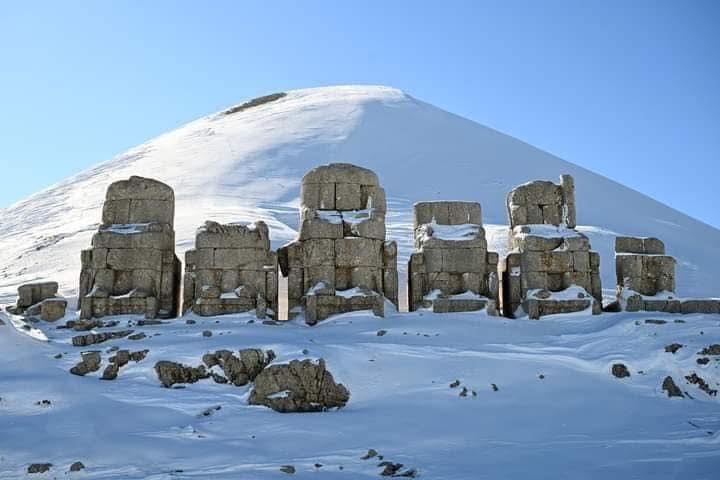
The Mount Nemrut sanctuary consists of three main terraces—east, west, and north—each with distinct functions:
-
Eastern Terrace:
-
The most elaborate terrace.
-
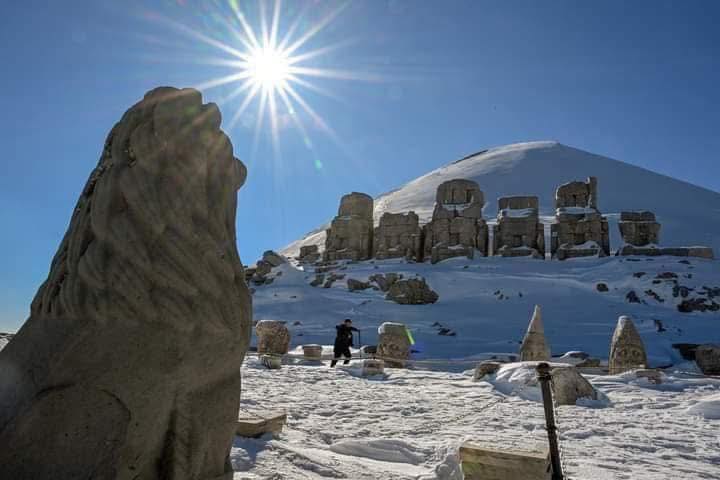
Features massive seated statues of deities, Antiochus himself, and a row of guardian animals (eagles and lions).
-
Behind the statues lies a tumulus of crushed rock, under which Antiochus’s tomb is believed to rest.
-
-
Western Terrace:
-
Known for its magnificent sunset views.
-
Contains a similar arrangement of statues, though less preserved than the eastern side.
-
-
Northern Terrace:
-
A processional route linking the east and west.
-
Likely used for ceremonial gatherings and rituals.
-
The Colossal Statues
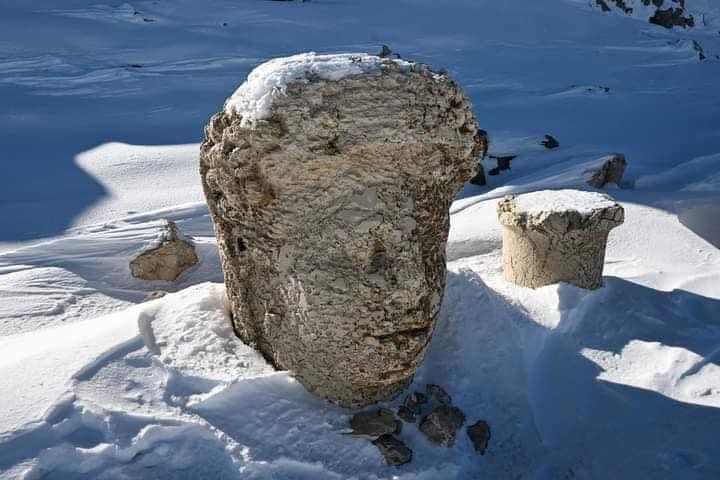
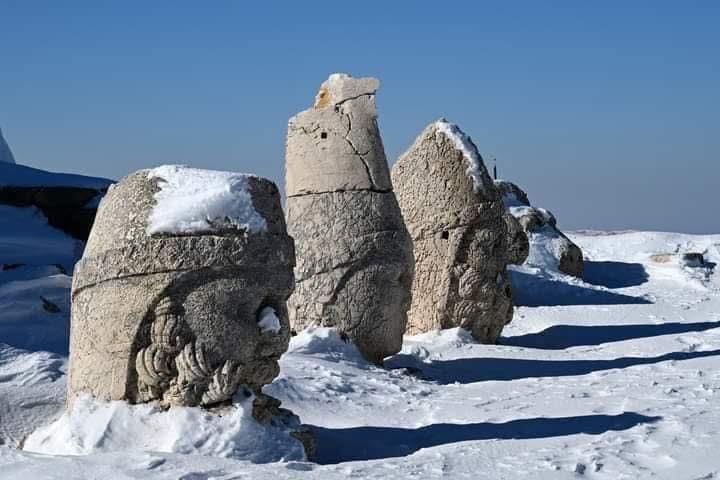
The most iconic feature of Mount Nemrut is the series of colossal stone heads, each weighing several tons and standing up to 8–9 meters (26–30 feet) tall when complete. Today, the heads lie detached from their seated bodies, scattered across the terraces.
The statues represent a pantheon of gods and cultural symbols, including:
-
Zeus-Oromasdes (a fusion of Greek Zeus and Persian Ahura Mazda),
-
Apollo-Mithras-Helios-Hermes,
-
Heracles-Artagnes-Ares,
-
Commagene Goddess (Tyche),
-
Antiochus I himself, depicted alongside the gods,
-
Guardian animals: lions symbolizing power and eagles symbolizing divine connection.
Artistic and Cultural Significance
Mount Nemrut is unique for its fusion of Greek and Persian artistic traditions, reflecting the cultural crossroads of Commagene.
-
Greek influence: Realistic human forms, proportionate anatomy, and sculptural detail.
-
Persian influence: Symbolic elements, divine kingship ideology, and religious syncretism.
This blending underscores Antiochus’s ambition to unite the two great civilizations of his time and elevate Commagene’s place in history.
Rediscovery and Archaeological Exploration
For centuries, Mount Nemrut remained largely forgotten. In 1881, German engineer Karl Sester stumbled upon the site while surveying for roads, sparking international interest.
Subsequent archaeological missions uncovered the vast scale and complexity of the monument. Despite extensive study, Antiochus’s tomb has never been located, hidden beneath the massive rock tumulus. This mystery continues to fuel speculation and research.
Mount Nemrut as a UNESCO World Heritage Site
In 1987, Mount Nemrut was inscribed as a UNESCO World Heritage Site, recognized for its outstanding cultural significance. It is celebrated as:
-
A masterpiece of Hellenistic art and architecture.
-
A rare example of syncretism between Greek and Persian traditions.
-
A symbol of human ambition to merge divine and political authority.
Visiting Mount Nemrut Today
Best Time to Visit
The most magical experiences are at sunrise and sunset, when the colossal stone heads glow with golden light against the backdrop of the mountains. Many travelers describe it as a spiritual and otherworldly experience.
How to Get There
-
By Air: Nearest airport is in Adiyaman.
-
By Road: Visitors usually travel from Kahta or Malatya, with organized tours widely available.
-
Hike to the Summit: A short but steep climb is required from the parking area to the sanctuary.
Visitor Tips
-
Dress warmly: Even in summer, mornings and evenings at 2,000+ meters can be cold.
-
Arrive early: To secure a good spot for sunrise or sunset views.
-
Combine visits: Explore nearby attractions like the Arsameia ruins and the Cendere Bridge, both linked to Commagene.
The Enduring Mystery of the Tomb
Despite decades of exploration, the actual burial chamber of Antiochus I has never been found. Archaeologists believe it lies beneath the artificial tumulus of crushed rock, but excavating it would risk damaging the site.
This enduring mystery only adds to the allure of Mount Nemrut, keeping scholars and adventurers captivated by the possibility of hidden treasures and untold secrets.
Conclusion
Mount Nemrut is more than an archaeological wonder—it is a monument to human ambition, divine reverence, and cultural fusion. Carved into the summit of a remote mountain, it represents the dream of King Antiochus I to unite East and West, immortalize himself among the gods, and leave a lasting legacy.
Today, as the sun rises or sets over the colossal stone heads, visitors witness a scene that transcends time—an eternal dialogue between humanity and the divine. Recognized as a UNESCO World Heritage Site, Mount Nemrut continues to inspire awe, reminding us of the heights ancient civilizations could reach in their pursuit of immortality.