The Etruscan Alphabet Tablet of Este: A Window into Ancient Writing
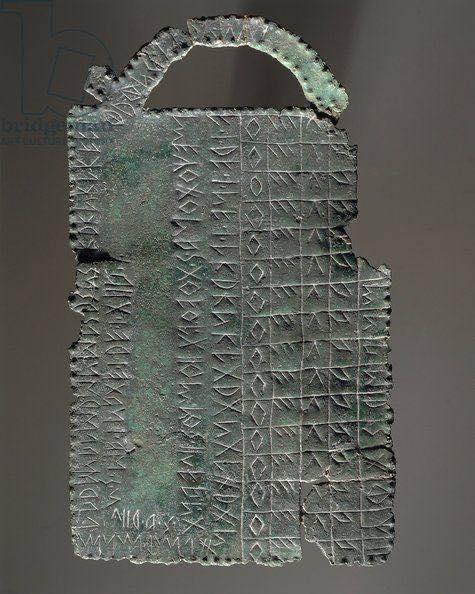
Among the many fascinating discoveries from the mysterious Etruscan civilization, one artifact stands out for its profound cultural and linguistic importance—the Etruscan Alphabet Tablet of Este. Engraved on a bronze sheet, this artifact dates back to the 5th–6th century BC and preserves sequences of Etruscan letters, shedding light on one of Europe’s earliest writing systems.
The tablet was unearthed in Este, in the Veneto region of northern Italy, within the votive offerings of the Sanctuary of Reithia, a goddess associated with writing, fertility, and health. Today, the artifact is carefully preserved and displayed at the Archaeological Museum of Este in Padua, where it continues to captivate scholars and visitors alike.
In this article, we will explore the history, discovery, and significance of this bronze alphabet tablet, highlighting its role in understanding Etruscan culture and the development of written language in the ancient Mediterranean.
The Etruscan Civilization and Its Writing System
The Etruscans flourished in central Italy between the 9th and 1st centuries BC, preceding and heavily influencing the Romans. Known for their artistry, engineering, and religious practices, they also developed a distinct writing system derived from early Greek alphabets.
Key Features of Etruscan Writing:
-
Written right to left, although occasionally left to right.
-
Adapted from Greek alphabets used by colonists in Italy.
-
Mostly used for religious texts, funerary inscriptions, and dedications.
-
Remains partly undeciphered today due to limited surviving texts.
The Alphabet Tablet of Este is crucial because it provides a structured sequence of letters, offering rare insight into how the Etruscans organized and taught their writing system.
Discovery of the Alphabet Tablet in Este
The artifact was discovered among a collection of votive offerings at the Sanctuary of Reithia, a significant religious site in Este, located in the Veneto region of Italy.
-
Date of artifact: 5th–6th century BC.
-
Material: Bronze sheet with inscribed letters.
-
Function: Possibly a teaching tool, a votive dedication, or both.
The sanctuary was dedicated to Reithia, a goddess often associated with health, childbirth, and literacy. The offering of an alphabet tablet within her shrine strongly suggests a connection between writing and divine protection, reinforcing the cultural importance of literacy in ritual contexts.
Description of the Artifact
The bronze tablet is a flat rectangular sheet, carefully engraved with sequences of letters. Unlike typical inscriptions found on tombs or pottery, this artifact does not form words or sentences but rather presents alphabetic sequences, much like an ancient primer.
Distinctive Features:
-
Alphabetical order resembling early Greek and Etruscan scripts.
-
Letters neatly incised, showing deliberate teaching or ritual use.
-
Suggests a dual function as both a didactic tool and a sacred offering.
Its preservation allows scholars to analyze letter forms and compare them with other Etruscan inscriptions across Italy, contributing to a broader understanding of their script.
The Sanctuary of Reithia: Context of the Find
The Sanctuary of Reithia was one of the most important religious centers in the Veneto region during the Etruscan and early Venetic periods. Excavations have uncovered numerous votive offerings, including figurines, inscriptions, and ceremonial objects.
The goddess Reithia held particular importance for women, children, and literacy. The dedication of an alphabet tablet within her sanctuary suggests that writing itself was considered sacred and possibly entrusted to divine guardianship.
This cultural context enhances the significance of the artifact—not just as a teaching tool, but as a bridge between religion, education, and identity.
The Significance of the Alphabet Tablet
1. Linguistic Insights
The Este tablet provides one of the few surviving examples of a complete Etruscan alphabet sequence. For modern scholars, it is invaluable in:
-
Reconstructing the phonetic system of Etruscan.
-
Comparing with Greek and Latin alphabets.
-
Understanding how writing was transmitted across Mediterranean cultures.
2. Cultural and Religious Meaning
Its placement in a sanctuary reveals that writing was not purely practical but held spiritual dimensions. The act of inscribing letters and dedicating them to a goddess symbolizes the intertwining of literacy and divine favor.
3. Educational Use
The tablet may have served as a didactic tool, akin to a school exercise board, teaching scribes or children how to write the Etruscan alphabet. Its preservation in bronze, however, suggests it was more than temporary—it was a permanent offering meant to last.
Comparison with Other Etruscan Inscriptions
Unlike funerary inscriptions or graffiti, which usually record names and dedications, the Este alphabet tablet is unique for its systematic listing of letters. Similar alphabetic sequences have been found in other parts of Etruria, but the Este tablet stands out for:
-
Its excellent preservation.
-
Its religious context in a sanctuary.
-
Its chronological placement in the 5th–6th century BC, a formative period for Etruscan literacy.
This makes it one of the most important artifacts for the study of Etruscan writing.
Preservation and Museum Display
Today, the Alphabet Tablet of Este is housed in the Archaeological Museum of Este in Padua, Italy. The museum curates an extensive collection of artifacts from the Veneto region, particularly those linked to the Etruscan and Venetic peoples.
The tablet is displayed with careful attention to conservation, allowing visitors to see the engraved letters up close while ensuring its protection from environmental damage. Informational panels provide context about its discovery, function, and importance to Etruscan studies.
Legacy and Modern Importance
The Etruscan Alphabet Tablet continues to be a focus of research for archaeologists, linguists, and historians. Its significance extends beyond Etruscan culture, contributing to our understanding of how writing systems evolved in the ancient Mediterranean and how literacy shaped identity and religious practice.
Modern scholars use it to:
-
Compare Etruscan script with Latin, highlighting the influence of Etruscan writing on early Roman literacy.
-
Explore the symbolic role of alphabets in rituals.
-
Teach the public about the complexities of a largely undeciphered language.
Conclusion
The Etruscan Alphabet Tablet of Este is far more than an artifact—it is a rare portal into the world of one of Italy’s most enigmatic civilizations. As a bronze sheet engraved with sequences of letters. It embodies the intersection of education, religion, and identity in the ancient world.
Discovered in the Sanctuary of Reithia, it reminds us that for the Etruscans. Writing was not just a tool of communication but also a sacred act tied to divine protection. Preserved today in the Archaeological Museum of Este, this artifact continues to inspire curiosity. Offering scholars and visitors alike a glimpse into the origins of written culture in Europe.
The mystery of the Etruscans may never be fully unraveled, but through artifacts like this alphabet tablet. We get closer to understanding their enduring legacy.
ALSO READ: Derinkuyu Underground City: The Astonishing Ancient Metropolis Beneath Cappadocia