The Ceremonial Chariot of Civita Giuliana: A Rare Roman Pilentum from Pompeii
The eruption of Mount Vesuvius in AD 79 buried the Roman city of Pompeii under volcanic ash and pumice, preserving countless aspects of daily and ceremonial life. Among the most spectacular discoveries in recent years is a 2,000-year-old ceremonial chariot unearthed in the suburban villa complex of Civita Giuliana, just north of Pompeii.
This extraordinary find, uncovered in 2021, is thought to be a pilentum—a four-wheeled vehicle described in ancient sources as reserved for rituals, parades, and community celebrations. Unlike carts used for agriculture or transportation, this chariot was richly decorated and likely served as a symbol of prestige and ceremony.
The Discovery at Civita Giuliana
The villa at Civita Giuliana had long been the subject of interest, but systematic excavations in the 21st century revealed previously unknown treasures. Archaeologists uncovered stables containing the remains of horses, followed by the remarkable ceremonial chariot in near-perfect preservation.
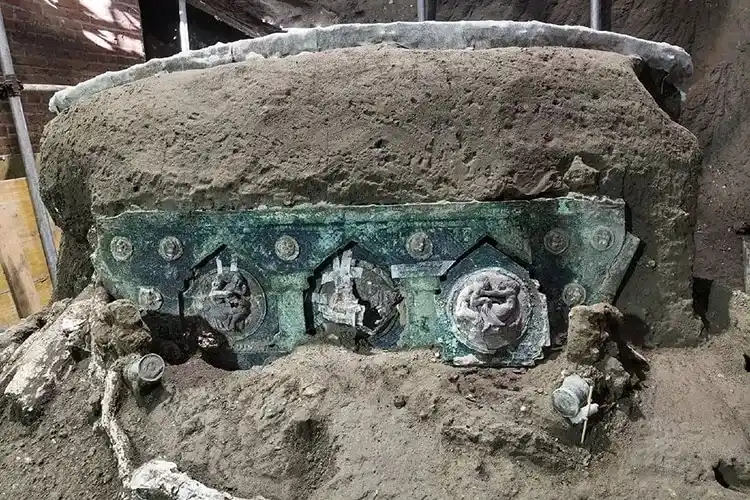
Found in a portico facing the villa’s stables, the chariot had been spared from looting attempts and remained largely intact thanks to the protective blanket of volcanic material. Its survival provides a rare glimpse into the luxury and ceremonial life of Roman elites.
Description of the Ceremonial Chariot
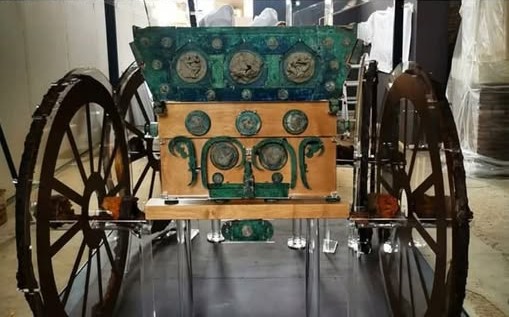
The Civita Giuliana chariot is a masterpiece of Roman engineering and artistry.
-
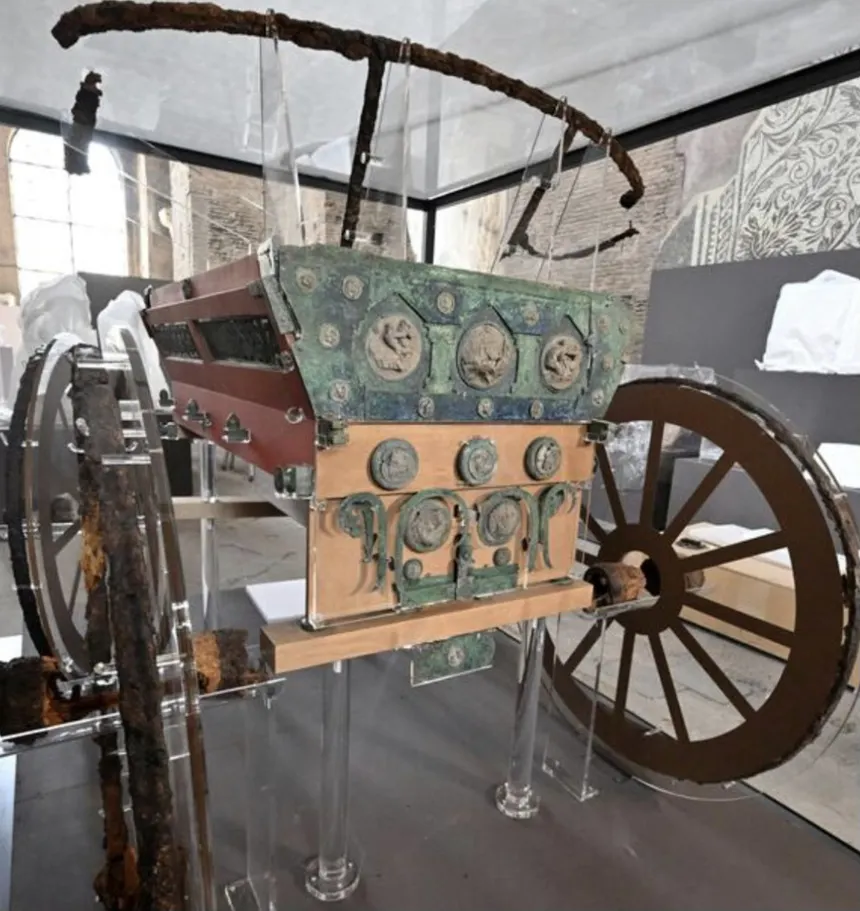
Structure: Four-wheeled with an iron framework.
-
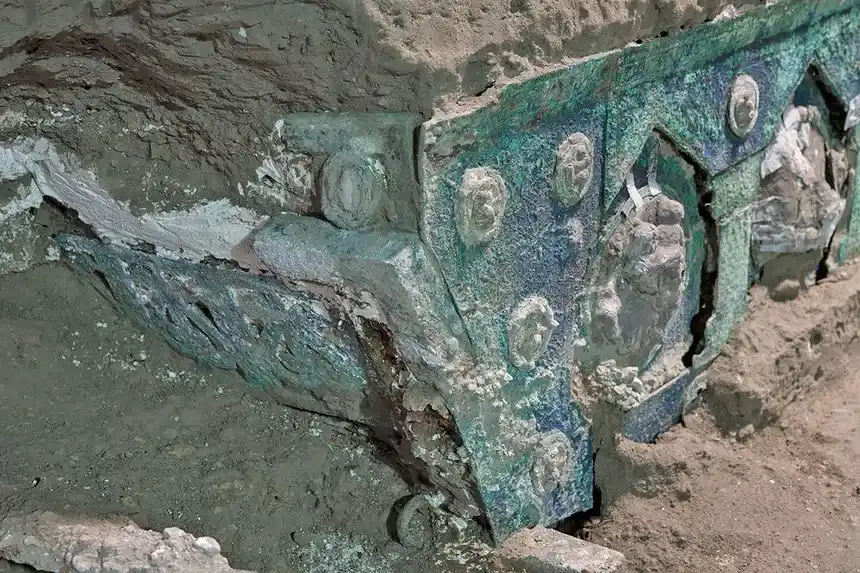
Decoration: Richly adorned with bronze and tin medallions, engravings, and decorative motifs, many depicting erotic and symbolic imagery.
-
Materials: Iron components combined with wood (which has left impressions in the volcanic ash), as well as rope and floral imprints.
-
Functionality: Designed for display and ceremony rather than heavy use.
The intricate decorations suggest the chariot was intended to be seen and admired, making it a central element of parades and public festivities.
The Pilentum: A Vehicle of Ceremony
Ancient Roman sources mention the pilentum, a ceremonial chariot reserved for special occasions. It was not a work vehicle, nor a military chariot, but rather a vehicle of honor and tradition.
The pilentum was often associated with:
-
Festivities and Parades: Used in processions that celebrated deities, community events, or elite families.
-
Rituals and Ceremonies: Possibly linked to weddings, festivals, or religious dedications.
-
Prestige Display: A sign of wealth and elevated social status for those who owned or rode in one.
The discovery at Civita Giuliana aligns with these descriptions, reinforcing the identification of the artifact as a pilentum.
Archaeological Significance
Archaeologists in Italy have found one of the first ceremonial chariots of its kind. While they had previously unearthed only fragments of utilitarian carts and wagons, they now uncovered a nearly complete and highly decorated ceremonial chariot—an unprecedented discovery.
Its significance includes:
-
Unique Preservation: Rare survival of wood impressions, organic materials, and decorative metal.
-
Cultural Insights: Evidence of how Roman elites celebrated, paraded, and marked special occasions.
-
Comparison to Other Cultures: Similarities to ceremonial vehicles found in Thrace and Greece highlight cross-cultural influences in antiquity.
Massimo Osanna, then director of the Archaeological Park of Pompeii, emphasized its importance, stating: ‘We have discovered a ceremonial chariot, not used for everyday purposes but to accompany community festivities, parades, and processions.’
Ritual and Social Context
The chariot’s placement in a villa complex suggests its ties to elite Roman households. Ceremonial vehicles like the pilentum were often part of:
-
Marriage Rituals: Transporting brides in highly symbolic ceremonies.
-
Religious Festivals: Serving as platforms to honor gods and goddesses.
-
Funerary Parades: Carrying offerings or participants in rituals of remembrance.
Thus, the Civita Giuliana chariot was more than a vehicle—it was a stage of ritual performance, connecting the private villa world with public and sacred traditions.
Artistry and Symbolism in Decoration
The decorative program of the chariot is one of its most fascinating aspects. Bronze and tin medallions depict:
-
Mythological Scenes: Possibly invoking protection, fertility, or divine approval.
-
Erotic Imagery: Suggesting associations with weddings, fertility rituals, or Dionysian celebrations.
-
Geometric Motifs: Emphasizing harmony, continuity, and Roman artistic preferences.
Such symbolism elevates the chariot from an object of function to an object of meaning, embodying themes of union, festivity, and cosmic order.
Pompeii’s Legacy Through the Chariot
The discovery of the ceremonial chariot adds to the extraordinary narrative of Pompeii’s preservation. Unlike other Roman cities destroyed over time, Pompeii’s sudden burial by volcanic ash created a unique time capsule.
The chariot allows us to:
-
Visualize elite ceremonial practices.
-
Understand the interplay between private luxury and public ritual.
-
Appreciate the artistic skill of Roman metalworkers and carpenters.
It stands as a reminder that Roman society was not only pragmatic but also deeply invested in symbolism, ceremony, and display.
Conservation and Display
Following its excavation, the chariot underwent careful conservation work to stabilize fragile remains and reconstruct its original form. Specialists preserved impressions of wood, ropes, and floral decorations, ensuring that future generations can study its design.
Archaeologists plan to display the chariot in a dedicated museum, where it will join other treasures of Pompeii and give visitors a direct encounter with Roman ceremonial life.
A Window into Roman Rituals and Identity
The Civita Giuliana chariot offers an unparalleled look at how Romans connected ritual, identity, and spectacle. While agricultural carts reveal daily labor, and military chariots speak to power and conquest, the pilentum symbolizes community celebration, honor, and sacred performance.
It is a reminder that Roman society was as much about ritualized display as it was about functionality, blending artistry with social meaning.
Conclusion
The ceremonial chariot of Civita Giuliana, discovered near Pompeii, is one of the most remarkable archaeological finds of recent decades. Identified as a pilentum, it embodies the grandeur of Roman ceremonial traditions—parades, rituals, and festivities that celebrated community and the gods.
Moreover, richly decorated and meticulously crafted, the chariot is not simply an artifact but a testament to Roman cultural values. Where ceremony was central to identity. Preserved by the catastrophic eruption of Mount Vesuvius. It offers us a rare window into a world where art, ritual, and social prestige converged on four wheels.
ALSO READ: The Wheel of Life and Death: Totonac Sculpture from El Zapotal