The Mysterious Circular Rock Carvings of India’s Western Coast
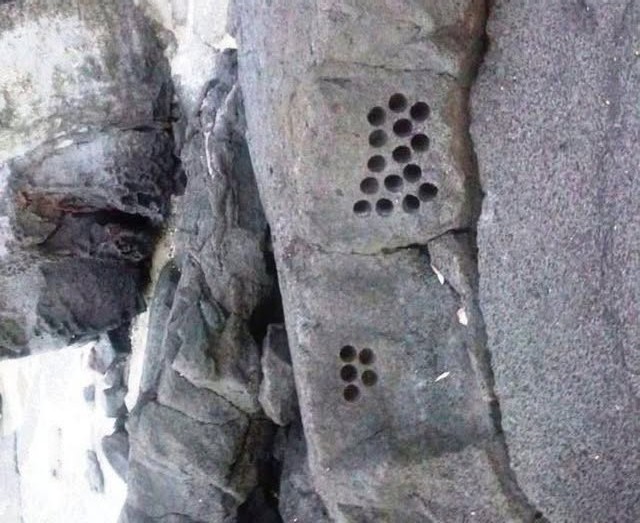
Along the rugged western coast of India, particularly near the state of Maharashtra, lie a series of enigmatic rock carvings that have fascinated locals, historians, and archaeologists alike. These carvings consist of neat rows of circular depressions etched into hard basalt rock, clustered in intentional patterns that defy simple explanations.
Though their exact age and creators remain unknown, the carvings continue to spark heated debates about their origins. Were they the result of ancient engineering techniques, carved to serve practical maritime or settlement purposes? Or do they hold a ritual or symbolic significance, tied to forgotten cultural or spiritual practices?
This blend of simplicity and mystery makes the circular rock carvings of Maharashtra one of India’s most puzzling archaeological features.
The Setting: Maharashtra’s Coastal Landscape
Maharashtra’s coastline stretches for nearly 720 kilometers along the Arabian Sea, dotted with fishing villages, forts, caves, and ancient trading ports. The basalt rock formations found here are the result of volcanic activity during the Deccan Traps, some of the largest volcanic events in Earth’s history.
Against this dramatic backdrop, the circular carvings stand out as human interventions in nature’s canvas. Their geometric precision contrasts with the rugged landscape, suggesting intentional craftsmanship rather than accidental formation.
Description of the Rock Carvings
The carvings typically appear as circular depressions cut directly into solid basalt.
-
Size: Most holes are uniform in diameter, generally ranging between 5–10 cm.
-
Depth: The depressions are consistently shallow, but deep enough to hold a peg or post.
-
Arrangement: The carvings appear in rows or clusters, suggesting a planned design rather than random placement.
-
Location: Found along coastal stretches, riverbanks, and rocky outcrops, often near areas with evidence of early settlement or maritime activity.
This uniformity and clustering points to a deliberate purpose, though scholars remain divided on what that purpose was.
Theories of Origin and Purpose
1. Anchoring Wooden Posts
One of the most widely accepted theories is that the circular holes were used to anchor wooden posts or beams. This could have served several practical functions:
-
Maritime Use: Posts for tying boats, nets, or temporary docks.
-
Settlement Structures: Foundations for huts, granaries, or temporary shelters.
-
Defensive Posts: Support for palisades or wooden barriers along the coast.
Given the carvings’ proximity to the sea, this practical maritime connection remains a strong possibility.
2. Ritual or Symbolic Significance
Another school of thought suggests that the carvings were ritualistic in nature. Ancient communities often imbued stone with spiritual meaning, and circles have long been considered symbols of unity, eternity, or cosmic cycles.
The deliberate clustering could have formed part of ceremonial sites or acted as markers for ritual performances tied to the sea, fertility, or seasonal changes.
3. Ancient Drilling or Quarrying Techniques
Some researchers believe the holes represent unfinished quarrying work or experiments with early drilling technology. Carving into hard basalt with primitive tools would have been labor-intensive, and the uniform holes could represent attempts to weaken the rock for easier extraction.
If true, these sites may reveal insights into the technological evolution of stonecraft in the region.
4. Navigation and Maritime Traditions
Given the western coast’s importance as a trading hub in ancient times, the carvings may have served as markers or signals for seafarers. Positioned near natural harbors, they could have indicated safe docking points or acted as ritual offerings to ensure safe voyages.
Archaeological Debates
The biggest challenge in understanding these carvings is the absence of inscriptions, artifacts, or datable materials directly linked to them. Unlike cave paintings or temple engravings, the circular depressions stand alone, offering little cultural context.
Archaeologists continue to debate:
-
Dating: Are they prehistoric, ancient, or medieval?
-
Creators: Were they carved by early coastal settlers, traders, or even specialized guilds of stonemasons?
-
Function: Were they practical, spiritual, or both?
This lack of consensus adds to their mystique, ensuring they remain a subject of active research and speculation.
Comparing to Similar Global Features
Interestingly, similar circular depressions have been found in other parts of the world:
-
Scandinavia: Cup-mark carvings tied to ritualistic practices.
-
Egypt: Stone quarries with drilled holes for splitting blocks.
-
South America: Petroglyphs with circular patterns linked to spiritual symbolism.
These comparisons suggest that circular stone carvings are a universal human expression, blending function and symbolism, adapted to local needs and beliefs.
The Local Connection: Folklore and Community Perceptions
For local communities, the carvings are not just archaeological curiosities—they are woven into oral traditions and folklore. Some villagers regard them as sacred spots, while others see them as remnants of ancient seafaring ancestors.
Their mystical aura has earned them names associated with spirits, gods, or forgotten builders, ensuring they remain respected and preserved even without formal protection.
Preservation Challenges
Despite their significance, the circular carvings face threats from:
-
Urban Expansion: Coastal development and construction.
-
Natural Erosion: Weathering of basalt over centuries.
-
Lack of Awareness: Many carvings remain undocumented, hidden in remote or neglected areas.
Greater archaeological surveys, conservation programs, and tourism initiatives are needed to safeguard these enigmatic features.
Why They Matter: Lessons from the Carvings
The circular rock carvings may appear simple, but they embody layers of meaning:
-
Human Ingenuity: Evidence of early drilling or construction methods.
-
Cultural Identity: Possible markers of rituals, maritime traditions, or community practices.
-
Historical Continuity: A reminder of how coastal communities adapted to their landscapes across centuries.
They are a silent dialogue between the past and present, bridging the gap between practical survival and spiritual imagination.
Conclusion
The circular rock carvings of Maharashtra’s western coast stand as quiet yet powerful reminders of India’s ancient past. Their uniformity and deliberate design point to a purpose—whether practical, ritualistic, or symbolic—that remains elusive even today.
They are more than just holes in stone. They are questions etched into basalt, echoing the ingenuity, beliefs, and lives of those who once walked these coasts. For modern scholars, they are both a puzzle and a gift, urging us to look deeper into the interplay of function and meaning in human history.
Until their mystery is fully unraveled, these carvings will continue to inspire wonder, serving as coded messages from a forgotten era, waiting patiently for us to listen.
ALSO READ: The Unfinished Obelisk of Aswan: Egypt’s Monument That Never Stood