The Unfinished Obelisk of Aswan: Egypt’s Monument That Never Stood
Among the many treasures of ancient Egypt, few capture the imagination quite like the Unfinished Obelisk of Aswan. Carved directly from bedrock in a granite quarry, this colossal monument was destined for greatness but was never completed. A large crack developed during the carving process, forcing ancient builders to abandon it where it lay.
If completed, the obelisk would have been the largest ever constructed in Egypt, weighing an astonishing 1,200 tons—equivalent to nearly 100 school buses. Its story offers unique insights into ancient Egyptian engineering techniques, labor organization, and ambition, making it one of the most important archaeological sites in Aswan.
Historical Context: The Role of Obelisks in Ancient Egypt
Obelisks were more than towering stone monuments—they were sacred symbols of the sun god Ra, representing rays of sunlight frozen in stone. Placed at temple entrances, they stood as testaments to pharaohs’ power and devotion to the gods.
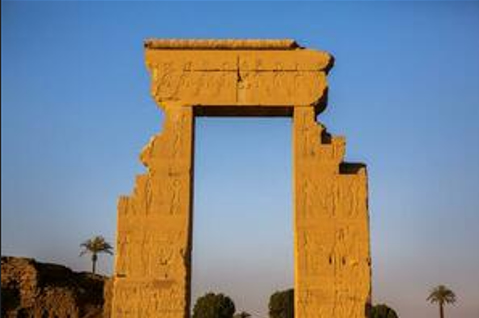
The Temple of Karnak, one of the largest and most important religious sites in ancient Egypt, was a common destination for these structures. The unfinished obelisk in Aswan was likely intended to stand proudly in this temple complex, reinforcing the divine authority of its patron ruler.
Most scholars believe the project dates back to the reign of Queen Hatshepsut (1507–1458 BCE), one of Egypt’s most successful female pharaohs, who was known for commissioning ambitious building projects.
Description of the Unfinished Obelisk
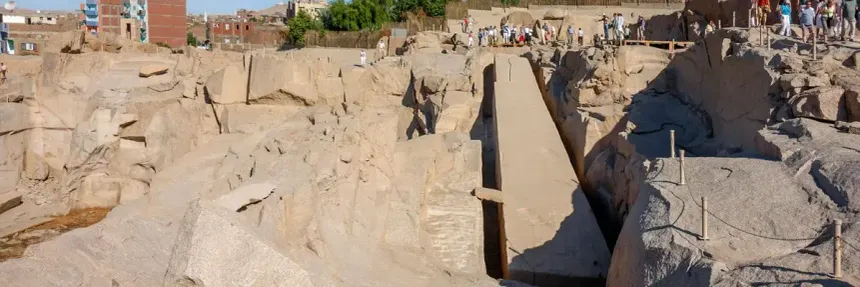
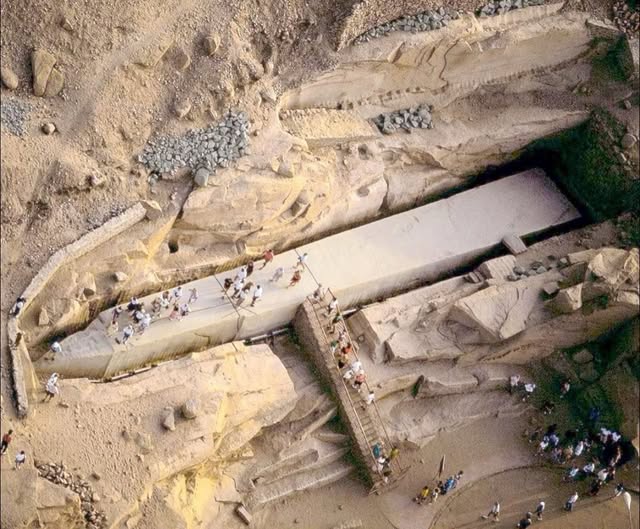
Located in the Northern Quarry of Aswan, the unfinished obelisk lies partially attached to the bedrock from which it was carved. Its measurements are staggering:
-
Length: Approximately 42 meters (137 feet).
-
Weight (estimated): 1,200 tons.
-
Material: Aswan pink granite, prized for its durability and beauty.
If completed, it would have been about one-third larger than any known obelisk ever successfully erected in Egypt. The sheer scale makes it a remarkable feat of planning—even in its unfinished state.
Why Was It Abandoned?
During the carving process, a crack appeared in the granite, rendering the obelisk structurally unsound. Ancient Egyptian builders realized that the stone could not withstand the stresses of transport or erection, forcing them to abandon the project.
The crack is still visible today, offering modern archaeologists clear evidence of how ancient stonemasons worked. While the failure was significant, it also preserved the monument in its incomplete state, creating a time capsule of ancient construction techniques.
Ancient Engineering: How Were Obelisks Carved?
The unfinished obelisk provides a rare, firsthand glimpse into Egyptian quarrying techniques. Archaeologists studying the site have identified key methods used by ancient builders:
-
Carving with Dolerite Pounders
Workers used hard dolerite stones as pounding tools to chip away at the granite surface. Marks left by these tools can still be seen on the obelisk and surrounding quarry walls. -
Separating from Bedrock
Channels were carved around the sides and bottom of the obelisk to free it from the bedrock. Heat and water may have also been used to help fracture the stone. -
Smoothing the Surface
Once detached, the obelisk’s surface would have been polished to a smooth finish before transportation.
The unfinished obelisk preserves these step-by-step traces of labor, making it one of the best “instruction manuals” on ancient Egyptian stoneworking.
Transportation Challenges: Moving 1,200 Tons
Even if the obelisk had been completed, moving it from Aswan to Karnak—over 150 miles (240 km) away—would have been a monumental challenge. Scholars believe transportation would have involved:
-
Sledges and Wooden Rollers: Workers dragged the massive obelisk onto sledges, reducing friction with water or mud.
-
River Transport: The Nile was the main highway of Egypt. The obelisk would have been loaded onto specially built barges during the Nile’s flood season.
-
Labor Force: Tens of thousands of workers may have been required to move such an immense block.
The logistics highlight the organizational genius of the Egyptians, who managed to raise numerous obelisks across Egypt, despite the immense difficulties.
The Symbolism of Size
Why would the Egyptians attempt such a colossal undertaking? The answer lies in symbolism. Size was directly linked to divine power and eternal legacy. By constructing the largest obelisk in history, Queen Hatshepsut (or another ruler) would have immortalized their reign in stone, surpassing predecessors and leaving a lasting mark on Egypt’s sacred landscape.
Even in failure, the unfinished obelisk conveys this ambition. Its sheer size continues to impress and inspire awe, thousands of years later.
Archaeological Significance
The unfinished obelisk is not just a curiosity—it is a scientific treasure. Because the monument was never completed, it preserves the tools marks, methods, and mistakes of ancient craftsmen.
Key contributions to archaeology include:
-
Evidence of stone-cutting techniques using dolerite pounders.
-
Insights into quarrying organization and labor division.
-
Better understanding of why certain monuments failed and how risks were managed.
This site has allowed Egyptologists to reconstruct the process of obelisk construction from start to finish, a rare achievement in archaeology.
Visiting the Unfinished Obelisk Today
Today, the unfinished obelisk is a popular tourist attraction in Aswan. Visitors can explore the quarry, walk along the channels cut by ancient workers, and stand beside the colossal monument that never rose.
Highlights of the site include:
-
Viewing the massive crack that halted the project.
-
Observing the tool marks left by stonemasons thousands of years ago.
-
Learning about ancient construction techniques through on-site exhibits.
The quarry offers a direct connection to the human effort and ingenuity that shaped Egypt’s most iconic monuments.
Legacy of the Unfinished Obelisk
Although it never stood tall, the unfinished obelisk has achieved something remarkable—it tells a story of ambition, failure, and perseverance. Unlike completed obelisks that are admired for their grandeur, this one is valued for the lessons it teaches about process, not product.
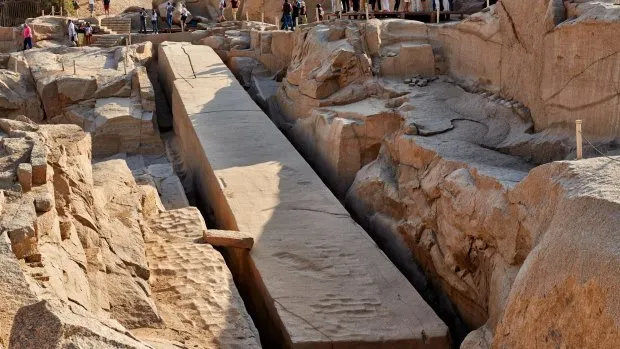
Its unfinished state is what makes it priceless to historians and engineers alike. It embodies the trial-and-error nature of human innovation, reminding us that even the greatest civilizations faced obstacles.
Conclusion
The Unfinished Obelisk of Aswan stands as both a monument to ancient Egypt’s ambition and a reminder of its limitations. Intended to be the largest obelisk in history, it was abandoned due to a fatal crack, yet preserved as a testament to the skills and struggles of its builders.
More than just an unfinished project, it is a window into ancient engineering, religious devotion, and human perseverance. For modern visitors, it offers an unforgettable glimpse into the challenges faced by one of history’s most extraordinary civilizations.
The Unfinished Obelisk may never have reached Karnak. But in its silent resting place, it continues to inspire awe and curiosity—making it one of Egypt’s most fascinating treasures.
ALSO READ: The Subterranean City of Naours: France’s Hidden Underground Fortress