Fossil Fish from Wyoming’s Green River Formation: A Perfectly Preserved Window into the Eocene Epoch
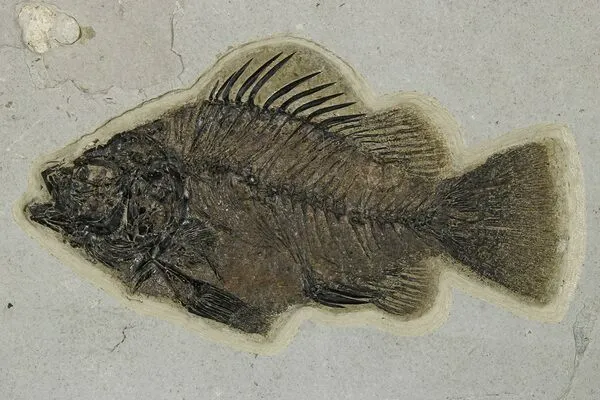
Imagine a fish fossil so perfectly preserved that it appears to have died yesterday, despite being 50 million years old. That’s exactly what paleontologists uncovered in Wyoming’s Green River Formation, one of the most famous fossil beds in the world. This remarkable specimen from the Eocene Epoch captures every microscopic detail—from delicate fin rays to individual scales and even traces of soft tissue.
This discovery is more than just a beautiful fossil; it’s a scientific time capsule. It offers rare insights into ancient ecosystems, fossilization processes, and the biology of fish that swam in Earth’s tropical lakes millions of years ago.
The Green River Formation: Nature’s Perfect Fossil Preserver
The Green River Formation spans parts of Wyoming, Colorado, and Utah. During the Eocene Epoch (56–34 million years ago), this region was home to vast freshwater lakes, including Lake Gosiute and Lake Uinta.
What makes the Green River Formation so extraordinary is its ideal fossilization conditions:
-
Fine sediments: Layers of silt and clay settled at the bottom of these lakes, quickly covering fish carcasses.
-
Low oxygen levels: Stagnant, oxygen-poor waters slowed bacterial activity, preventing decay.
-
Rapid burial: Organisms were sealed before scavengers or microorganisms could destroy soft tissues.
-
Mineral replacement: Over time, minerals infiltrated the bodies, hardening tissues into stone while preserving minute details.
Thanks to this process, the Green River Formation has yielded some of the world’s most detailed vertebrate fossils, including fish, reptiles, birds, plants, and even mammals.
The Fossil: A Fish Frozen in Time
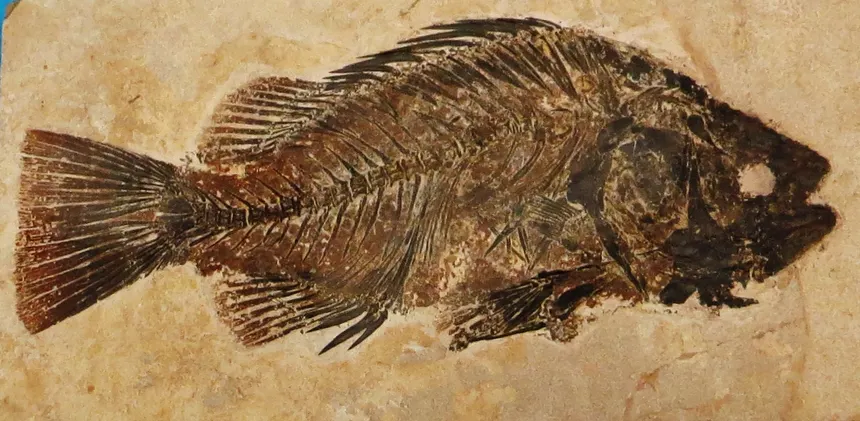
The newly highlighted fish fossil from Lake Gosiute is extraordinary for several reasons:
-
Scales: Each scale is visible and intact, displaying the original pattern of the fish’s outer body.
-
Fins: The delicate fin rays are perfectly spread, as if the fish were still swimming.
-
Soft Tissues: Remarkably, traces of muscle fibers and internal organs are preserved, a rarity in paleontology.
-
Microscopic Structures: Researchers have identified features at the cellular level, allowing studies that were once impossible.
This specimen provides paleontologists with an unprecedented look into fish anatomy from the Eocene Epoch, bridging the gap between fossilized bone structures and living tissue biology.
Life in Ancient Lake Gosiute
About 50 million years ago, Wyoming was unrecognizable compared to today’s sagebrush-dominated landscape. During the Eocene:
-
Climate: The region was warm and tropical, with palm trees and lush vegetation.
-
Wildlife: Alongside fish, the area supported early horses, primitive whales, crocodiles, turtles, insects, and ancestral mammals.
-
Ecosystem: Lake Gosiute teemed with life, forming a freshwater environment strikingly similar to modern tropical lakes.
The fish preserved in this fossil lived in a vibrant, interconnected ecosystem. Its preservation allows scientists to reconstruct the food chains, climate conditions, and ecological dynamics of this ancient world.
What the Fossil Reveals About Ancient Fish
This fossil does more than showcase external beauty—it provides scientific insights into Eocene fish biology:
-
Muscle Fibers: Scientists can study the arrangement of muscles, giving clues about swimming styles and predatory behavior.
-
Stomach Contents: Some Green River fossils preserve partially digested food, revealing exact diets.
-
Cellular Structures: Preservation at the microscopic level allows examination of cell types and tissue organization.
-
Growth Patterns: The scales retain growth rings, similar to tree rings, which record seasonal changes in the environment.
Each layer of information adds to our understanding of how ancient fish lived, adapted, and interacted with their environment.
The Fossilization Process: From Life to Stone
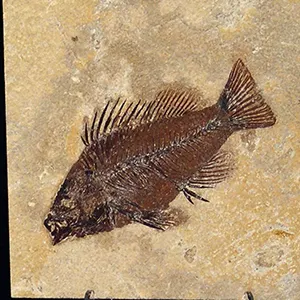
The preservation of this fish fossil demonstrates one of nature’s rarest occurrences: soft tissue fossilization. Normally, tissues like muscles and skin decay within days. In this case, the process unfolded differently:
-
Rapid Burial – After death, the fish sank to the oxygen-depleted lake bottom, where scavengers were absent.
-
Sediment Sealing – Fine-grained mud and carbonate sediments quickly blanketed the body.
-
Decay Prevention – Low oxygen slowed decomposition, buying time for mineralization to occur.
-
Mineral Replacement – Minerals such as calcite and silica gradually replaced organic material, preserving even the smallest details.
This rare combination of factors transformed a once-living fish into a stone replica so precise that it looks lifelike millions of years later.
Global Scientific Importance of the Green River Fossils
The Green River Formation is one of the most studied fossil sites worldwide. Its specimens are prized for both their beauty and scientific value:
-
Paleontological Research: Fossils offer a glimpse into the Eocene Epoch’s biodiversity and evolutionary trends.
-
Climate Studies: Plant and animal fossils reveal how climate shifts affected ecosystems over millions of years.
-
Evolutionary Biology: The fossils help scientists trace the origins of modern fish families and other vertebrates.
-
Museum Displays: Perfectly preserved specimens attract collectors and researchers from around the globe.
These fossils act as both scientific resources and cultural treasures, bridging the gap between public fascination and academic study.
A Snapshot of Earth’s Past
This fish fossil is more than an isolated find—it is a snapshot of an entire ecosystem frozen in time. When studied alongside other fossils from the Green River Formation, it paints a detailed picture of:
-
Tropical climates in ancient North America
-
Early mammalian evolution
-
The ecological dynamics of freshwater lakes
-
The resilience and adaptability of fish species
By studying such fossils, scientists can compare past ecosystems to modern environments, shedding light on how life responds to climate change and environmental stress.
Conclusion: Why This Fossil Matters
The discovery of this perfectly preserved fish fossil from Wyoming’s Green River Formation is a rare and invaluable window into the past. Preserving every detail from scales to soft tissue, it allows paleontologists to study ancient anatomy, ecology, and climate with unprecedented precision.
It reminds us that Earth, even 50 million years ago, supported thriving and complex ecosystems similar in many ways to today’s freshwater environments. More importantly, it underscores the scientific and cultural importance of fossil beds like the Green River Formation—time capsules that preserve not just organisms, but entire worlds.
This single fossil is a testament to life’s continuity, evolution, and the remarkable ability of nature to record its own history in stone.
ALSO READ: The Black Pharaohs of Kush: Architects of Egypt’s 25th Dynasty