The Huey Tzompantli: The Aztec Skull Rack of Tenochtitlán
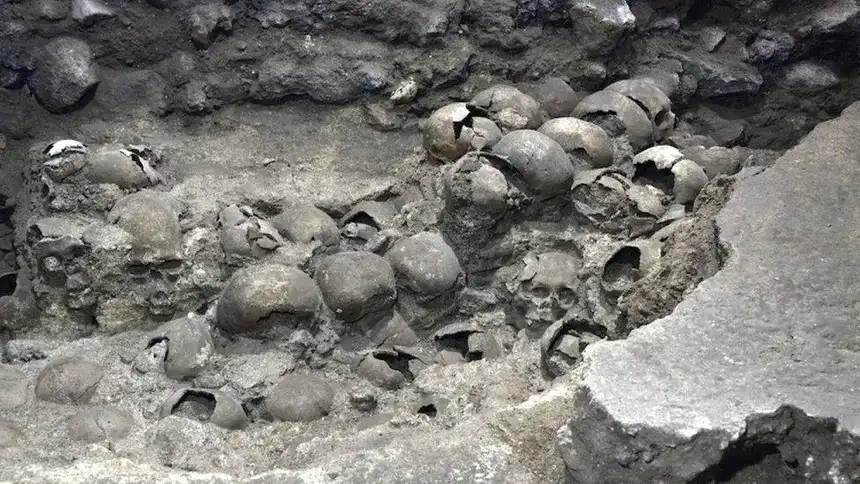
Among the most striking archaeological discoveries in Mexico City is the Huey Tzompantli, a massive skull rack built by the Aztecs in their capital, Tenochtitlán, during the 15th century CE. Unlike ordinary ruins of temples or plazas, the Huey Tzompantli shocks modern audiences with its direct display of human remains. Rows upon rows of human skulls, carefully mortared into walls, remind us of a world where religious devotion, warfare, and sacrifice were deeply intertwined.
Far from being a mere spectacle of violence, this structure represented the cosmological worldview of the Aztecs, where human life was offered to sustain the gods and ensure the continuation of the universe. Archaeological research around the Templo Mayor, the city’s central temple, has revealed hundreds of skulls, opening a unique chapter in the study of Mesoamerican religion and empire.
The Meaning of Tzompantli in Aztec Culture
The term tzompantli comes from Nahuatl, the language of the Aztecs, and literally means “skull rack.” Similar structures were known in other Mesoamerican cultures, including the Maya, but the Huey Tzompantli (translated as the “Great Skull Rack”) of Tenochtitlán was the largest and most elaborate.
The skull rack served multiple purposes:
-
Religious Offering: Skulls were offered to gods such as Huitzilopochtli, the Aztec god of the sun and war, and Tlaloc, the rain deity.
-
Symbol of Power: Displaying the skulls of war captives demonstrated the might of the Aztec military and reinforced imperial dominance.
-
Cosmic Duty: The Aztecs believed human blood and life force (known as tonalli) were essential to sustain the sun and keep the world in balance.
Thus, the tzompantli was not just a monument of terror — it was a sacred structure linking earthly life to divine forces.
Construction of the Huey Tzompantli
The Huey Tzompantli was no ordinary rack. Built near the Templo Mayor, the spiritual heart of Tenochtitlán, it was a massive wooden and stone structure that displayed thousands of skulls.
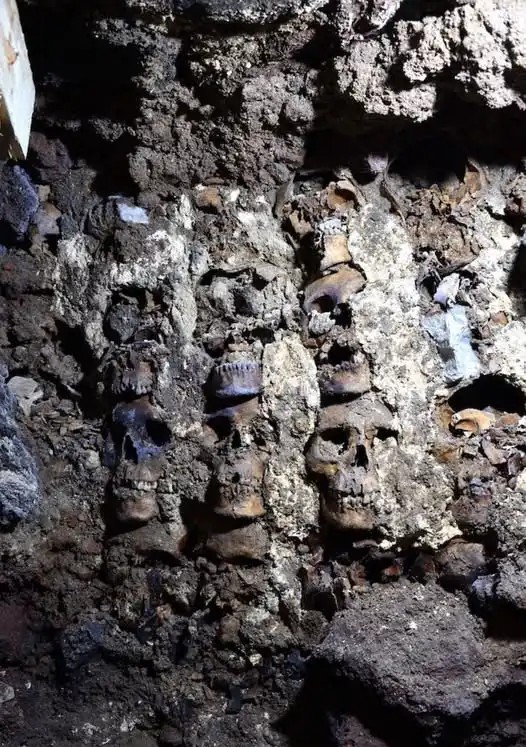
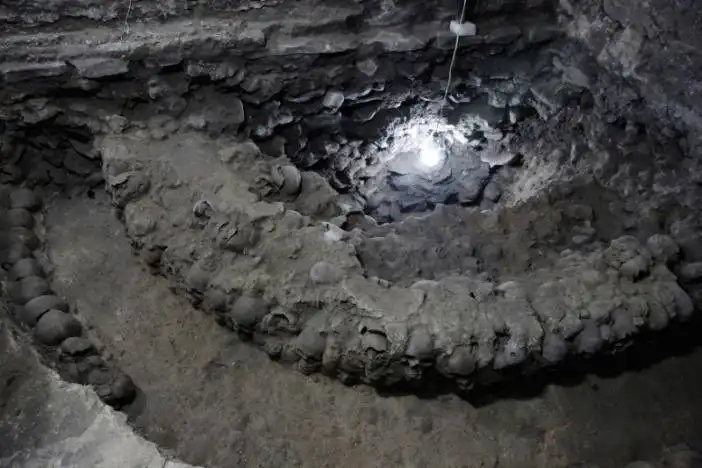
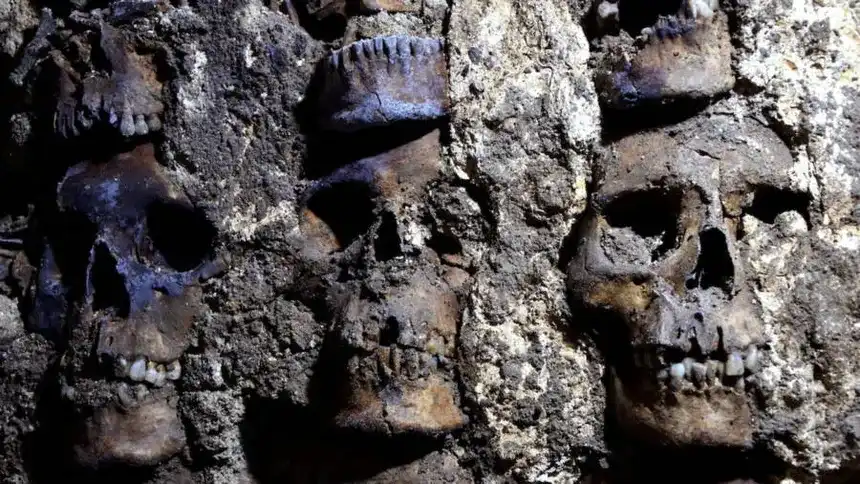
Originally, skulls were threaded onto wooden poles arranged horizontally, creating rows upon rows of crania. Over time, many of these skulls were removed, drilled, and mortared into circular or wall-like formations, creating lasting displays. Archaeological excavations have uncovered skulls fused together with lime-based mortar, forming a grim yet carefully organized structure.
The size of the Huey Tzompantli was immense. Spanish chroniclers, including Bernal Díaz del Castillo and Hernán Cortés, described seeing racks filled with thousands of skulls upon entering Tenochtitlán in the early 16th century. These accounts, once dismissed as exaggerations, are now corroborated by the physical remains uncovered beneath Mexico City.
The Victims: Who Were They?
One of the most revealing aspects of the Huey Tzompantli is the diversity of the skulls uncovered. Excavations show that victims included:
-
Adult men: Likely captured warriors sacrificed after battles.
-
Women: Possibly war captives or individuals offered in fertility-related rituals.
-
Children: Often dedicated to deities like Tlaloc, associated with rain and agricultural fertility.
The presence of women and children challenges earlier assumptions that only male warriors were sacrificed, highlighting the wide-ranging religious demands of the Aztec pantheon.
Ritual Sacrifice in Aztec Society
To modern sensibilities, the scale of human sacrifice in Aztec culture may seem shocking. However, within Aztec cosmology, these rituals were acts of devotion and necessity.
Why Sacrifice Was Essential
The Aztecs believed they lived in the “Fifth Sun,” the current age of the world, which required nourishment to continue. Human hearts and blood were considered the ultimate sustenance for the gods. Without sacrifice, they feared the sun would cease to rise, and cosmic order would collapse.
The Ceremonies
Priests often sacrificed victims atop the Templo Mayor, removing the heart in a ritual act. They then used the bodies in different ways: they reserved limbs for ceremonial feasting and placed heads on the tzompantli as offerings. These ceremonies sometimes reached massive scales — Spanish chronicles describe priests sacrificing thousands of victims during the dedication of new temples.
Archaeological Discoveries Near the Templo Mayor
In recent decades, archaeologists from the Instituto Nacional de Antropología e Historia (INAH) have uncovered parts of the Huey Tzompantli during excavations in Mexico City’s historic center. These finds confirm the Spanish accounts that once seemed like colonial propaganda.
Key Discoveries Include:
-
Hundreds of skulls embedded in mortar, forming circular and linear structures.
-
Archaeologists found skulls with drilled holes, providing evidence that the Aztecs mounted them on wooden poles before incorporating them into permanent walls.
-
Remains belonging to men, women, and children, confirming the broad scale of sacrificial victims.
-
Archaeologists uncovered layers of construction, which suggest that the Aztecs expanded the tzompantli over time as the empire grew.
These discoveries not only validate historical accounts but also deepen our understanding of Aztec rituals and social organization.
The Huey Tzompantli as a Symbol of Power
Beyond its religious role, the Huey Tzompantli was a tool of psychological warfare and political dominance.
-
Intimidation: Displaying enemy skulls reinforced Aztec supremacy over subject peoples and rival states.
-
Imperial Propaganda: The structure projected an image of divine-backed power, reminding allies and foes alike of the Aztec’s military might.
-
Spiritual Authority: By situating it near the Templo Mayor, the heart of Aztec religious life, the tzompantli linked political rule with cosmic duty.
In essence, the Huey Tzompantli was both a religious altar and a political billboard.
Spanish Accounts and Modern Confirmation
When the Spanish conquistadors arrived in Tenochtitlán in 1519, the scale of the tzompantli astonished them. Chroniclers described structures holding tens of thousands of skulls, though historians debated for centuries whether the accounts exaggerated the numbers.
Today, thanks to excavations, we know the conquistadors were describing a reality — albeit perhaps with inflated numbers. The discoveries near the Templo Mayor prove the existence of massive skull racks and confirm the central role of sacrifice in Aztec religion.
The Legacy of the Huey Tzompantli
The Huey Tzompantli remains one of the most haunting and fascinating symbols of Aztec civilization. It embodies the dual nature of Aztec culture: artistic brilliance, complex social organization, and devotion to cosmic balance — alongside rituals of blood and death.
For modern Mexicans, the discovery of the tzompantli is not merely a reminder of violence but a testament to the richness of their heritage. It offers a powerful narrative of faith, empire, and resilience. Helping us understand how the Aztecs saw their place in the universe.
Visiting the Templo Mayor and the Huey Tzompantli
Today, visitors to Mexico City can explore the Templo Mayor Museum. Archaeologists have reconstructed and studied parts of the tzompantli. The site allows people to see firsthand the remnants of this extraordinary structure and to reflect on the Aztec worldview that shaped its creation.
Walking through the ruins of the Templo Mayor, surrounded by skull displays and ritual artifacts. Visitors confront the intensity of Aztec spirituality and the enduring legacy of their civilization.
Conclusion
The Huey Tzompantli of Tenochtitlán is more than an archaeological curiosity — it is a monument to the Aztec worldview. Where sacrifice sustained the cosmos and reinforced imperial rule. Its discovery has shed light on centuries-old accounts, revealing a complex culture where devotion, power, and ritual intertwined.
Today, the skull rack stands as both a chilling reminder of human sacrifice. A profound insight into the spiritual life of one of history’s greatest empires.