The Temple of Bacchus in Baalbek: A Masterpiece of Roman Architecture
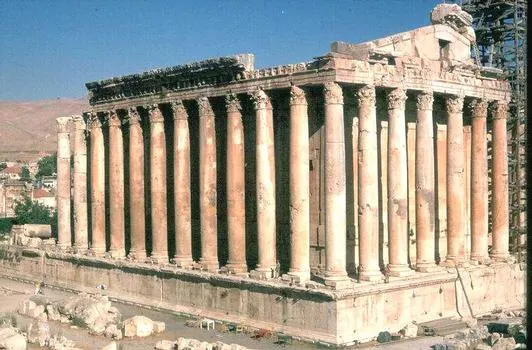
In the heart of Lebanon’s Bekaa Valley, the Temple of Bacchus stands as one of the most impressive and best-preserved Roman temples in the world. Built during the reign of Emperor Antoninus Pius (138–161 CE), this monumental structure was dedicated to Bacchus, the Roman god of wine, festivity, and fertility.
Part of the larger temple complex of Baalbek, the Temple of Bacchus rivals even the grandest Roman structures in size and magnificence. Recognized as a UNESCO World Heritage Site in 1984, it remains a testament to Roman architectural genius, cultural influence, and the enduring legacy of Baalbek as a crossroads of civilizations.
Historical Background of Baalbek
Baalbek Before the Romans
Baalbek’s history stretches far before the Romans arrived. Known in antiquity as Heliopolis or the “City of the Sun,” it was a Phoenician religious center, where people worshipped deities connected to fertility and the sky. Later, under Hellenistic rule, the city incorporated Greek gods into its pantheon, blending local and Mediterranean traditions.
Roman Expansion
When the Romans conquered the region in the 1st century BCE, they recognized Baalbek’s importance as both a religious center and a strategic location in the fertile Bekaa Valley. They began transforming it into a grand complex of temples, courtyards, and monumental structures, dedicated to gods such as Jupiter, Venus, and Bacchus.
The Temple of Bacchus, completed in the 2nd century CE, was one of the jewels of this architectural transformation.
Temple of Bacchus: Dimensions and Design
The Temple of Bacchus is nothing short of colossal.
-
Length: 66 meters (217 feet)
-
Width: 35 meters (115 feet)
-
Height: 31 meters (102 feet)
-
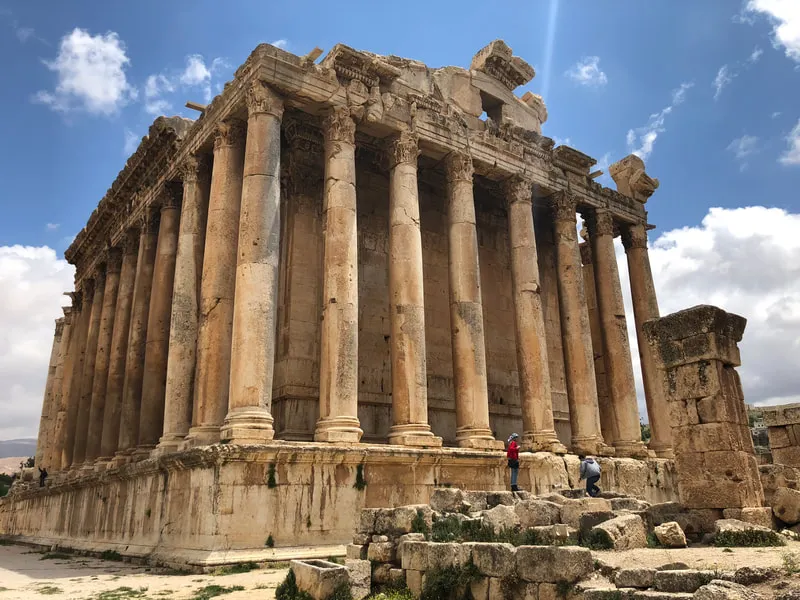
Columns: 42 Corinthian columns, each rising about 19 meters (62 feet) high
Corinthian Splendor
The temple’s Corinthian columns, adorned with acanthus leaf capitals, frame its exterior with elegance and power. Many of these columns remain standing, offering a sense of the grandeur that once dominated the ancient city.
The Inner Sanctuary
Inside, the temple’s cella (inner chamber) once housed the cult statue of Bacchus, while the walls were richly decorated with friezes depicting mythological scenes, grapevines, and Bacchic rituals.
Symbolism of Wine and Fertility
Bacchus, as the god of wine, represented not only celebration but also fertility, rebirth, and divine ecstasy. The choice to dedicate such a monumental structure to him reflects the cultural importance of agriculture and festivity in the fertile Bekaa Valley.
Artistic and Architectural Details
The Temple of Bacchus is celebrated not only for its size but also for its exquisite artistic details:
-
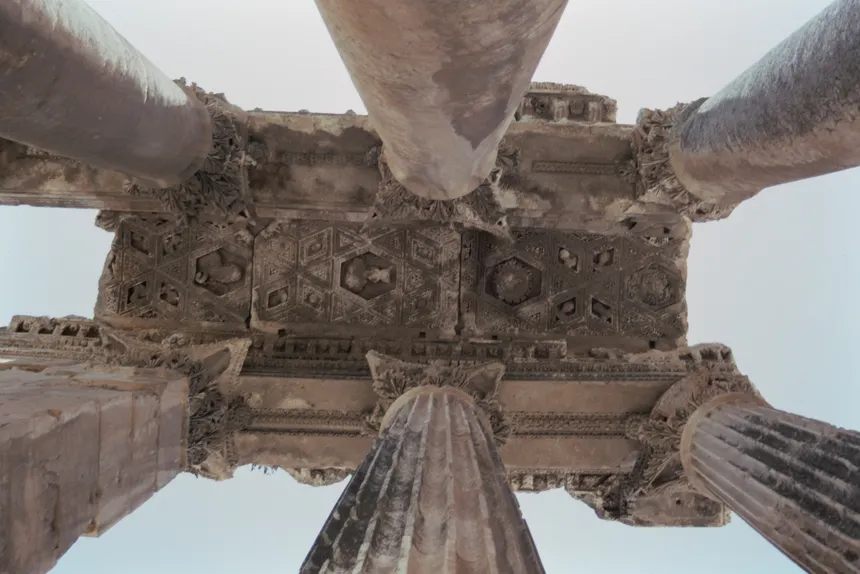
Ornate Reliefs: The walls and ceilings bear carvings of gods, animals, vines, and mythological motifs.
-
Doorways and Portals: Monumental entrances emphasize the sacred threshold between the earthly world and the divine.
-
Ceiling Panels: Carved with rosettes, mythic figures, and cosmic symbols, reinforcing the temple as a link between humanity and the heavens.
These artistic elements showcase Roman craftsmanship at its peak, blending function with rich symbolic meaning.
Religious and Cultural Role
Worship of Bacchus
Though dedicated to Bacchus, the temple likely hosted rituals that blended local and Roman traditions, possibly involving wine, fertility rites, and celebrations of seasonal cycles.
The Larger Baalbek Complex
The Temple of Bacchus was part of a grand complex that included:
-
The Temple of Jupiter → One of the largest temples ever built in the Roman Empire.
-
The Temple of Venus → A smaller, elegant sanctuary.
-
Monumental courtyards and processional stairways.
Together, these structures made Baalbek one of the most important religious centers in the Roman world.
Baalbek Through the Ages
Byzantine Era
With the rise of Christianity in the 4th century, pagan temples fell out of use. The Temple of Bacchus was spared large-scale destruction, likely because of its robust structure, and may have been repurposed.
Islamic and Medieval Rule
Baalbek came under Umayyad, Abbasid, Seljuk, and Ayyubid rule, followed by the Crusaders and later the Mamluks and Ottomans. Each era left traces on the site, but the Temple of Bacchus remained largely intact.
Earthquakes and Preservation
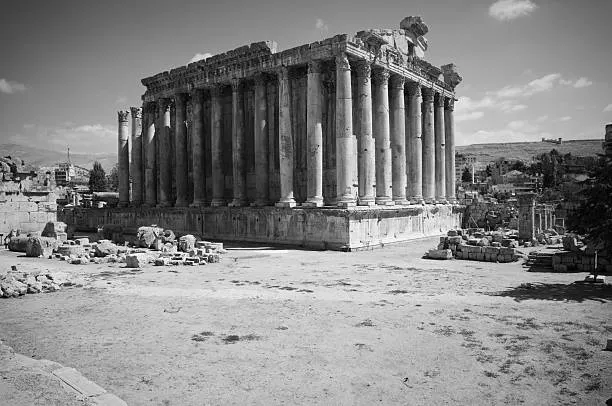
Lebanon’s seismic activity damaged parts of the structure over the centuries, but remarkably, the Temple of Bacchus survived in better condition than many other ancient Roman temples.
UNESCO Recognition
In 1984, Baalbek, including the Temple of Bacchus, was inscribed as a UNESCO World Heritage Site. The recognition emphasized its:
-
Outstanding preservation of Roman architecture.
-
Historical significance as a crossroads of civilizations.
-
Cultural importance as a symbol of Lebanon’s rich heritage.
Visiting the Temple of Bacchus Today
A Monumental Experience
Walking among the towering columns of the Temple of Bacchus, visitors gain a sense of the awe it must have inspired in ancient worshippers. The scale alone rivals that of the Parthenon in Athens and the Pantheon in Rome.
The Atmosphere
-
Light and Shadow → The sun streaming through broken stonework creates an atmosphere of timeless grandeur.
-
Ancient Craftsmanship → The carvings and columns still display the skill of Roman artisans.
-
Historic Resonance → Each stone testifies to the temple’s survival through centuries of empire, conquest, and natural disaster.
Tourism and Preservation
Today, Baalbek is a major archaeological site and tourist destination. Ongoing conservation efforts aim to preserve the temple while allowing the public to experience its magnificence.
The Significance of the Temple of Bacchus
The Temple of Bacchus is significant for several reasons:
-
Architectural Achievement → One of the largest and best-preserved Roman temples in existence.
-
Cultural Blend → Reflects the fusion of Roman religion with local traditions in the Levant.
-
Symbol of Lebanon’s Heritage → A reminder of the country’s role as a bridge between civilizations.
-
Spiritual Message → Dedicated to Bacchus, the temple embodies themes of joy, fertility, and the cycles of life.
Conclusion
The Temple of Bacchus in Baalbek is more than a monument of stone—it is a living testament to human ingenuity, faith, and cultural exchange. Built nearly 1,900 years ago under Emperor Antoninus Pius, it still rises majestically in Lebanon’s Bekaa Valley, surrounded by history’s echoes.
With its towering Corinthian columns, intricate reliefs, and monumental scale, it stands as one of the greatest achievements of Roman architecture. Today, as a UNESCO World Heritage Site, the temple continues to inspire awe, connecting us to the ancient world and reminding us of the enduring legacy of Baalbek.
ALSO READ: Angels Ascending the Ladder to Heaven on Bath Abbey’s West Front (1520 CE)