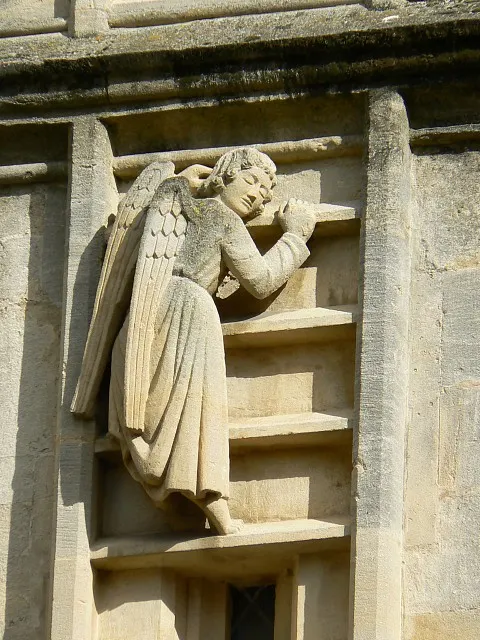
Angels Ascending the Ladder to Heaven on Bath Abbey’s West Front (1520 CE)
The West Front of Bath Abbey, completed around 1520 CE, is one of the most striking examples of late Gothic architecture in England. Its most famous feature is the unique stone carving of angels climbing ladders to Heaven—a rare and beautiful depiction of the biblical vision of Jacob’s Ladder.
These carvings, adorning the façade of the abbey, have fascinated historians, pilgrims, and visitors for centuries. They are more than just decorative stonework; they carry profound Christian symbolism, embody artistic excellence of the late medieval period, and represent one of the most imaginative pieces of church sculpture in Europe.
Bath Abbey: A Brief Historical Background
Bath Abbey, located in the historic city of Bath in Somerset, has a long and complex history:
-
Originally founded as a Benedictine monastery in the 7th century CE.
-
Rebuilt several times, with the present Gothic structure dating largely from the late 15th and early 16th centuries.
-
The West Front carvings, including the angels ascending the ladders, were completed around 1520 CE during the reign of King Henry VIII.
The Abbey today is not only a place of worship but also a heritage site visited by millions each year, celebrated for its soaring fan vaulting, stained glass windows, and its remarkable exterior sculptures.
The Vision of Angels on Ladders
The angels carved on the West Front are inspired by the biblical story of Jacob’s Ladder from the Book of Genesis (28:12):
“And he dreamed, and behold a ladder set up on the earth, and the top of it reached to heaven: and behold the angels of God ascending and descending on it.”
This vision symbolized the connection between Heaven and Earth, and God’s presence among His people. By choosing this theme, the builders of Bath Abbey gave a powerful spiritual message to all who looked upon the church: the Abbey itself was a gateway to Heaven.
The West Front of Bath Abbey
1. Architectural Grandeur
The West Front of Bath Abbey is the main entrance and a focal point of its external design. The façade is dominated by large windows, intricate tracery, and rows of sculpted figures.
2. The Angelic Ladders
On either side of the main window, stone ladders rise toward Heaven. On these ladders, angels are seen climbing upwards toward God’s realm. Some angels ascend gracefully, while others descend, creating a sense of divine movement and heavenly order.
3. Symbolism of Ascent and Descent
-
Ascending Angels → Represent the souls of the faithful being guided upward toward salvation.
-
Descending Angels → Symbolize divine grace, blessings, and God’s messengers coming down to Earth.
This dual movement emphasizes the belief that Heaven and Earth are not separate, but deeply interconnected through faith and divine guidance.
Artistic Style of the Carvings
The angels are carved in the Perpendicular Gothic style, which was prevalent in late medieval England. Key features include:
-
Verticality: The ladders emphasize height, drawing the viewer’s gaze upward toward Heaven.
-
Detail: Each angel is carved with flowing robes, wings, and delicate facial expressions.
-
Narrative Sculpture: Unlike many Gothic façades filled with saints and kings, Bath Abbey’s focus on angels creates a more spiritual and universal message.
The ladders themselves are unusual in Gothic sculpture, making Bath Abbey’s West Front a one-of-a-kind masterpiece in English church architecture.
Bishop Oliver King and the Dream
Legend holds that Bishop Oliver King’s dream inspired the design of Bath Abbey’s West Front. In this vision, he reportedly saw angels climbing a ladder to Heaven, accompanied by a voice commanding him to rebuild the abbey.
The carvings on the West Front were thus not only biblical but also personal, tying the bishop’s dream to the construction of one of England’s great abbeys. The symbolism of the dream connected the act of rebuilding with divine approval and purpose.
Religious and Cultural Significance
1. A Message for Worshippers
For medieval Christians, who often could not read, these carvings served as a “Bible in stone.” Seeing angels climbing ladders reminded them of salvation, prayer, and the hope of eternal life.
2. Pilgrimage and Awe
Bath was a site of pilgrimage for centuries, and the imagery of angels ascending ladders would have reinforced the sacred nature of the abbey for visiting pilgrims.
3. Political and Spiritual Symbolism
The carvings also reflected the church’s authority. By showing a direct link between Earth and Heaven, the abbey emphasized its role as a spiritual gateway under divine sanction.
Preservation of the West Front
Over 500 years old, the carvings of angels on Bath Abbey’s West Front have survived centuries of weather, pollution, and historical upheaval.
-
Victorian Restoration: The 19th-century restoration of Bath Abbey helped preserve and repair many of the original sculptures.
-
Modern Conservation: Today, conservation efforts ensure that the carvings remain visible and protected for future generations.
Visitors can still admire the angels, though centuries of erosion have softened some details, adding a sense of timelessness to the sculptures.
Visiting Bath Abbey Today
Bath Abbey remains one of the most visited historic sites in England. When standing before the West Front:
-
Look up at the two great ladders filled with angels.
-
Notice the balance between ascending and descending figures.
-
Reflect on the centuries of worshippers who have seen the same imagery and drawn inspiration from it.
Guided tours of the abbey often highlight these carvings as one of the most unique features of the church.
Lessons from the Angels of Bath Abbey
The angelic ladders on the West Front continue to offer timeless lessons:
-
Spiritual Aspiration: The ladders remind us of the eternal human desire to reach toward the divine.
-
Divine Presence: The descending angels assure believers that Heaven’s blessings are always near.
-
Art as Theology: The carvings show how artists and architects used their work to teach faith to a largely illiterate population.
Conclusion
The angels ascending the ladder to Heaven on Bath Abbey’s West Front (1520 CE) are more than just beautiful carvings. They are symbols of faith, salvation, and divine connection. Inspired by Bishop Oliver King’s dream and rooted in the biblical story of Jacob’s Ladder, these sculptures stand as a masterpiece of late Gothic art in England.
For modern visitors, the angelic ladders remain a source of wonder and reflection, linking the medieval world with today’s quest for meaning and spirituality. Bath Abbey’s angels intertwine art, faith, and history, guiding our gaze upward toward the eternal.
ALSO READ: The Sacred City of Caral: Exploring the Oldest Civilization in the Americas