The Sacred City of Caral: Exploring the Oldest Civilization in the Americas
Nestled in the Supe Valley of Peru, about 200 kilometers north of Lima, lies the Sacred City of Caral—a remarkable archaeological site and the heart of the Norte Chico Civilization, the oldest known civilization in the Americas. Built nearly 5,000 years ago, Caral flourished between 3000 and 1800 BC, making it contemporary with the pyramids of Egypt, Mesopotamia, and early Chinese dynasties.
Caral stands as a testament to human ingenuity, sustainable living, and social organization. With its monumental pyramids, sunken amphitheatres, advanced irrigation canals, and earthquake-resistant engineering, Caral continues to astonish researchers and architects alike.
Caral: The Oldest City in the Americas
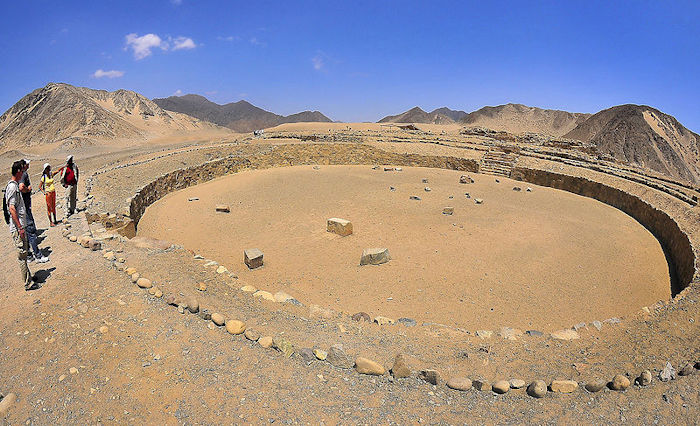
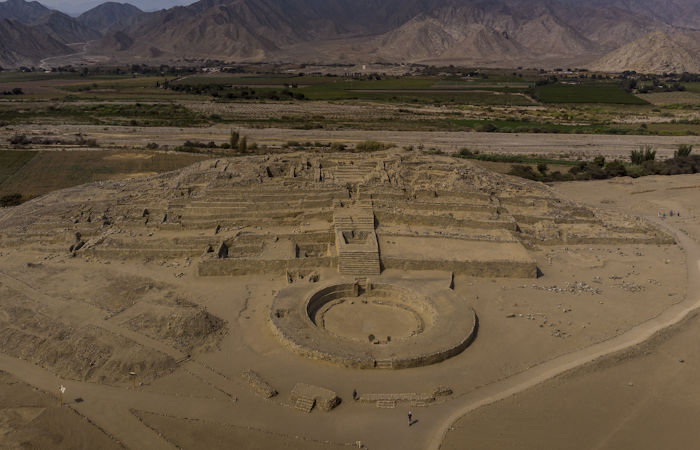
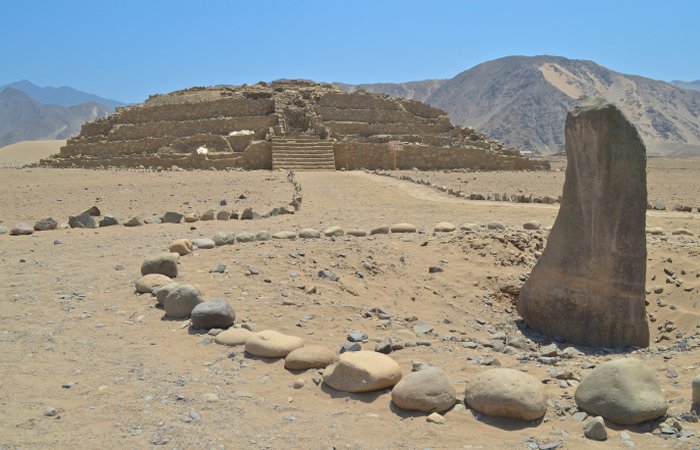
The Sacred City of Caral covers more than 60 hectares (150 acres) and once housed about 3,000 inhabitants. The site includes seven monumental pyramids, a large amphitheatre, and two sunken circular plazas that served as gathering places for rituals and commerce.
Built between 2600 BC and 2000 BC, the pyramids of Caral are contemporaries of Egypt’s Pyramids of Giza. This makes Caral not only an archaeological wonder of Peru but also a key player in the story of early world civilizations.
Ingenious Architecture and Engineering
One of the most fascinating aspects of Caral is its sustainable architecture and seismic resilience, achieved with remarkably simple tools.
Earthquake-Resistant Buildings
Caral sits in a seismically active region, yet its structures show advanced earthquake-proofing. Builders used shicras—large woven baskets filled with stones—as flexible foundations. This ingenious design absorbed seismic shocks and minimized damage, a method modern architects are studying today.
Venturi Effect for Sacred Fires
Caral’s engineers also designed underground ducts that channeled wind to fuel sacred fires during ceremonies. This system relied on the Venturi effect, a principle of fluid dynamics that reduces pressure when air flows through a narrow passage. Such innovation demonstrates the people’s sophisticated grasp of natural forces.
Urban Planning in Harmony with Nature
Unlike many ancient civilizations that built on fertile land, Caral was constructed on arid terrain, leaving fertile valleys for agriculture. This reflects a conscious decision to balance urban development and farming sustainability, a lesson highly relevant to modern urban planning.
A Peaceful Civilization
Unlike other ancient sites, Caral reveals no evidence of warfare. Archaeologists have found:
-
No weapons or battlements
-
No fortifications
-
No mutilated bodies
Instead, Caral reflects a society based on commerce, spirituality, and cultural exchange. The discovery of musical instruments—32 flutes made from condor and pelican bones and 37 cornets made of deer and llama bones—suggests that music and ceremony played a central role in their culture.
A quipu, a knotted textile used for record-keeping, was also found at Caral. This artifact indicates the early use of information systems later refined by the Inca Empire.
Agriculture and Irrigation Systems
Caral’s success depended heavily on its ingenious irrigation systems. The Supe Valley relies on about 50 rivers from the Andes, though only three flow year-round. To survive, Caral’s inhabitants constructed extensive irrigation canals that connected seasonal streams and diverted water for crops.
These irrigation systems supported a growing population and laid the foundation for agriculture-driven trade. Farmers exchanged crops with coastal fishermen and distant traders, evidence of Caral’s role as a commercial hub.
Cultural and Trade Networks
Archaeological findings show Caral was a thriving trade center. Markets drew fishermen, farmers, and traders from wide regions. Artifacts such as:
-
Shells from Ecuador
-
Exotic stones and textiles
-
Bone flutes and musical instruments
…prove that Caral maintained long-distance trade connections, helping spread cultural innovations across ancient South America.
Caral and Global Civilizations
Caral’s age places it among the cradles of world civilization:
-
Mesopotamia (Sumerians, ~3100 BC)
-
Egypt (Old Kingdom, ~2600 BC)
-
Indus Valley Civilization (~2500 BC)
-
China (Xia and Shang dynasties, ~2100 BC)
-
Mesoamerica (Olmecs, ~1500 BC)
This comparison underscores Caral’s importance as one of the earliest urban societies, with advanced knowledge of architecture, agriculture, and governance.
Spiritual and Social Life
Religion played a significant role in Caral’s social fabric. The sunken plazas and amphitheatre were likely used for communal rituals, ceremonies, and possibly astronomical observations. Music, fire rituals, and the use of quipus suggest a rich spiritual and cultural life, fostering unity and identity among its people.
Decline and Abandonment
Around 1800 BC, Caral was struck by a long drought. As water became scarce, agriculture collapsed, and the population was forced to abandon the city. Over time, desert sands buried the once-thriving metropolis, preserving it until modern archaeologists rediscovered it.
Legacy of Caral
Caral’s legacy is immense:
-
It demonstrates sustainable urban planning that modern architects still study.
-
It proves that peaceful societies could achieve monumental development without warfare.
-
It highlights the role of commerce, culture, and music in shaping civilization.
-
It provides insights into the early use of record-keeping systems like the quipu.
In 2009, UNESCO declared the Sacred City of Caral a World Heritage Site, recognizing its global significance.
Conclusion
The Sacred City of Caral is more than just an ancient ruin—it is a blueprint of civilization. Built 5,000 years ago, it reflects an advanced society that valued harmony with nature, peace, and innovation. Its pyramids, amphitheatres, irrigation systems, and earthquake-resistant designs continue to inspire researchers and engineers today.
Caral proves that long before the Incas, Peru was home to a thriving, sophisticated culture whose legacy still shapes the understanding of human history.
ALSO READ: The White Horse of Uffington: A 3,000-Year-Old Chalk Masterpiece