The White Horse of Uffington: A 3,000-Year-Old Chalk Masterpiece
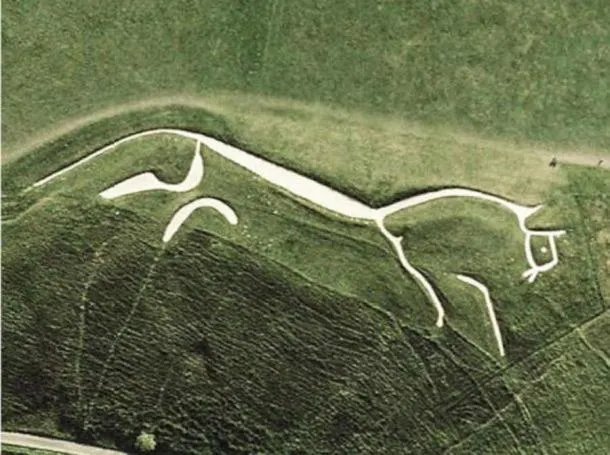
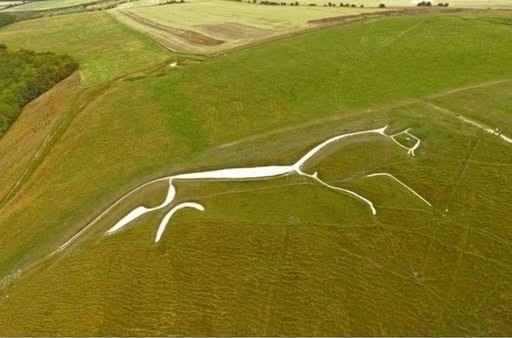
On the rolling chalk hills of Oxfordshire, England, a giant white figure gallops across the landscape—a timeless witness to thousands of years of history. The White Horse of Uffington, believed to be over 3,000 years old, is one of the oldest known hill figures in Britain. Created by carving deep trenches into the hillside and filling them with crushed white chalk, this prehistoric masterpiece continues to inspire awe and curiosity in all who see it.
Location and Setting
The White Horse lies on the upper slopes of White Horse Hill, near the village of Uffington. The site offers sweeping views across the Vale of the White Horse, and on clear days, the figure can be seen from miles away. Its elevated position suggests it may have served as both a territorial marker and a spiritual or ceremonial symbol for ancient peoples.
Creation of the White Horse
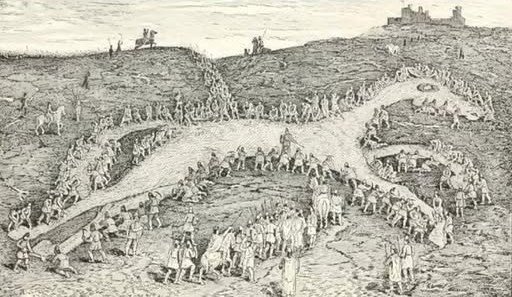
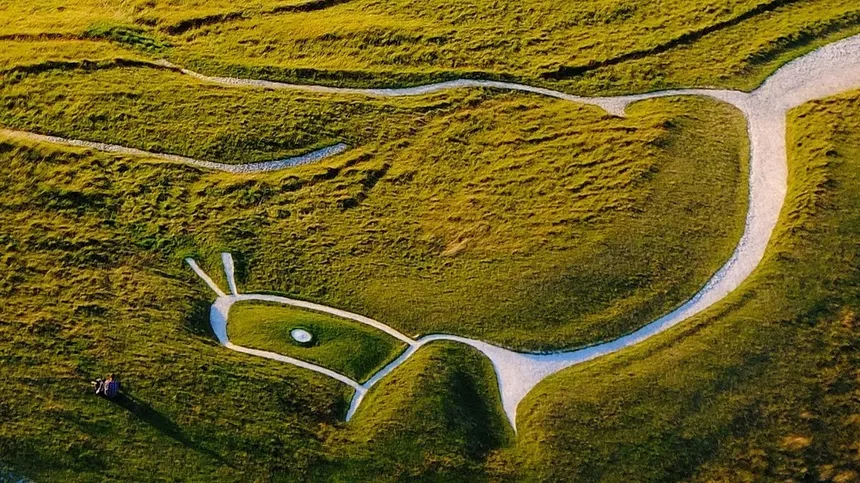
The figure was made by cutting deep, curved trenches—up to one meter deep—into the natural chalk bedrock. These trenches were then filled with compacted chalk rubble, creating a brilliant white contrast against the surrounding green hillside.
Its abstract, flowing lines suggest a stylized horse in motion, though some researchers have argued it could represent other animals or even a mythical creature.
Dating the Figure
For centuries, the origins of the White Horse were shrouded in mystery. However, modern dating techniques, including optically stimulated luminescence (OSL), have confirmed that the figure likely dates back to the Late Bronze Age or Early Iron Age (around 1,000–700 BCE). This makes it roughly 3,000 years old—far older than medieval or Roman explanations once suggested.
Theories About Its Purpose
1. Tribal or Clan Symbol
The horse may have been a territorial emblem, marking the land of a specific tribe. Its visibility from afar could have served as a powerful statement of identity and control.
2. Religious or Ceremonial Symbol
Some historians believe the figure was connected to sun worship, fertility rituals, or other spiritual practices. The horse has long been associated with deities in Celtic and Indo-European traditions.
3. Commemorative Monument
It’s possible that the figure commemorated a significant event—such as a victory in battle—or honored a revered leader or ancestor.
Connection to the Horse in Ancient Culture
In prehistoric and early historic societies, horses symbolized speed, strength, and prestige. They played key roles in warfare, transportation, and ceremonial life. In Celtic mythology, the horse goddess Epona was revered as a protector of horses, fertility, and travelers—a connection that might shed light on the Uffington figure’s cultural role.
Preservation Through Centuries
Maintaining the figure’s striking white appearance requires constant care. Over time, weathering and plant growth can obscure the chalk, so historically, the local community would gather for an annual “scouring”—a ritual cleaning and re-chalking of the trenches. This practice, dating back hundreds of years, ensured the horse remained visible and preserved.
Today, the National Trust oversees conservation efforts, organizing regular re-chalking events with the help of volunteers.
Archaeological Discoveries Nearby
The area surrounding the White Horse is rich in prehistoric sites, including:
-
Uffington Castle – An Iron Age hillfort just above the horse, possibly linked to the same culture that created it.
-
Dragon Hill – A small, flat-topped mound below the figure, associated with local legends.
-
Wayland’s Smithy – A Neolithic long barrow and burial chamber located nearby.
These sites suggest the landscape had deep ceremonial and strategic significance for thousands of years.
Myths and Legends
St. George and the Dragon
One legend claims that the nearby Dragon Hill is where St. George slew the dragon, its blood leaving a bare patch of earth where no grass grows. The White Horse, in this tale, symbolizes St. George’s steed.
Celtic and Saxon Connections
Some link the figure to the Saxon victory at the Battle of Ashdown in 871 CE, though this is unlikely given the prehistoric dating. Others see it as a Celtic tribal emblem, possibly connected to the Dobunni or Atrebates tribes.
The Galloping Horse at Night
Local folklore insists that the horse leaves its hillside at night to gallop across the valley, returning before sunrise.
Artistic Style and Interpretation
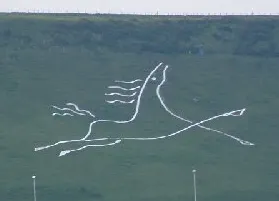
Unlike more literal medieval hill figures, the White Horse’s design is highly abstract, with elongated lines and sweeping curves. This stylization has led some scholars to compare it to figures found on Celtic coins from the Iron Age, which often depicted horses in a similar flowing style.
The minimalist approach may also have been a practical choice, making the figure easier to maintain over centuries.
Modern Cultural Impact
The White Horse has inspired countless works of art, literature, and music. It appears in:
-
Poems by William Morris and G. K. Chesterton.
-
Folklore collections and historical novels.
-
Modern logos, emblems, and local branding.
The figure remains a symbol of Oxfordshire’s heritage and a testament to Britain’s ancient past.
Visiting the White Horse of Uffington
Today, visitors can explore the site via walking trails maintained by the National Trust. The best views of the figure are from the air or from across the valley, as its scale makes it hard to appreciate up close.
Nearby attractions—such as Uffington Castle, Dragon Hill, and Wayland’s Smithy—offer a deeper glimpse into the prehistoric landscape.
Preservation Challenges
Climate change, erosion, and human activity continue to threaten the figure’s condition. The National Trust employs strategies such as:
-
Re-chalking using traditional methods.
-
Managing visitor access to prevent soil compaction.
-
Monitoring vegetation growth to keep the figure’s outline clear.
Why the White Horse Endures as a Mystery
Despite decades of research, the true purpose of the White Horse remains uncertain. Its sheer age, unique style, and enduring presence make it one of Britain’s most captivating archaeological enigmas—a silent messenger from a world that existed long before written history.
Conclusion
The White Horse of Uffington is more than a hillside carving—it is a cultural landmark, a prehistoric mystery, and a living tradition of community preservation. Whether it was a tribal emblem, a sacred symbol, or a territorial marker, its beauty and scale speak to the skill and vision of its ancient creators.
As it gallops across the Oxfordshire hills, the White Horse reminds us that some symbols are timeless—etched not only into the landscape, but also into the human imagination.
ALSO READ: Anunnaki Holding Lions: Power and Divinity in Ancient Mesopotamian Art