Ephesus After Rome: Life in a Byzantine City of Pilgrimage and Resilience
Ephesus Beyond the Roman Empire
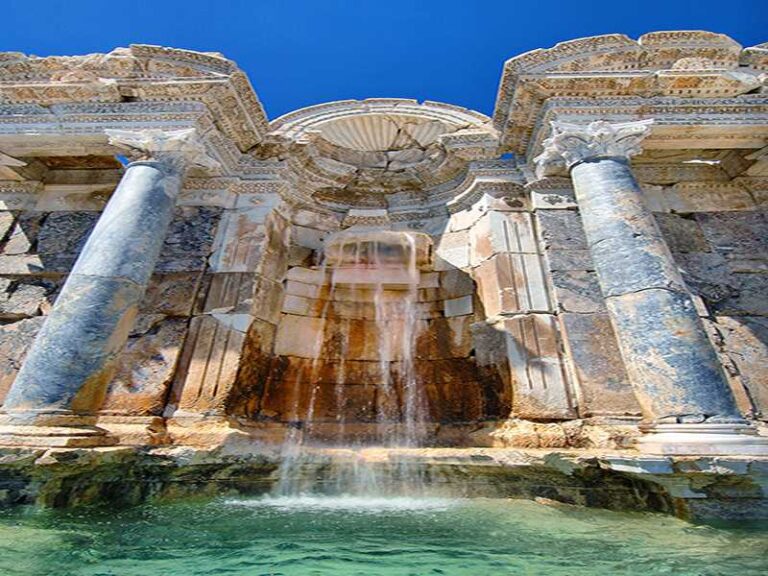
Ephesus, once a thriving metropolis of the Roman Empire, is famous today for its monumental architecture—grand theaters, public baths, and the Library of Celsus. But fewer people are aware that Ephesus continued to flourish well into the Byzantine era, adapting to new religious, political, and environmental realities. Thanks to recent excavations led by Sabine Ladstätter and Michaela Binder of the Austrian Archaeological Institute, we now have a clearer picture of Byzantine Ephesus, revealing a resilient city that transformed itself in the face of adversity.
A City in Transition: From Imperial Power to Regional Center
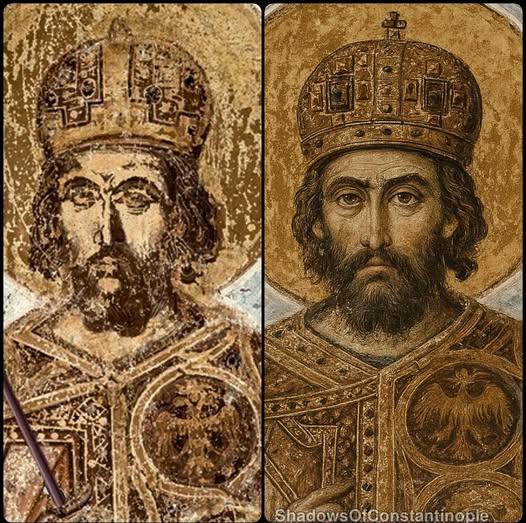
The 4th century AD marked a turning point for Ephesus. The Roman Empire’s administrative center shifted when Constantine the Great established Constantinople as the capital of the Eastern Roman Empire. With this change, Imperial patronage and investment flowed into the new capital, diverting resources away from older cities like Ephesus.
At the same time, natural disasters and environmental challenges added to the city’s troubles. A series of earthquakes in the 3rd century AD damaged critical infrastructure and public buildings, visible today in the archaeological layers of rubble and hasty repairs. Additionally, the harbor, vital for trade and commerce, was becoming unusable due to the constant silting of the coastline, a problem that would plague the city for centuries.
Despite these setbacks, Ephesus reinvented itself, no longer as a powerful Imperial city but as a vibrant religious and pilgrimage center within the Byzantine world.
Pilgrimage and Prosperity: The Rise of Christian Ephesus
In the Byzantine period, Christianity became central to the identity and economy of Ephesus. The city capitalized on its religious significance, which stemmed from its association with early Christianity and apostolic figures.
Several key religious sites were developed:
-
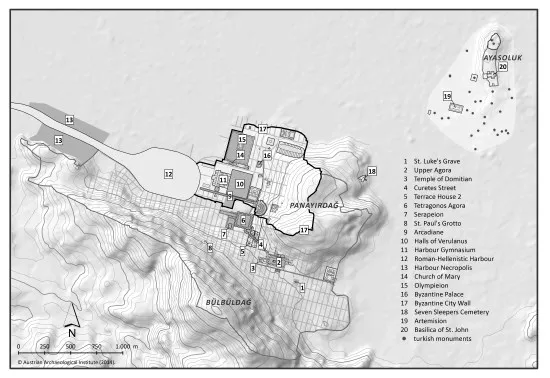
Church of St. Mary: Known for hosting the Council of Ephesus in 431 AD, one of Christianity’s early ecumenical councils, this church elevated the city’s status as a center of Christian theology.
-
Basilica of St. John: Built over what was believed to be the tomb of the Apostle John, this basilica became a major pilgrimage destination.
-
Cemetery of the Seven Sleepers: Linked to a popular Christian legend, this site drew pilgrims from across the Byzantine world.
-
Tomb of Luke: Although its attribution remains debated, it contributed to the spiritual aura of the city.
These sites attracted pilgrims, creating new economic opportunities for local residents. Visitors needed lodging, food, religious souvenirs, and transportation, all of which generated wealth for Ephesians. Donations and endowments from the faithful also enriched the local churches and supported urban maintenance.
Environmental Struggles: The Silted Harbor and Ephesus’s Lifeline
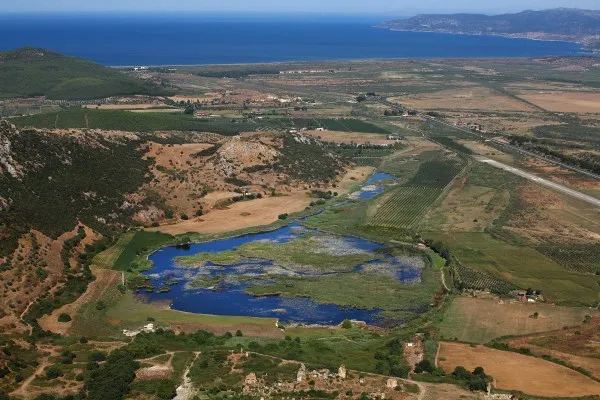
For Ephesus, access to the sea was not only a commercial advantage but a lifeline. Unfortunately, the city’s harbor—once a bustling Roman trade hub—was in perpetual crisis due to silt accumulation from the Cayster River. Without continuous dredging and maintenance, the harbor became unusable.
During the early Imperial period, Ephesians had invested in significant engineering projects to manage this problem:
-
A channel connected the harbor basin to the open sea, and as the coastline retreated due to silting, the channel was extended multiple times.
-
Outer harbors were constructed to accommodate larger ships. Goods and people were then transferred to smaller vessels that could navigate the increasingly shallow and narrow access channels.
-
Signal towers and navigational aids helped guide ships into the harbor, while regular cleaning efforts were organized to keep it operational.
Despite these efforts, by the Byzantine period, keeping the harbor functional was a constant struggle. The decline in maritime trade posed significant challenges, yet pilgrimage traffic helped to offset economic losses from reduced commercial activity.
Adaptation and Resilience: A Changing Urban Landscape
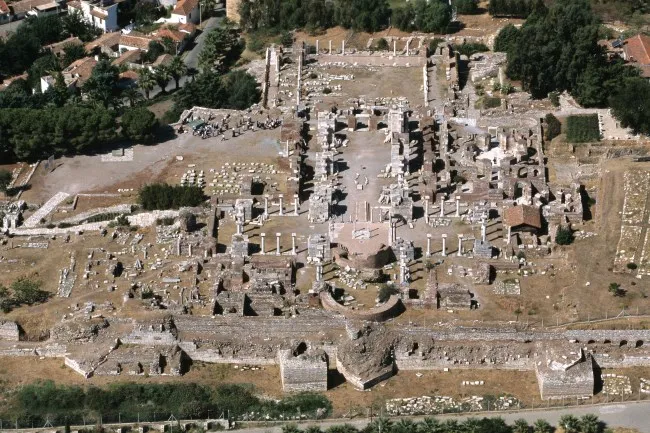
The changing priorities of Byzantine Ephesus also left their mark on the city’s architecture. Public spaces that once served as forums of civic life under the Romans were repurposed for religious use or fell into disrepair. At the same time, new churches and monasteries were constructed, often reusing materials from older Roman buildings, a practice known as spolia.
Urban planning in Byzantine Ephesus focused more on supporting pilgrims than on civic grandeur:
-
Hostels and inns were built or expanded.
-
Roads connecting the city to neighboring regions and ports were improved to ensure safe passage for pilgrims.
-
Efforts to maintain water supply and sanitation systems also continued, ensuring the city could accommodate an influx of visitors.
Through adaptability, Ephesus managed to retain regional importance, even if its days as a global Imperial center had passed.
Conclusion: Ephesus in Late Antiquity—A Story of Survival
The story of Byzantine Ephesus is one of transformation, resilience, and survival. Rather than fading into obscurity after the fall of Rome, the city adapted to new political realities and economic opportunities. Harnessing its Christian heritage to become a beacon for pilgrims.
Modern archaeology has unveiled this lesser-known chapter in the city’s history. Revealing how resourcefulness and religious devotion helped sustain Ephesus for centuries. As ongoing excavations continue to unearth new evidence, our understanding of life in post-Roman Ephesus becomes ever richer.
The legacy of Byzantine Ephesus is not just in the stones of its churches and the remnants of its harbor. But in the story of a city that refused to disappear.
ALSO READ: Chichén Itzá Tourism: Magic, Mayhem, and the Lost Legacy of the Maya