The Arch of Septimius Severus in Rome: A Monument of Imperial Power
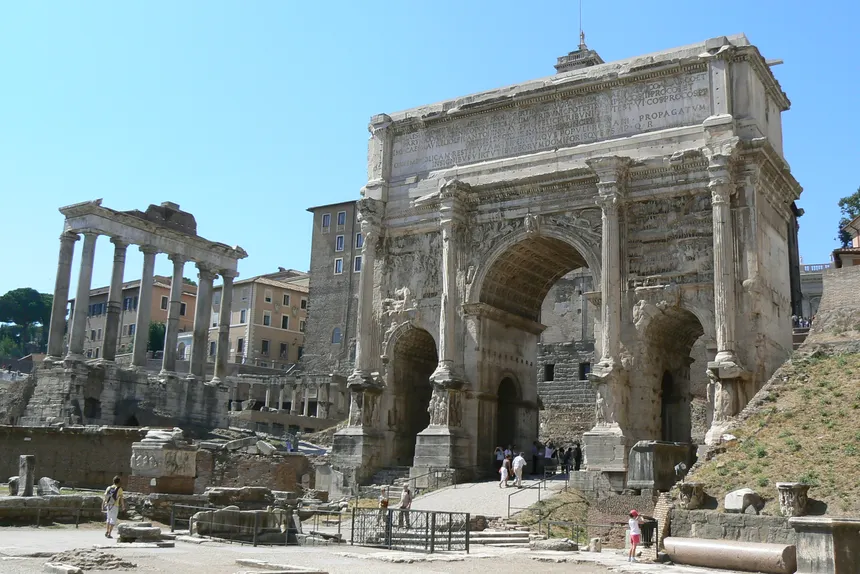
Rome, the Eternal City, is home to countless historic landmarks, but few stand as boldly and as majestically as the Arch of Septimius Severus. Erected in 203 AD, this triumphal arch commemorates the military victories of Emperor Septimius Severus and his sons, Caracalla and Geta, over the Parthians. Positioned at the northwestern end of the Roman Forum, the arch is both a testament to Roman military glory and a valuable window into the imperial propaganda of its time.
In this article, we’ll explore the history, architecture, symbolism, and legacy of the Arch of Septimius Severus and provide useful insights for modern-day visitors.
A Glorious History: Honoring Military Triumphs
The Arch of Septimius Severus was commissioned in 203 AD to celebrate the Roman victories in two Parthian campaigns, waged from 194–195 and 197–199 AD. These wars were fought against the Parthian Empire in present-day Iran and Iraq. Septimius Severus emerged victorious, expanding the Roman Empire further into the East.
The arch commemorates not only Severus’s leadership but also his sons Caracalla and Geta, who were declared co-emperors. Inscriptions on the arch originally included both sons, but after Geta’s assassination by Caracalla in 212 AD, his name was erased in an act known as damnatio memoriae, or the condemnation of memory. This political purge is still visible today, providing a fascinating glimpse into the darker side of Roman imperial succession.
Architectural Overview: A Masterpiece of Roman Engineering
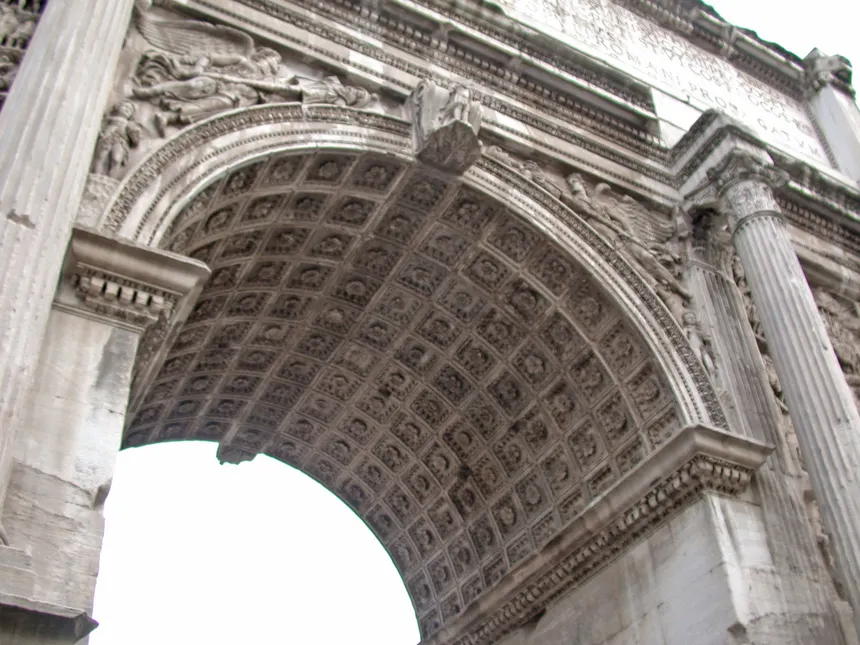
The Arch of Septimius Severus is a triumphal arch—a Roman architectural form used to celebrate significant military victories and achievements. Standing approximately 23 meters high and 25 meters wide, the arch dominates the northern end of the Roman Forum, a place of great civic and ceremonial importance in ancient Rome.
Key Architectural Features:
-
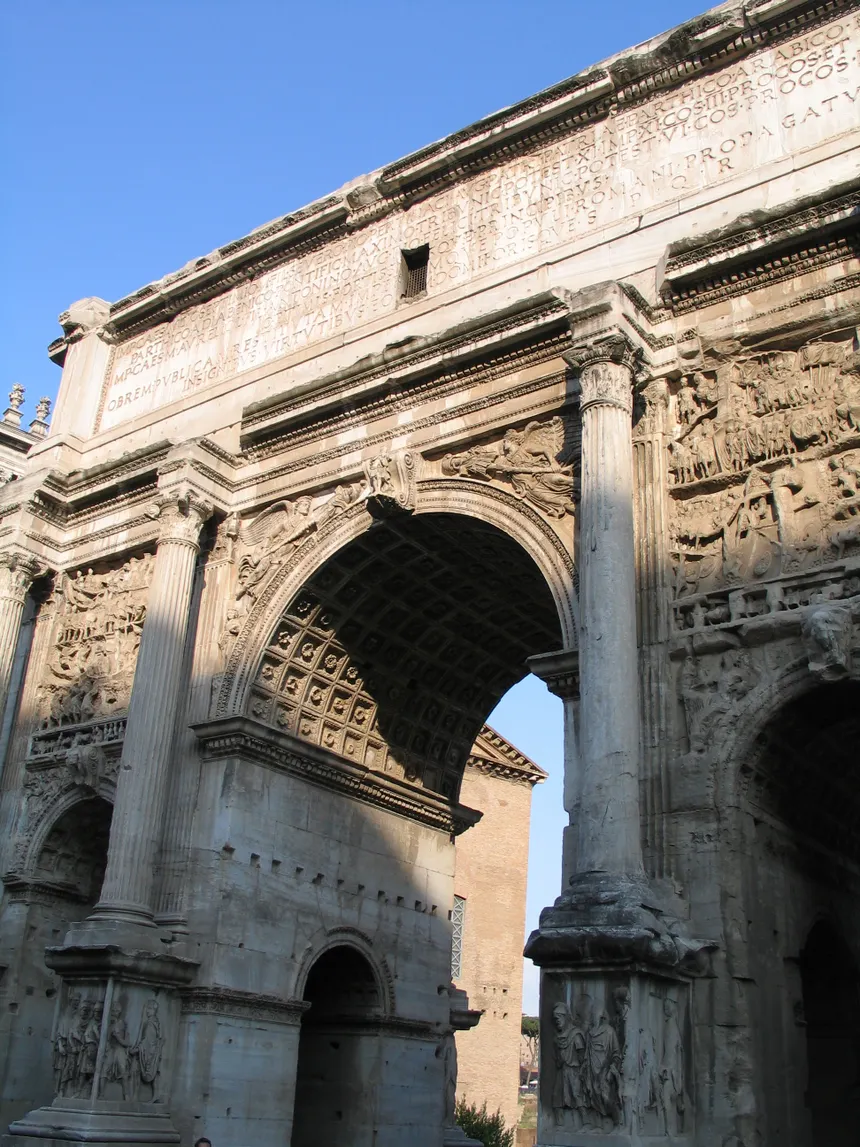
Three Archways: The structure consists of a large central arch flanked by two smaller side arches.
-
Engaged Corinthian Columns: These columns decorate the sides of the arch, adding grandeur and symmetry.
-
Relief Panels: Four large panels above the side arches depict scenes from the Parthian campaigns, including sieges, battles, and the submission of enemy leaders.
-
Attic Inscription: The Latin inscription on the upper part of the arch dedicates the monument to Septimius Severus and his sons. The removal of Geta’s name is a stark reminder of political intrigue in Roman history.
The combination of detailed reliefs, symbolic inscriptions, and monumental scale makes the arch a prime example of Roman imperial architecture and propaganda.
Symbolism and Propaganda: Power Carved in Stone
Roman monuments were never just decorative—they were political tools. The Arch of Septimius Severus is a brilliant example of how architecture was used to legitimize power, promote unity, and instill fear or admiration in onlookers.
Political Symbolism:
-
Victory over the East: The Parthian Empire was a major rival to Rome. By defeating them and erecting this monument, Severus demonstrated Rome’s supremacy.
-
Dynastic Legitimacy: The original inclusion of both sons emphasized a stable succession. The later removal of Geta’s name illustrates the fragility of imperial unity.
-
Imperial Virtue: The reliefs show the emperor leading armies and offering mercy—imagery meant to portray Severus as a strong yet benevolent leader.
Damnatio Memoriae: The Erasure of Geta
After the death of Septimius Severus in 211 AD, his sons Caracalla and Geta became joint emperors. However, their relationship quickly deteriorated. In 212 AD, Caracalla had Geta murdered, likely in their mother’s arms.
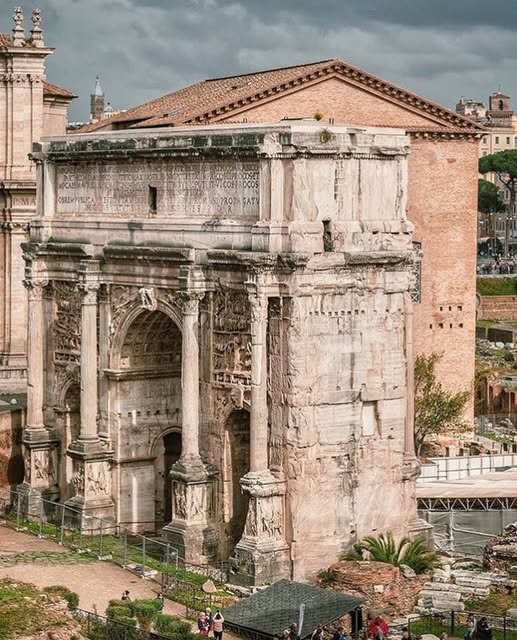
Following Geta’s assassination, Caracalla initiated damnatio memoriae, ordering all mentions of Geta to be removed from public records, statues, and monuments. On the Arch of Septimius Severus, Geta’s name was chiseled out of the inscription. This act of historical editing is still visible today and serves as a chilling reminder of the lengths to which emperors went to consolidate power.
Preservation and Restoration
Despite its age and exposure to the elements, the Arch of Septimius Severus has survived remarkably well. During the Middle Ages, it was partially buried by debris and sediment. Its upper portion remained visible, which helped protect it from total destruction.
In the 19th and 20th centuries, efforts were made to excavate and restore the monument. Today, the arch remains in its original location and stands as one of the best-preserved Roman triumphal arches.
The reliefs, though weathered, are still legible, and the grandeur of the structure continues to impress visitors. Conservation efforts have focused on preventing further erosion while maintaining the integrity of the original stonework.
Visiting the Arch: A Journey into Ancient Rome
If you’re planning a trip to Rome, the Arch of Septimius Severus is a must-see. It is located within the Roman Forum, which is accessible with a combined ticket that also includes the Colosseum and Palatine Hill.
Travel Tips:
-
Best Time to Visit: Early morning or late afternoon for fewer crowds and better lighting for photography.
-
Wear Comfortable Shoes: The Forum has uneven terrain and ancient stone paths.
-
Bring a Guide or Audio Tour: Understanding the history and symbolism of the arch will greatly enhance your experience.
-
Look for Geta’s Erasure: It’s a powerful visual representation of Roman political culture.
Legacy: Influence on Later Architecture
The Arch of Septimius Severus served as an architectural model for later triumphal arches, both in ancient Rome and in later periods of history. Its structure influenced famous monuments like:
-
Arch of Constantine (Rome)
-
Arc de Triomphe (Paris)
-
Wellington Arch (London)
The idea of celebrating military victories with monumental architecture continues to this day. And the arch remains a foundational example of how art and architecture intersect with politics and power.
Conclusion: A Timeless Symbol of Power and Politics
The Arch of Septimius Severus is more than a relic—it’s a story in stone. It tells of conquest, imperial ambition, family betrayal, and the enduring power of propaganda. As one of Rome’s best-preserved ancient monuments. It invites visitors to step back into a world where emperors ruled, armies marched. And history was literally carved into the heart of the city.
Whether you’re a history lover, a traveler, or a student of art and architecture. This magnificent arch is an essential piece of Rome’s grand historical puzzle.
ALSO READ: The Mystical Guardian of Persepolis: The Lamassu-Inspired Griffin