The Mystical Guardian of Persepolis: The Lamassu-Inspired Griffin
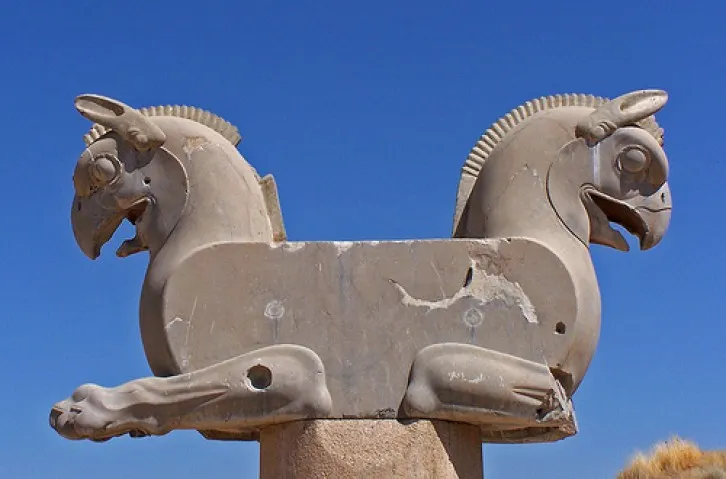
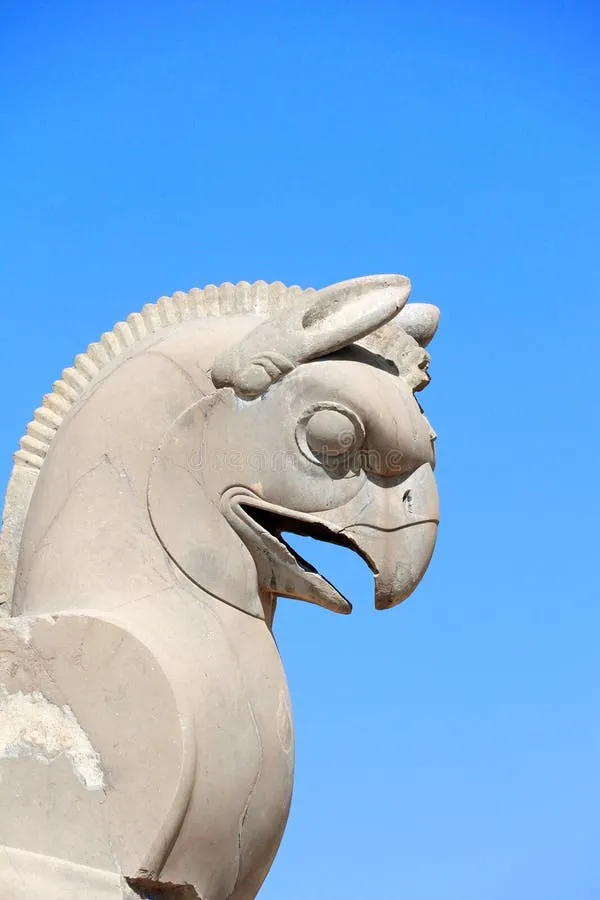
The ancient city of Persepolis, once the ceremonial capital of the mighty Achaemenid Empire (ca. 550–330 BCE), remains one of the most iconic archaeological sites in the world. Nestled in the modern Iranian province of Fars, Persepolis is home to a breathtaking array of art and architecture. Among the most striking relics is the majestic griffin-like statue that once served as a guardian figure—part eagle, part lion, and imbued with symbolic meaning and imperial authority.
This article delves deep into the mythology, symbolism, craftsmanship, and cultural significance of this monumental statue, often described as a lamassu-inspired griffin or Persian griffin, showcasing the grandeur and creativity of Persian civilization.
Origins and Mythological Significance
What Is a Griffin?
A griffin is a legendary creature with the body of a lion and the head and wings of an eagle. It symbolizes a powerful duality: the king of beasts (lion) and the king of birds (eagle). While griffins are commonly associated with Greek mythology, the concept of hybrid guardian creatures dates back to Mesopotamian and Persian civilizations, where they served as protective entities against evil.
Persian Interpretation: The Homa or Lamassu Hybrid
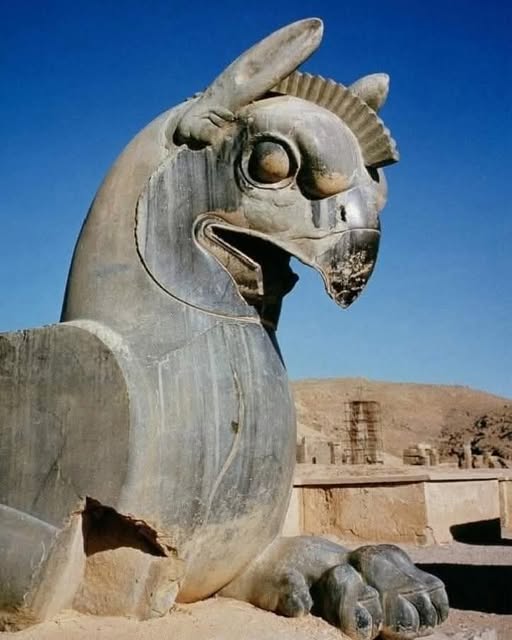
In ancient Persian culture, a similar figure known as the Homa or Lamassu held significance. The statue in the image represents a unique synthesis of these mythological beings. It reflects Persian ingenuity in merging Mesopotamian lamassu traits with Zoroastrian symbolism of divine guardianship, immortality, and royal authority.
Location: The Throne of Empires — Persepolis
Overview of Persepolis
Founded by Darius I in the 6th century BCE, Persepolis was not only a political center but also a stage for showcasing Persian cosmopolitanism. The site boasts enormous columned halls, exquisite reliefs, and majestic gateways.
The griffin statue likely stood atop a column capital in one of these palatial halls, perhaps in the Apadana (Audience Hall) or the Hall of 100 Columns, overlooking delegations from across the empire.
Architectural Purpose
Statues like these weren’t merely decorative. They served as symbolic gatekeepers and bearers of weight—literally and figuratively. Placed at the tops of columns, they represented strength and protection, guarding the sacred or royal spaces beneath them.
Design and Craftsmanship
Material and Technique
This imposing sculpture is carved from limestone, a common medium in Persian architecture. Artisans achieved a remarkable level of symmetry and expression, as evident in the detailed eyes, powerful beak, and tense musculature of the body.
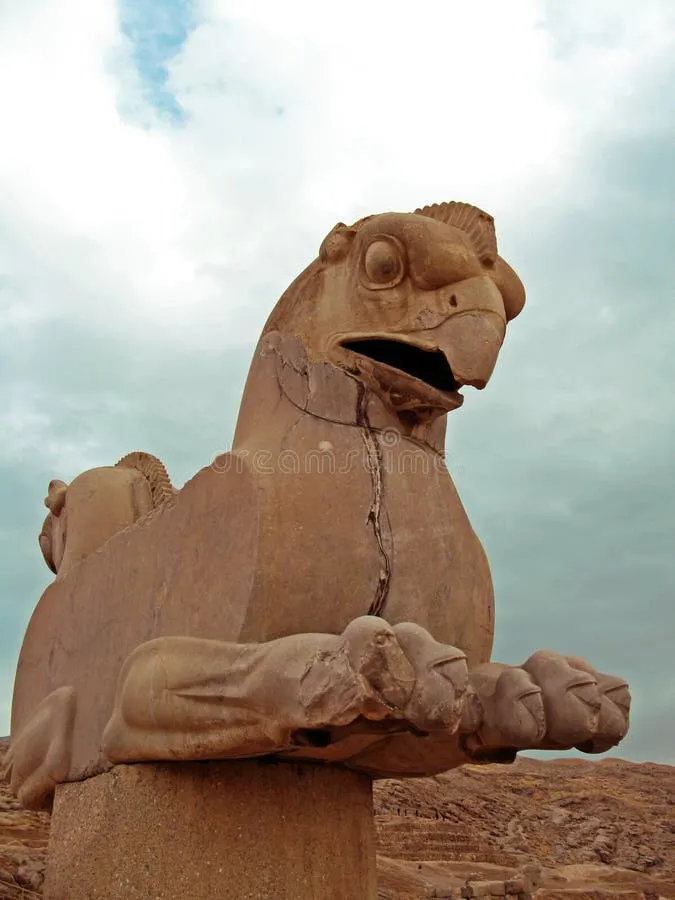
The smoothness of the statue’s surface and the precision of its curves demonstrate advanced sculpting techniques of the Achaemenid period. The broken base and minor cracks suggest that the statue endured centuries of natural erosion, possibly from Alexander the Great’s invasion or later neglect.
Stylization
Note the unique features:
-
The wide, circular eyes suggest vigilance and omniscience.
-
The feathered crown or crest evokes divinity.
-
The beak symbolizes decisiveness and strength.
-
The paws rest assertively on the pedestal, portraying dominance.
This stylization blurs the lines between realism and idealism, embodying Achaemenid artistic values that emphasized symbolism over naturalistic representation.
Symbolic Interpretation
Royal Authority
As a creature that merges land and sky, the griffin symbolizes the unification of earthly and divine power, a fitting metaphor for the Persian king who claimed the divine right to rule. These statues reminded subjects and foreign envoys of the immense power of the empire.
Protection and Sacred Guardianship
Guardian creatures were believed to ward off evil spirits and maintain cosmic order—a key tenet of Zoroastrianism, the primary religion of the Achaemenids. This griffin, stationed at ceremonial entrances, protected the sacred thresholds from impurity or malevolence.
Imperial Unity
The hybrid nature of the griffin also symbolized the multicultural identity of the Persian Empire, which spanned from India to Greece. Incorporating elements from various mythologies demonstrated a respectful inclusivity and diplomatic genius of the empire.
Influence on Later Cultures
Continuity in Islamic and Persian Art
Although Islamic traditions later eschewed figurative sculpture, the legacy of these guardian creatures persisted in miniature paintings, mosaics, and carpets, where hybrid animals continued to represent protection and nobility.
Western Adaptations
European scholars and archaeologists who encountered these ruins in the 19th and 20th centuries were fascinated by the artistry of these statues. The image of the Persian griffin began to appear in Orientalist architecture, museum collections, and pop culture, influencing everything from fantasy films to video games.
Preservation and Global Recognition
UNESCO World Heritage Site
In 1979, Persepolis was declared a UNESCO World Heritage Site, underlining its historical and architectural importance. Statues like this griffin are now protected artifacts, with international efforts aimed at preservation and restoration.
Museum Replicas and Exhibits
Several replicas and original pieces from Persepolis are on display in the Louvre, the British Museum, and Tehran’s National Museum of Iran, allowing global audiences to appreciate this majestic piece of history.
Conclusion
The griffin statue of Persepolis is far more than a mythological relic—it is a powerful embodiment of the spirituality, sovereignty, and sophistication of the ancient Persian Empire. Standing resolute in the Iranian desert, it gazes into eternity, a stone guardian watching over the echoes of a once-glorious civilization.
Its fusion of artistic mastery, mythological symbolism, and cultural diplomacy. Makes it one of the most compelling artifacts of human history. For historians, artists, and travelers alike. This statue serves as a reminder of the enduring legacy of the Achaemenid Empire. And the timeless appeal of its monumental architecture.
ALSO READ: Rethinking the ‘Lion Man’: Evidence Suggests It May Be a Bear, Not a God or Lion